Recognition
The elongated body reaches a reported maximum total length of about twenty-three and a half centimetres. Compared with Channa lucius, the head is rounded rather than pointed. Numerous spots mark the dorsal, anal and tail fins, where the similar species has bars or stripes. Its reddish-brown living colour is another part of the comparison. Using all three features is more useful than identifying any brown snakehead by colour alone.
Sources & references · 1
Species account or primary research · FishBase: Channa bankanensisHabitat and Borneo range
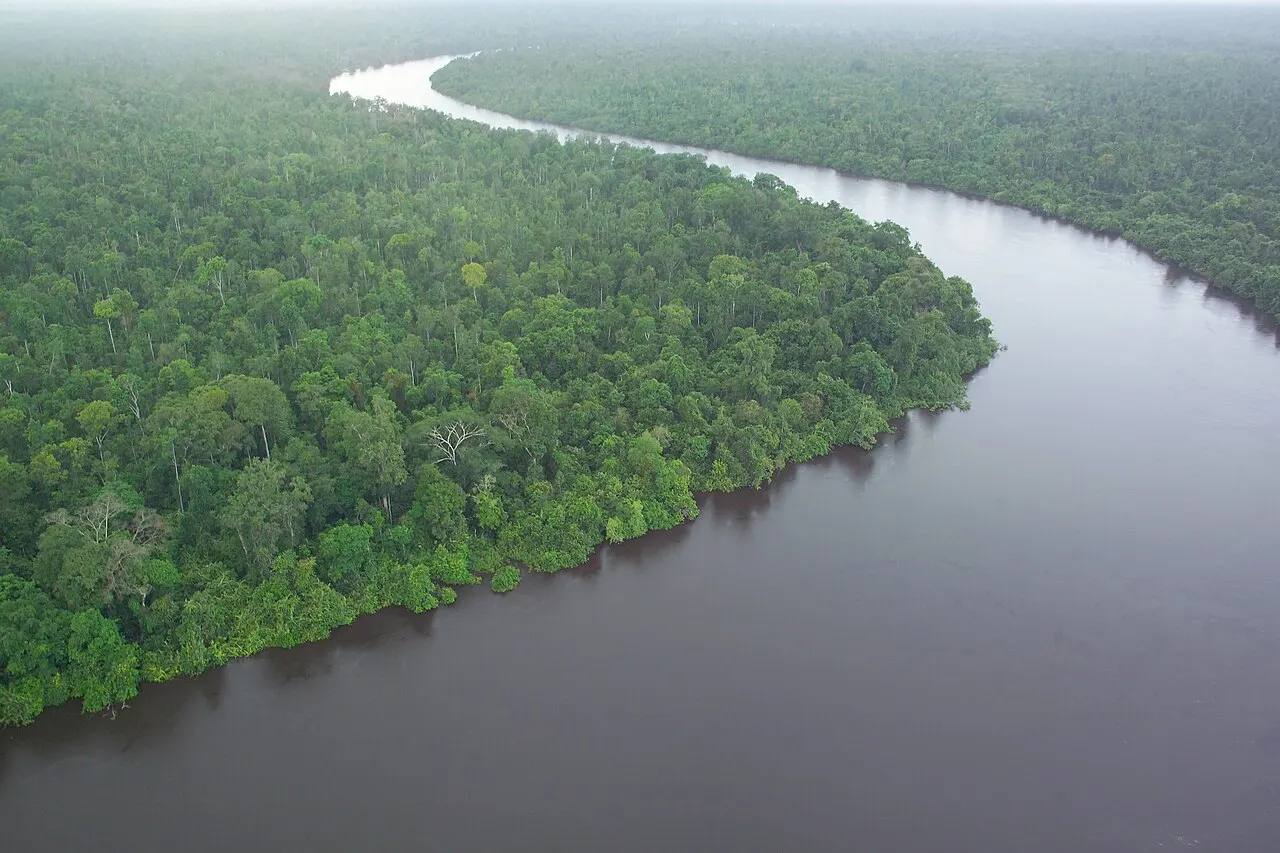
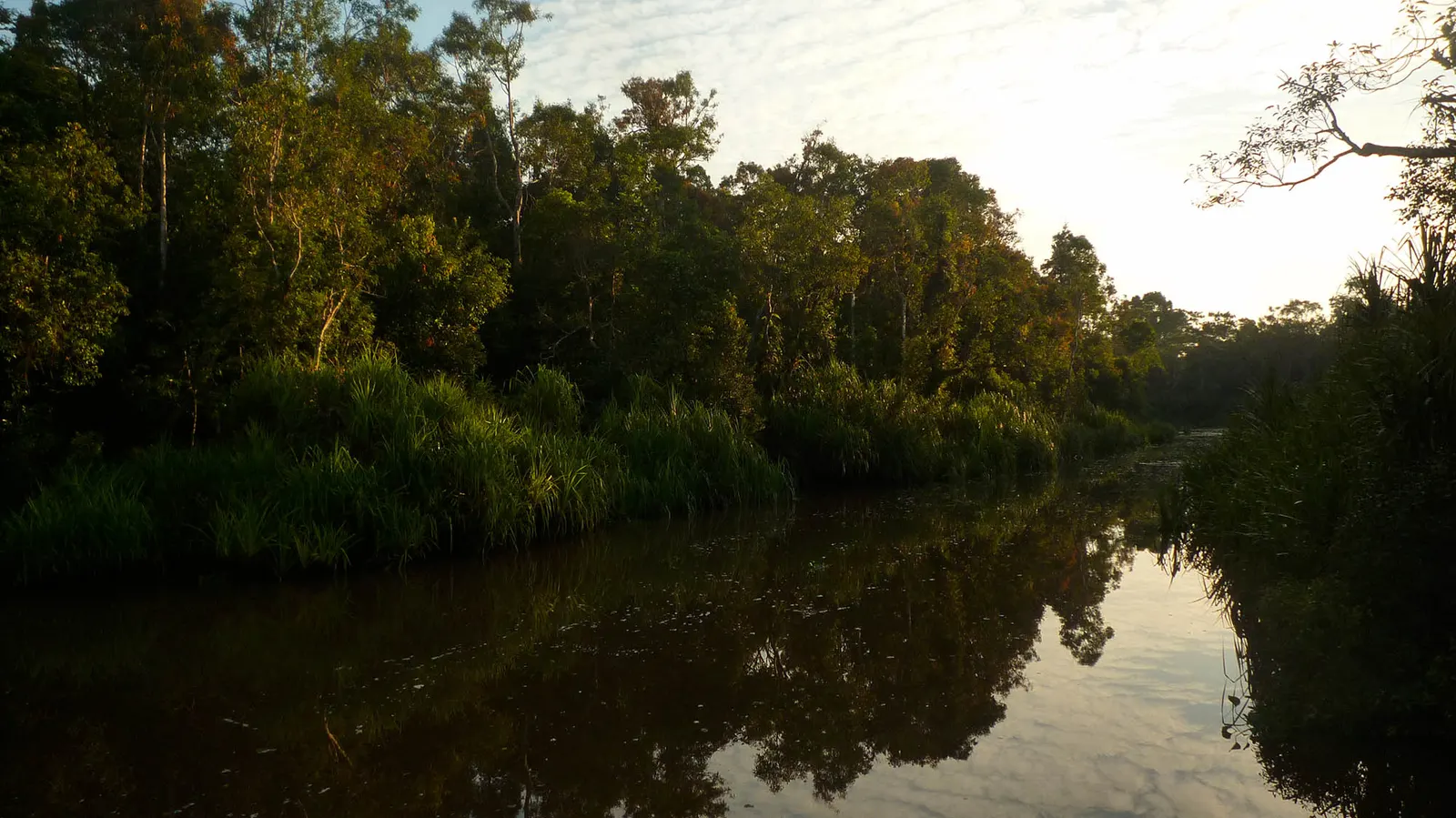
Blackwater streams and peat swamps define its habitat. Reference accounts report very acidic waters, around pH 2.8–3.8, rather than ordinary clear-water rivers. In Central Kalimantan, Sebangau sampling places it among the fishes of the peatland drainage. The dark water reflects dissolved organic matter from the wetland, tying the aquatic setting to peat and surrounding forest vegetation.
Sources & references · 2
Species account or primary research · FishBase: Channa bankanensisMires and Peat · Rasbora kalochroma: documented occurrenceBehaviour
Air breathing is obligatory for this species, so its relationship with the surface differs from that of fishes using only their gills. Its range includes Indonesia and Malaysia. The global category is Near Threatened, reflecting concern beyond a single locality. Conserving this fish means retaining functioning peat-water habitat as well as the animal itself: air-breathing ability does not remove its dependence on wetland conditions.