Feeding
Fruit, roots and small animals occur in its diet; the snout helps it forage in soil. Dietary flexibility does not mean every population uses the same foods or follows the same movements. Specific tree-species relationships need their own evidence.
Sources & references · 1
Animal Diversity Web, University of Michigan · Sus barbatusThreats
African swine fever has caused major concern for wild pigs across Borneo. Recent research documents disease spread and sharp population impacts. Old abundance descriptions cannot be treated as current viewing expectations; monitoring and biosecurity matter alongside habitat protection.
Sources & references · 1
Peer-reviewed conservation research, 2025 · Rapid spread of African swine fever across BorneoFood, soil and forest change
Bearded pigs search for fruit and seeds and root through the forest floor for other foods. Their movements link feeding areas, while rooting disturbs soil and influences seedlings. They are therefore both consumers of forest crops and agents of change on the ground. Food abundance can vary strongly, especially when many trees fruit together. The pigs also provide prey for large predators and have long been important to the food traditions of many Bornean communities.
Sources & references · 2
Animal Diversity Web, University of Michigan · Sus barbatusPeer-reviewed conservation research, 2025 · Rapid spread of African swine fever across BorneoAfrican swine fever
African swine fever caused a major recent crisis. Wild-pig deaths were reported in Sabah from late 2020, followed by confirmation and spread across much of Borneo. Evidence assembled for 2020–2023 records severe losses, although there is no reliable island-wide percentage for the decline. Subsequent observations of surviving adults and young show that recovery remains possible in some places. Disease adds to hunting and habitat loss; it does not replace those longer-standing threats. The species remains globally Vulnerable in the verified assessment.
Sources & references · 2
Peer-reviewed conservation research, 2025 · Rapid spread of African swine fever across BorneoMammal Diversity Database, American Society of Mammalogists · Sus barbatusThe beard and the young
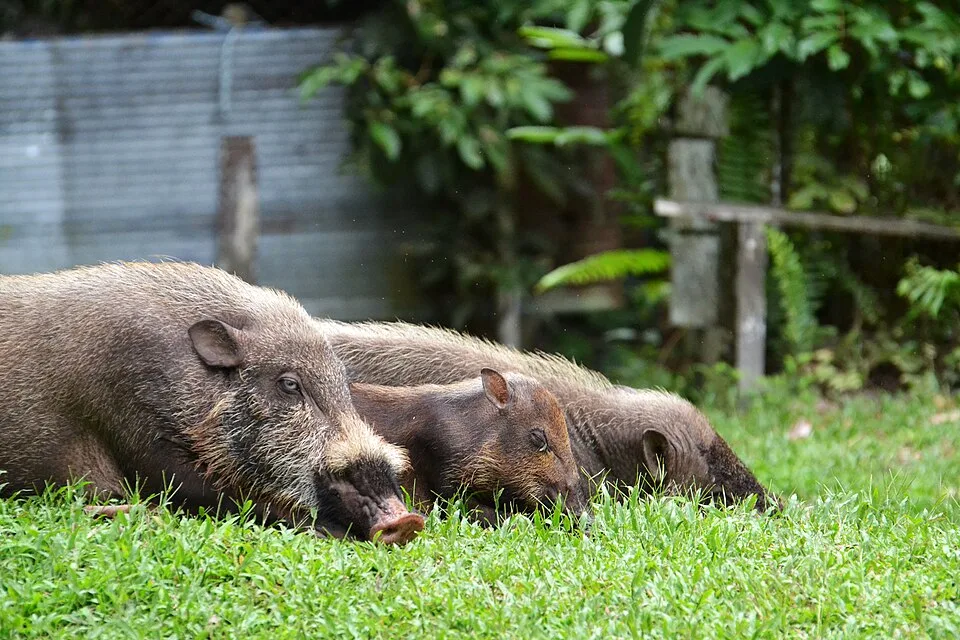
Pale facial bristles form the distinctive beard around a long snout. The body is comparatively lean. Females prepare a sheltered nest of vegetation for birth. The young have stripes that differ from the adult coat, and later follow their mother through the forest.