Edible parts, flavour & texture
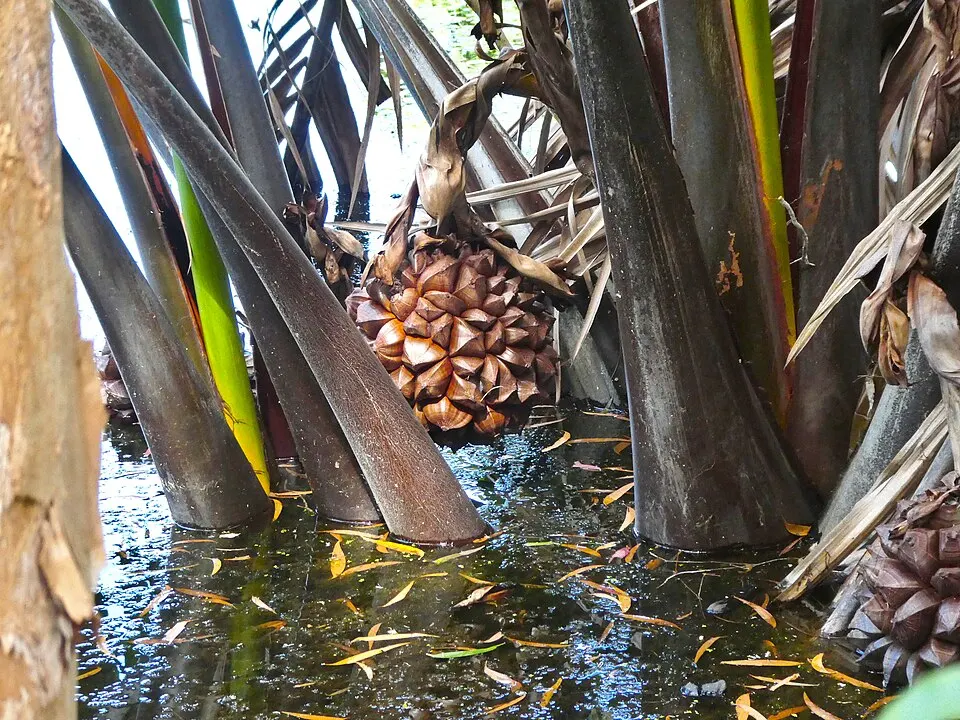
The white seed tissue supplies coconut flesh; grating and extracting it produces coconut milk. Its richness changes the texture of rice preparations. Do not confuse this cultivated palm with nipah, whose young seeds and flower-stalk sap have different uses.
Sources & references · 1
NParks · Cocos nuciferaIn Borneo’s kitchens
Milk extracted from the white seed tissue of Coconut palm enriches Kelupis. This coconut milk is not coconut water: it supplies the creamy character of the steamed rice parcel.
Milk from Coconut palm is cooked with glutinous rice in Lemang. It changes the rice’s richness and texture; the accompanying dishes still determine the suitability of a complete meal.
Coconut milk rounds out the broth of Sarawak laksa.
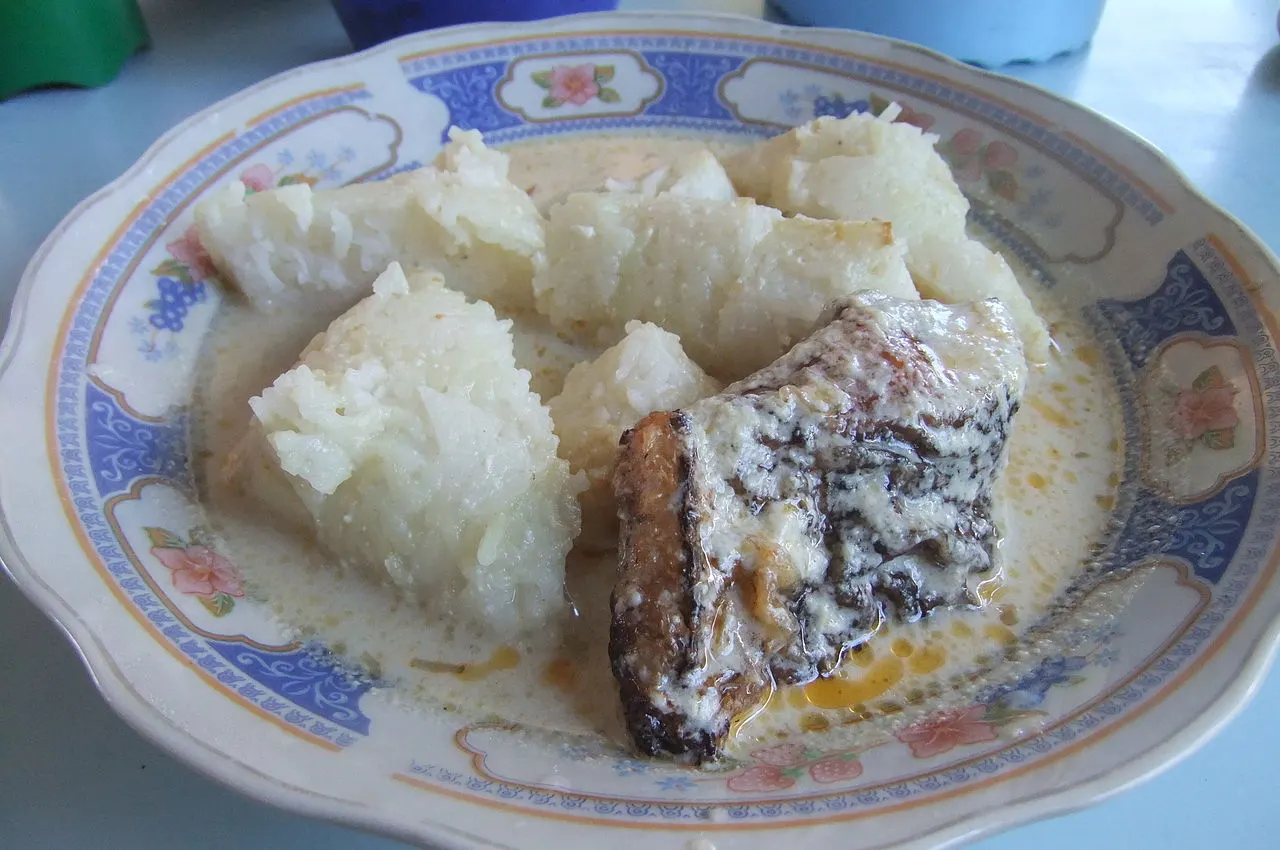
Coconut milk gives the sauce in Ketupat Kandangan its richness.
Sources & references · 4
Sabah Tourism Board · Gastronomical Adventure with Sabah’s Traditional FoodMinistry of Tourism, Indonesia · Lemang: regional variationsSarawak Tourism Board · How to make Sarawak laksaUniversitas Mulawarman · Kuliner BorneoAppearance & recognition
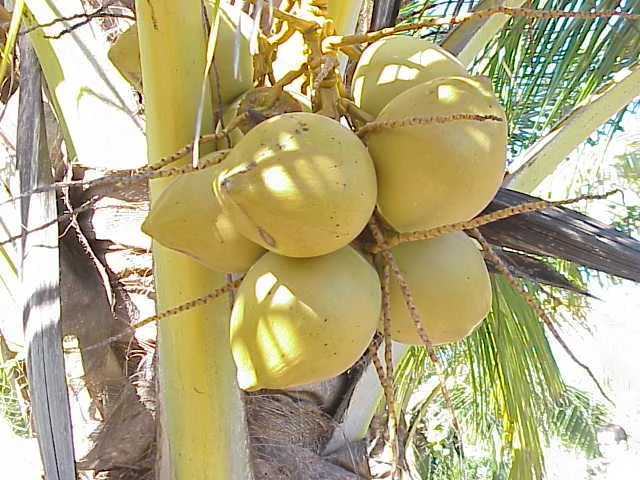
A solitary ringed trunk rises towards a crown of long feather-like fronds. The familiar coconut is a fibrous fruit surrounding a hard shell and seed. Coconut water fills the seed cavity; the white flesh is solid endosperm. Coconut milk is made by extracting grated flesh, so it is not simply the liquid poured from a young fruit. The palm is widely cultivated across Borneo’s settlements and coastal landscapes.
Sources & references · 1
NParks · Cocos nuciferaMaterials & other uses
Coconut milk adds richness to Kelupis and Lemang, while leaves can be woven into food wrappers. The fibrous husk supplies coir for cordage and mats; hard shells become utensils or fuel. These uses come from different tissues of the same fruit and plant. In contrast, nipah is a mangrove palm with a creeping stem and different food and material traditions.