What is Kelupis?
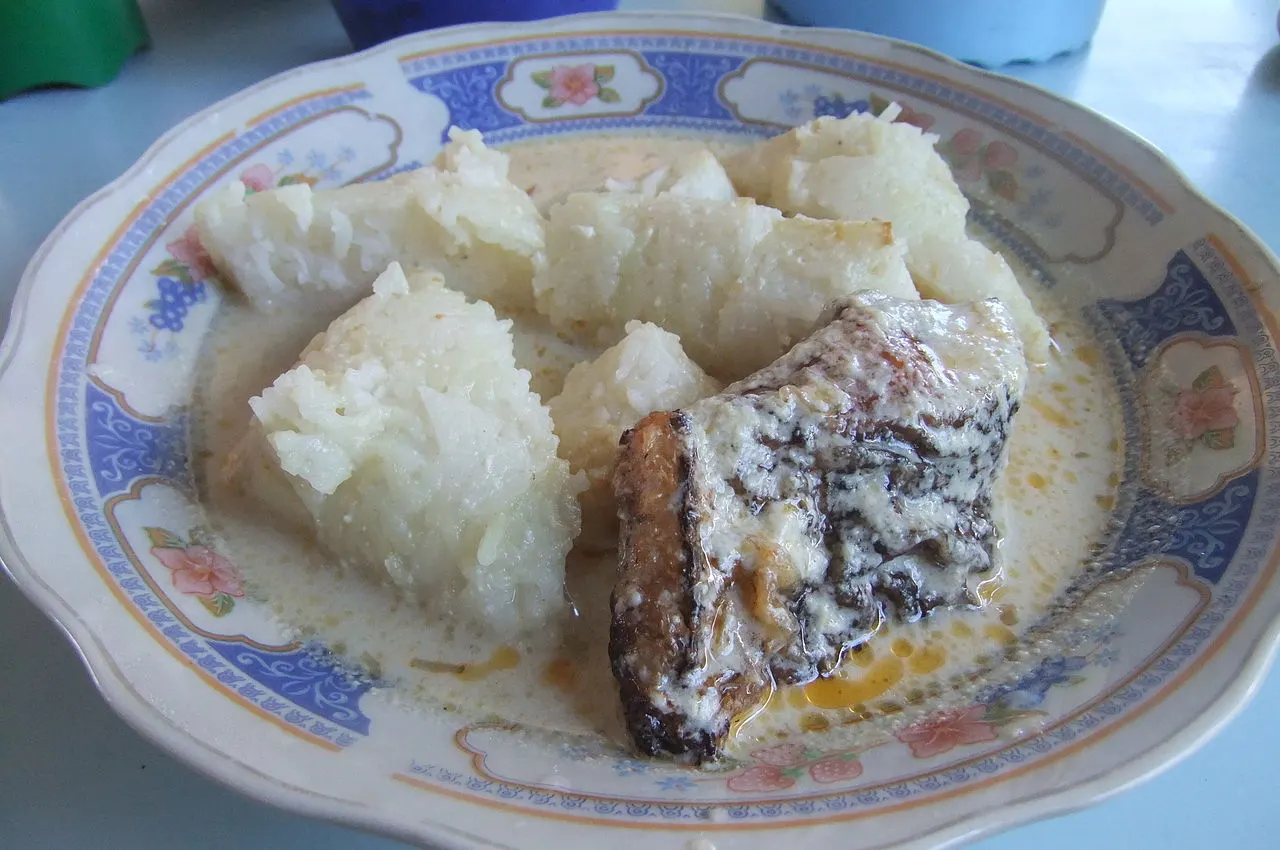
The parcel contains glutinous rice, a rice type that becomes cohesive on cooking. Sabah’s tourism account describes coconut milk in the preparation and steaming after wrapping. The result is different from loose plain rice served with a separate sauce: the enriched grains hold together in a small package.
In Brunei, the official description names nyirik as the wrapper and links kelupis with Bisaya weddings and special occasions. These leaves are packaging, not automatically part of what is eaten. Their local name alone is not used here to identify a scientific species.
Flavour and texture
Coconut milk contributes richness, while glutinous rice supplies the soft, cohesive texture. Peanut sauce appears in the Sabah example; Brunei’s account also mentions curry dip and versions accompanied by dried shrimp or anchovies. The flavour of the complete serving therefore depends on the dip and additions.
Compare kelupis with Linopot or Nuba laya to notice how different leaf-wrapped rice foods can be. A shared wrapper does not mean the rice, preparation or accompaniments are identical.
At the table
Kelupis can be a snack or part of a larger meal. Its ceremonial association in Brunei sits alongside contemporary café servings in Sabah. Ask how the parcel is opened and which sauce is intended for it.
Check the rice mixture, sauce and accompaniments separately for dietary needs. Coconut and rice are plant ingredients, but shrimp, anchovies or an animal-based curry change the complete serving. A peanut dip also matters for anyone avoiding nuts.