Edible parts, flavour & texture
Rice is used as cooked grain and as flour. Glutinous rice describes a group of cultivars with a particular starch texture; it does not mean the grain contains gluten. The rice plant is distinct from a named dish or a geographically identified crop such as Adan rice.
Sources & references · 1
Flora of Singapore, NParks, 2019 · Oryza sativa and PoaceaeHow the plant grows
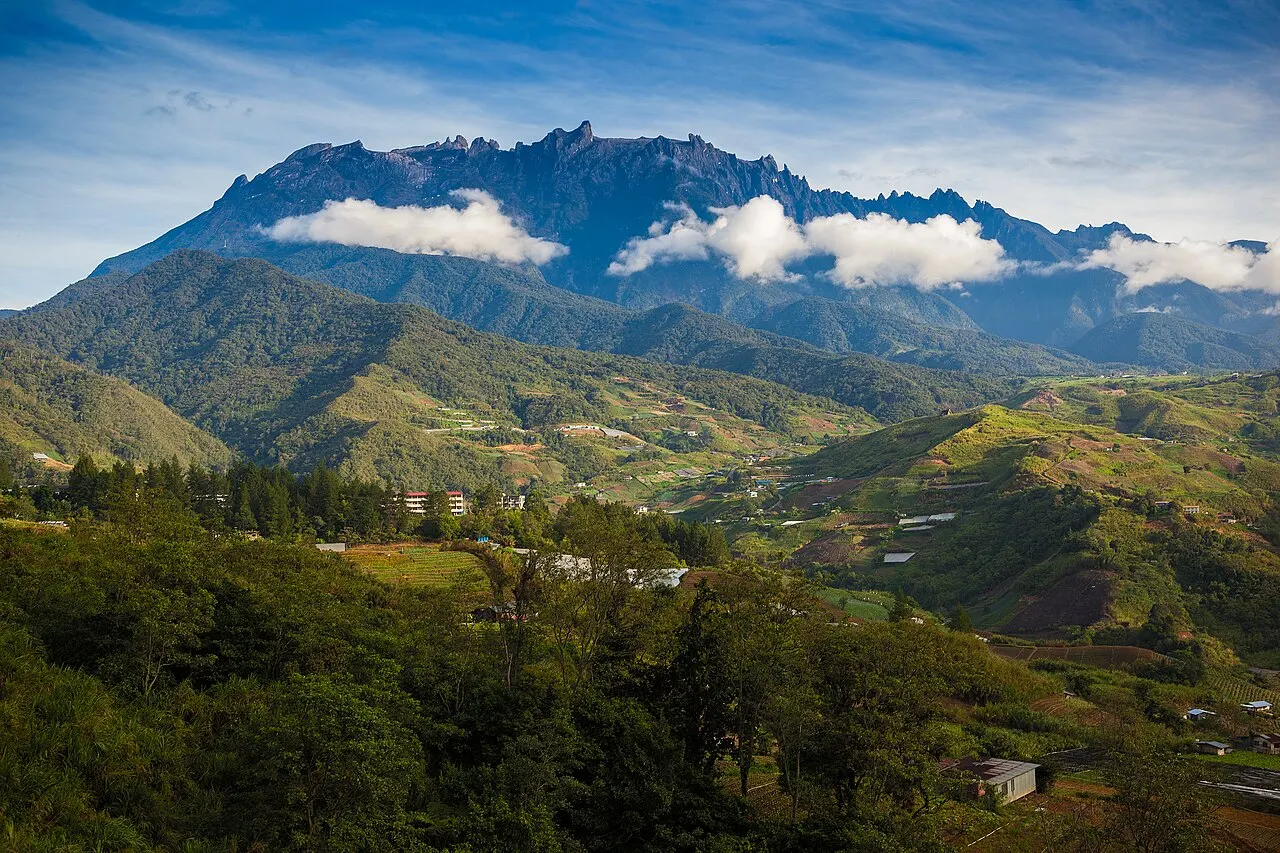
Oryza sativa is a grass in the Poaceae family. Narrow leaves emerge from jointed stems; the flowering panicle later carries grains. The grain is a caryopsis, the characteristic grass fruit, rather than a loose seed in a fleshy fruit. A rice field is therefore a managed habitat with an annual crop cycle, not a stand of forest trees. Flooded cultivation and upland cultivation create different landscapes on Borneo.
Sources & references · 1
Flora of Singapore, NParks, 2019 · Oryza sativa and PoaceaeIn Borneo’s kitchens
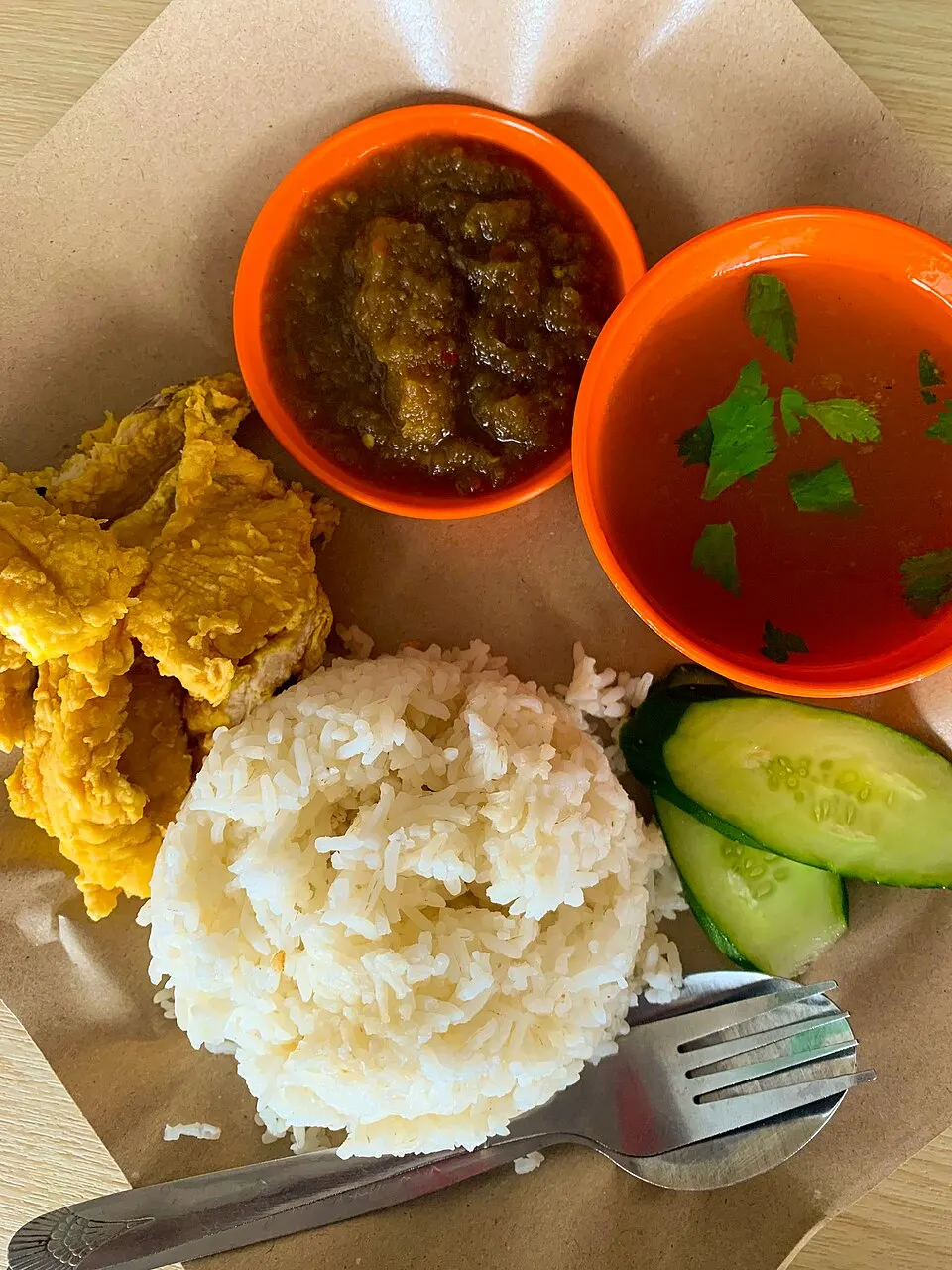
Rice connects very different textures: the compact wrapping of Kelupis, the soft rice of nuba laya, rice flour in choi pan, and bamboo-cooked Lemang. Glutinous varieties become sticky because of their starch composition; “glutinous” does not mean gluten-containing. Adan rice from Krayan describes regional cultivation and varieties within this same botanical species, rather than a second species of rice.
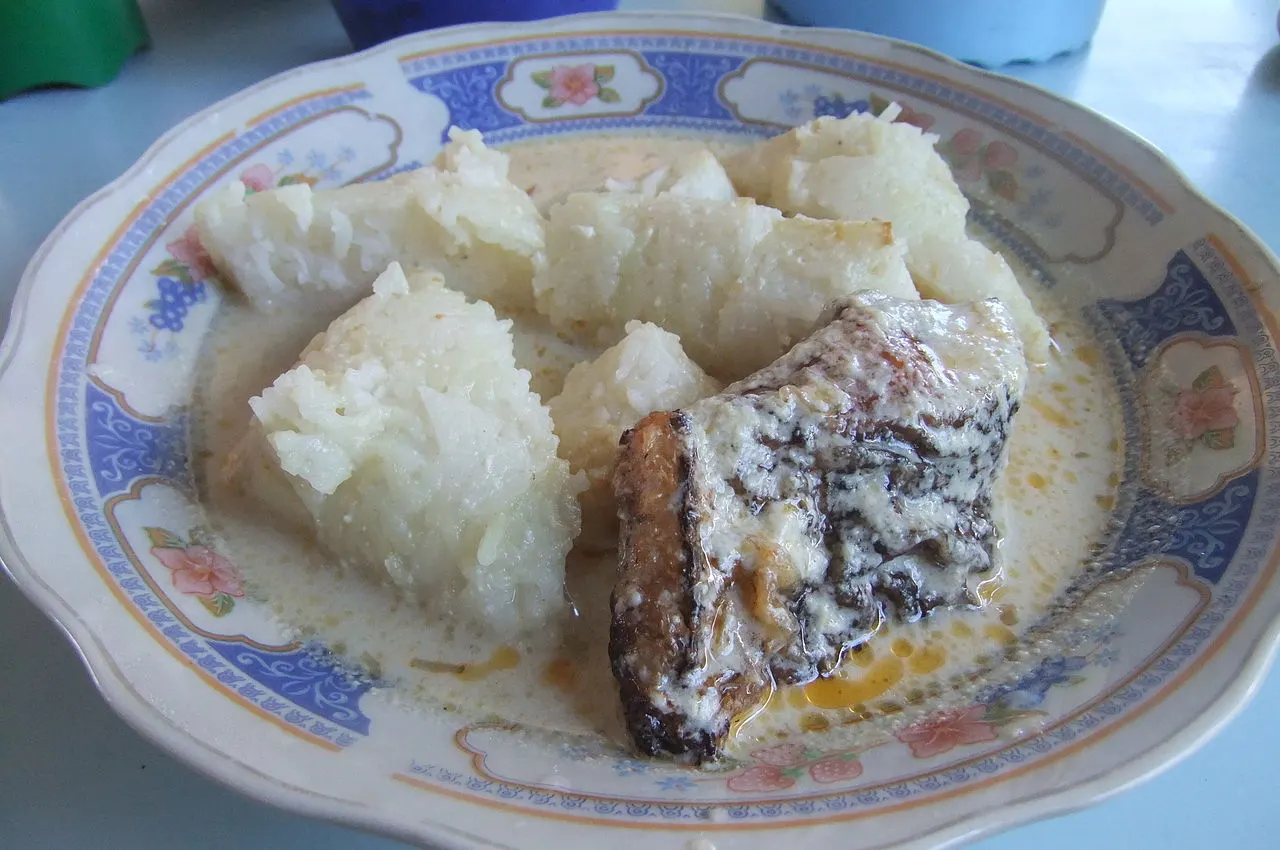
Rice forms the compact ketupat portions in Ketupat Kandangan.
Roasted glutinous rice becomes samu, the rice mixture used in wadi fermentation.