What is Nasi katok?
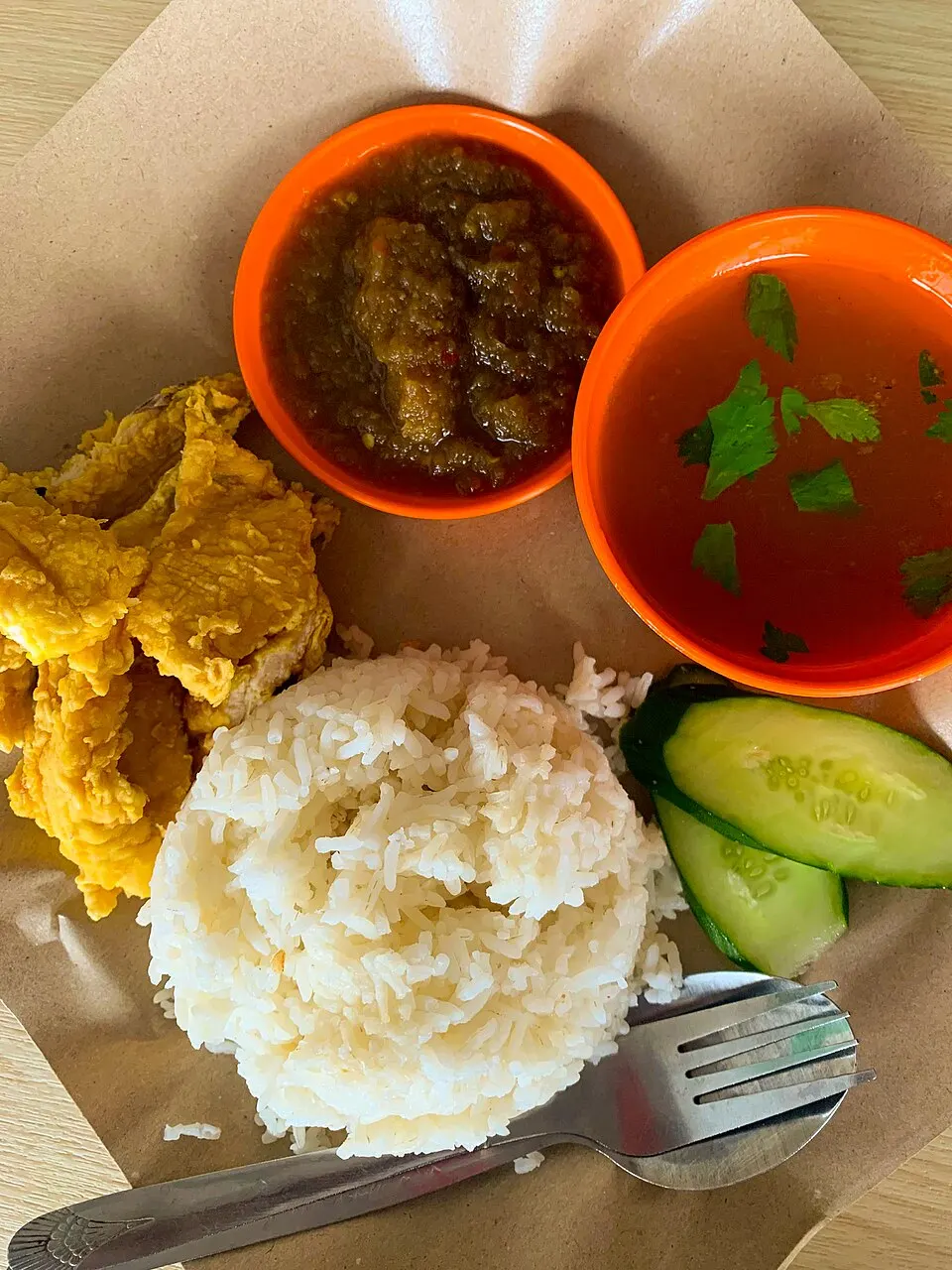
Three components define the meal: a serving of rice, a piece of fried chicken and sambal. Its appeal is easy to understand from the plate. Plain rice provides a foundation, chicken supplies the main savoury element and the sauce brings the seasoning into focus.
The word nasi means rice. Katok means knock; Brunei Tourism relates the name to a story of customers knocking on a seller’s door to order food. It is a remembered explanation of the name, not a reason to expect door-knocking service today.
Sources & references · 1
Brunei Tourism / Tourism Development Department · Local DelicaciesFlavour and texture
A useful first comparison is between the chicken and the sambal. One provides the savoury body of the meal; the other changes how each mouthful of rice tastes. Brunei’s official description notes many variations, so neither a single chilli level nor one particular sauce recipe defines every packet.
If you prefer less heat, ask whether sambal can be served separately. That lets you taste the chicken first and add sauce gradually. It also makes differences between preparations easier to notice without turning the dish into a competition for the hottest serving.
Sources & references · 1
Brunei Tourism / Tourism Development Department · Local DelicaciesAt the table
Nasi katok is presented by Brunei Tourism as an accessible everyday favourite. The country-wide association is more useful for a visitor than relying on an old advertised price: the current seller decides today’s portion and cost.
The meal contains chicken and is not vegetarian. Sambal may have further ingredients that matter for allergies or dietary requirements. Ask about those rather than assuming the simple appearance guarantees a short ingredient list. Alongside Ambuyat, nasi katok offers a contrasting way to explore Brunei’s staples: rice grains and a composed portion instead of sticky sago with multiple accompaniments.