What is Choi pan?
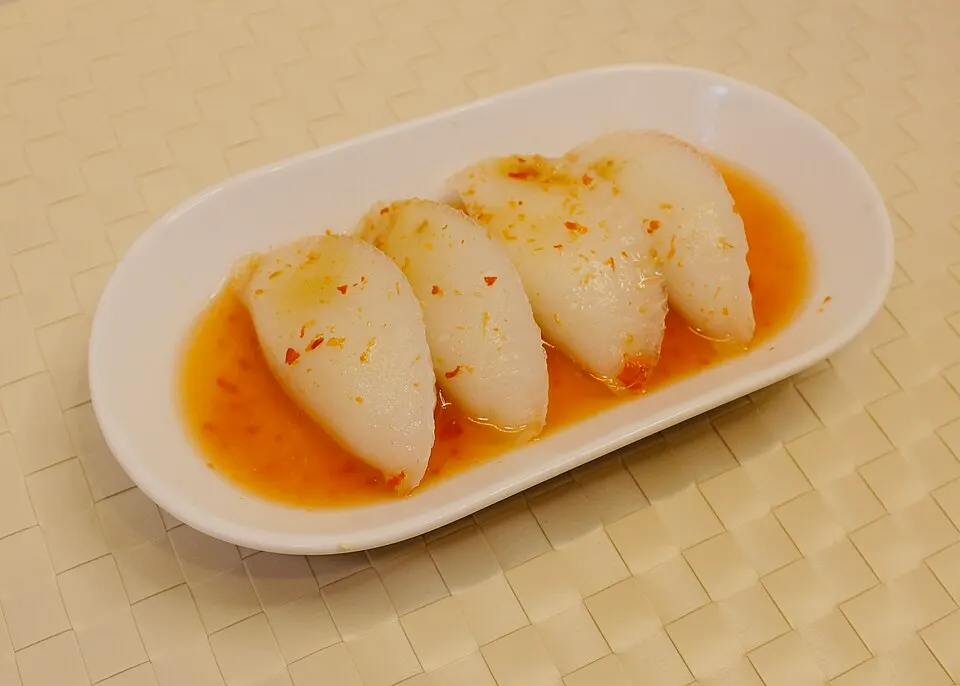
The thin wrapper is made with rice flour and tapioca, enclosing a savoury filling. Chai kwe and choi pan are alternative names you may encounter for this Pontianak food. The national tourism account connects it with Chinese-Indonesian food traditions and describes its appeal across the city’s communities.
It is generally introduced as a steamed snack, though fried versions are also documented. Ask which preparation is being served: soft translucent-looking skin and a crisp fried surface produce different textures even when the filling is similar.
Ingredients
Jicama, chives and taro are documented fillings. They should be understood as choices between versions, not necessarily all packed into the same dumpling. Jicama brings a lighter bite, chives a distinct aroma and taro a denser filling. Fried garlic adds a savoury finishing note.
Chilli sauce is often served alongside, so the heat can be adjusted to the mouthful. If vegetarian food matters, ask about the filling and seasoning together. A visible vegetable filling is helpful information, but does not describe every ingredient used by the kitchen.
At the table
Choi pan fits a breakfast or snack stop rather than needing a formal multi-course meal. Trying different fillings lets a small plate show considerable variation. Add sauce gradually so the garlic and filling remain easy to taste.
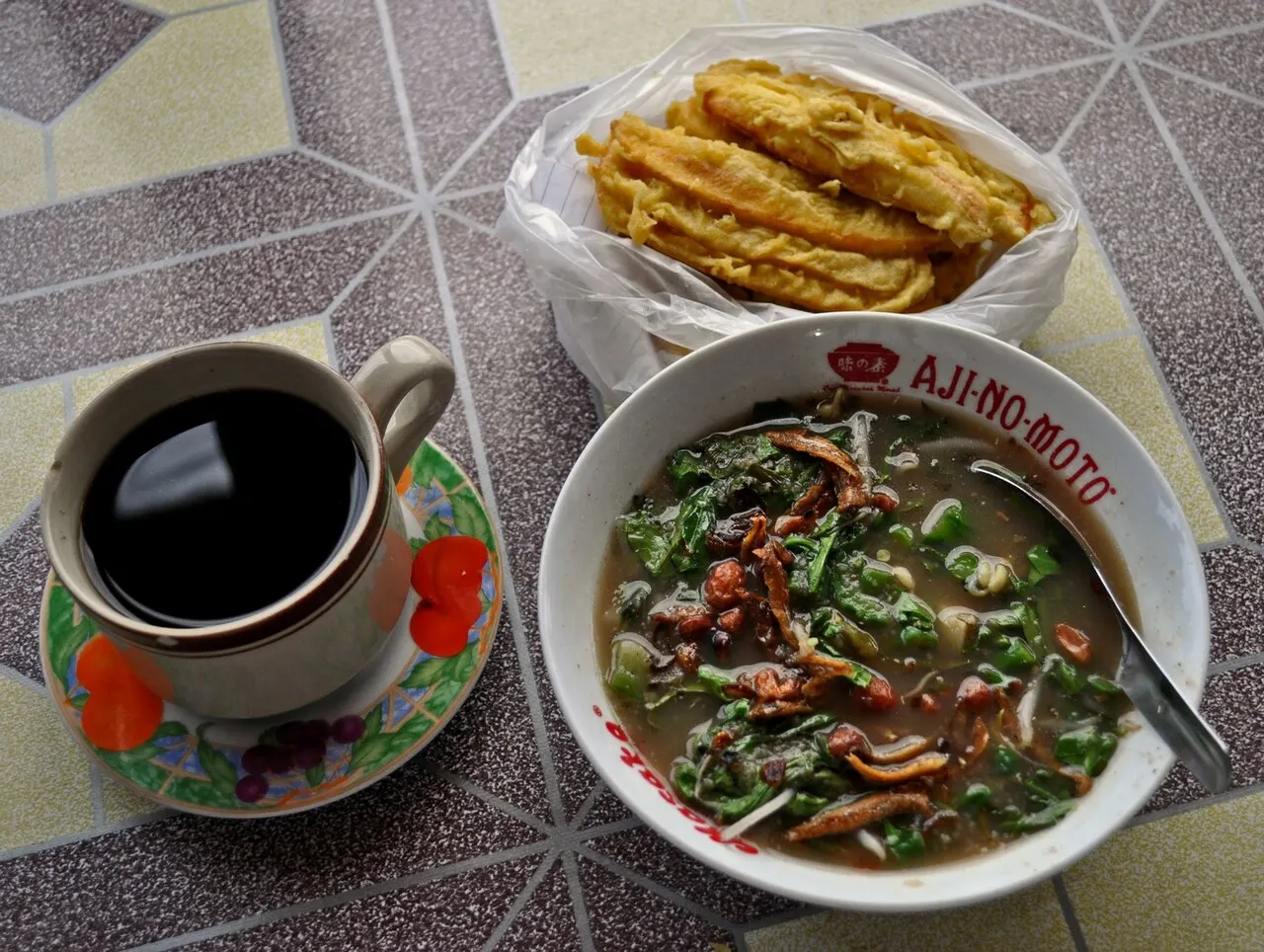
Within West Kalimantan, compare it with Bubur pedas. Rice provides an ingredient connection, but flour wrapped around vegetables is a different technique from roasted ground rice cooked into porridge. The two foods offer complementary introductions to Pontianak and the region around it.