What is Adan rice from Krayan?
Adan refers to a highland rice tradition rather than one finished recipe. A plate may simply present cooked rice with local accompaniments, while a bag of grain tells a story about its growing place. The Krayan area lies in Nunukan, North Kalimantan, within a wider highland landscape that crosses the Indonesia–Malaysia border.
FORMADAT and WWF describe white, red and black Adan varieties. Colour is therefore part of its diversity, not a test that all genuine Adan must be white. Ask the grower or seller which variety is being offered and where it was grown.
Origin and food culture
The rice fields are part of a living agricultural landscape, not untouched forest. Water, cultivated valleys and the knowledge of farming families all contribute to the crop. Agricultural documentation describes buffalo entering fields after harvest, helping with vegetation, soil disturbance and manure.
Highland food heritage also involves community networks. FORMADAT brings together Lundayeh/Lun Bawang, Kelabit and Sa’ban communities across the border. Rice can introduce those connections without making every household’s farming and cooking practices identical.
At the table
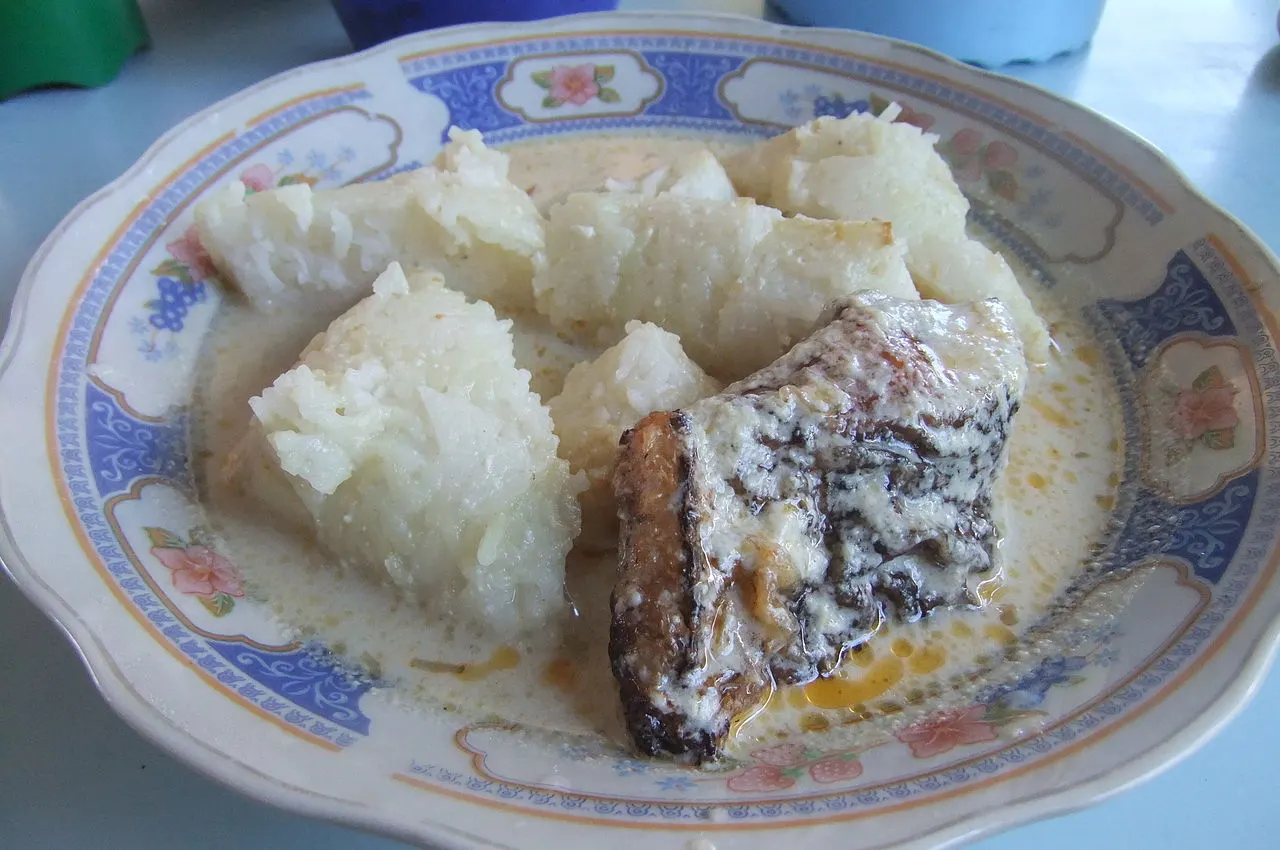
Taste the rice before adding strongly flavoured sauces if you want to notice the particular grain. Texture and aroma depend on the variety, milling, storage and cooking, so one plate cannot represent every Adan harvest. Local accompaniments place it back within a meal rather than treating it as a souvenir alone.
Buying identified rice from a named producer makes the growing place easier to trace. The highland tradition is often described through low-input farming, but a regional name is not proof that every bag carries organic certification. Ask about the actual production and labelling.