Recognition
This is a small member of the huntsman-spider family: the measured adults in the original description had bodies around one centimetre long, excluding the legs. Yellowish-brown colouring carries darker markings. A pale, branched pattern on the upper front of the body is clearer in living spiders than in preserved specimens. Stiff bristles project forward between the front eyes, varying from one to three. Reliable identification also uses reproductive anatomy; a brown long-legged spider photographed in Temburong is not automatically this species.
Sources & references · 2
Senckenberg / Lee Kong Chian Natural History Museum · Jäger & Koh (2024): Heteropoda temburong and other Southeast Asian huntsman spidersNatural History Museum Bern · World Spider Catalog: Heteropoda temburongHabitat and Borneo range
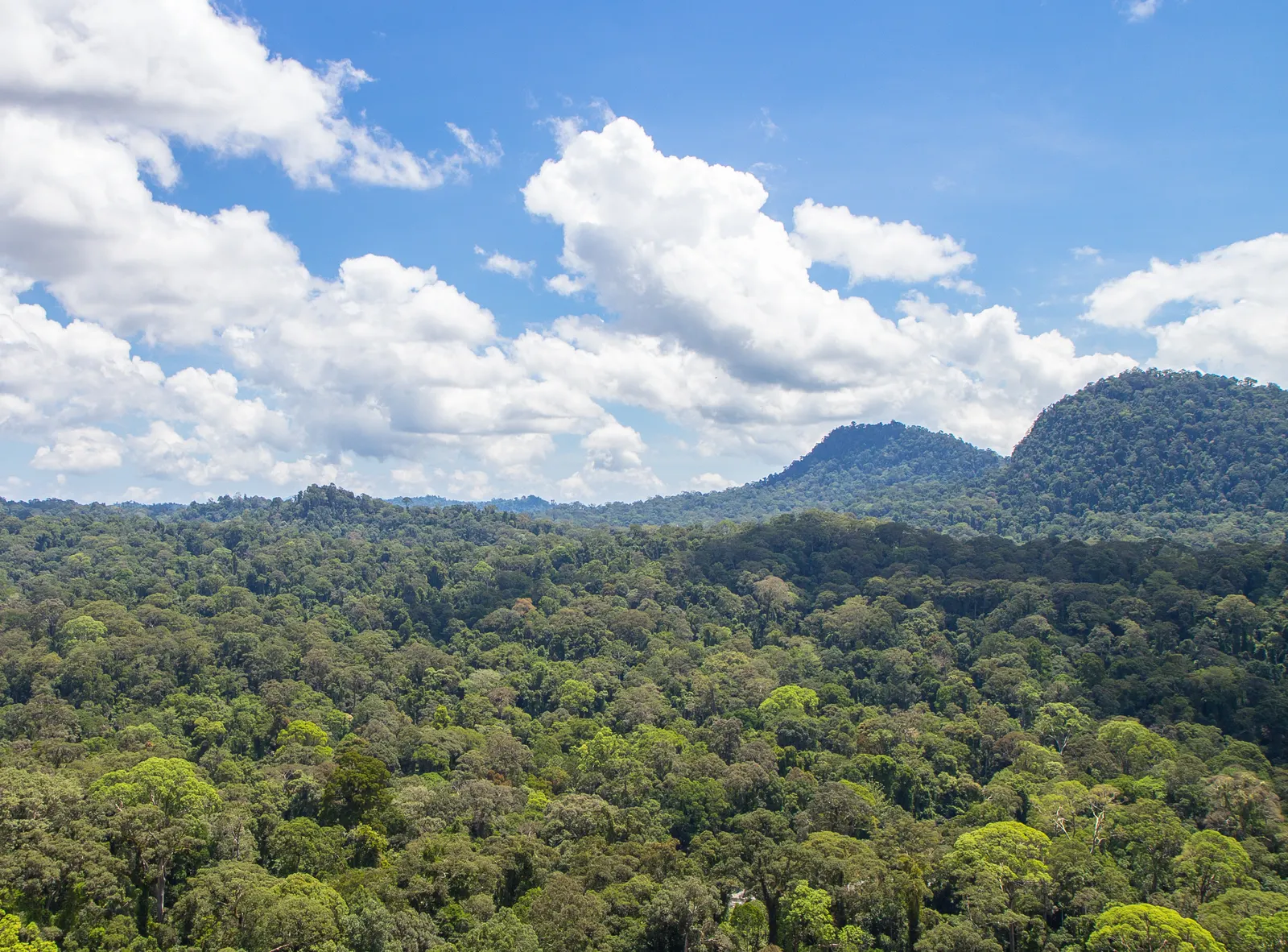
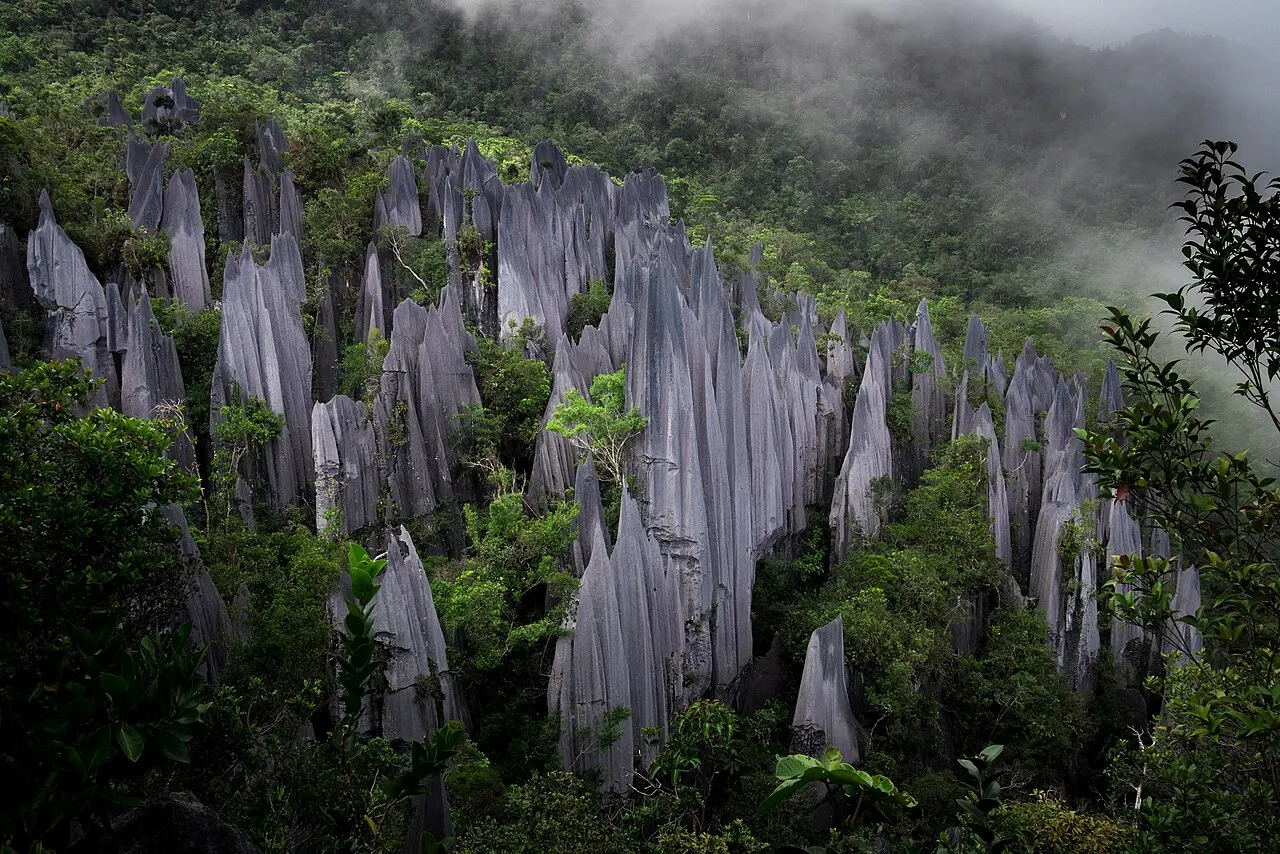
The first described male came from primary forest near Sungai Seruyu in Ulu Temburong National Park. Other confirmed material comes from Peradayan and Sungai Ingei in Brunei, Sepilok in Sabah, and Gunung Mulu in Sarawak. The Sepilok specimen was collected in disturbed forest, so the evidence is not limited to untouched rainforest. These records concern northern Borneo; they do not establish a Central Kalimantan population. The species name refers to Temburong, but its documented range crosses national and state boundaries.
Sources & references · 1
Senckenberg / Lee Kong Chian Natural History Museum · Jäger & Koh (2024): Heteropoda temburong and other Southeast Asian huntsman spidersBehaviour and daily life
The authors observed nocturnal hunting mainly on foliage, twigs, stems and tree trunks, although individuals also occurred among leaf litter. This makes low vegetation and the surfaces of trees part of its hunting space. At rest, both sexes tend to point their first two leg pairs forward rather than spreading them sideways like many other huntsman spiders. Its movements and posture are useful features to watch during a permitted guided night walk. The published account does not provide a dependable species-specific prey list or a best observation season.
Sources & references · 1
Senckenberg / Lee Kong Chian Natural History Museum · Jäger & Koh (2024): Heteropoda temburong and other Southeast Asian huntsman spidersReproduction
A female carries a thick, inflated egg sac rather than the flatter disc common in many Heteropoda species. One measured sac from Brunei was about a centimetre wide and more than seven millimetres thick. The shape is one of the distinctive biological observations in the 2024 description. Egg numbers, incubation duration and a local breeding calendar remain poorly documented. A female with her sac should be left undisturbed: the observation is more valuable than moving the spider for a photograph.