Recognition
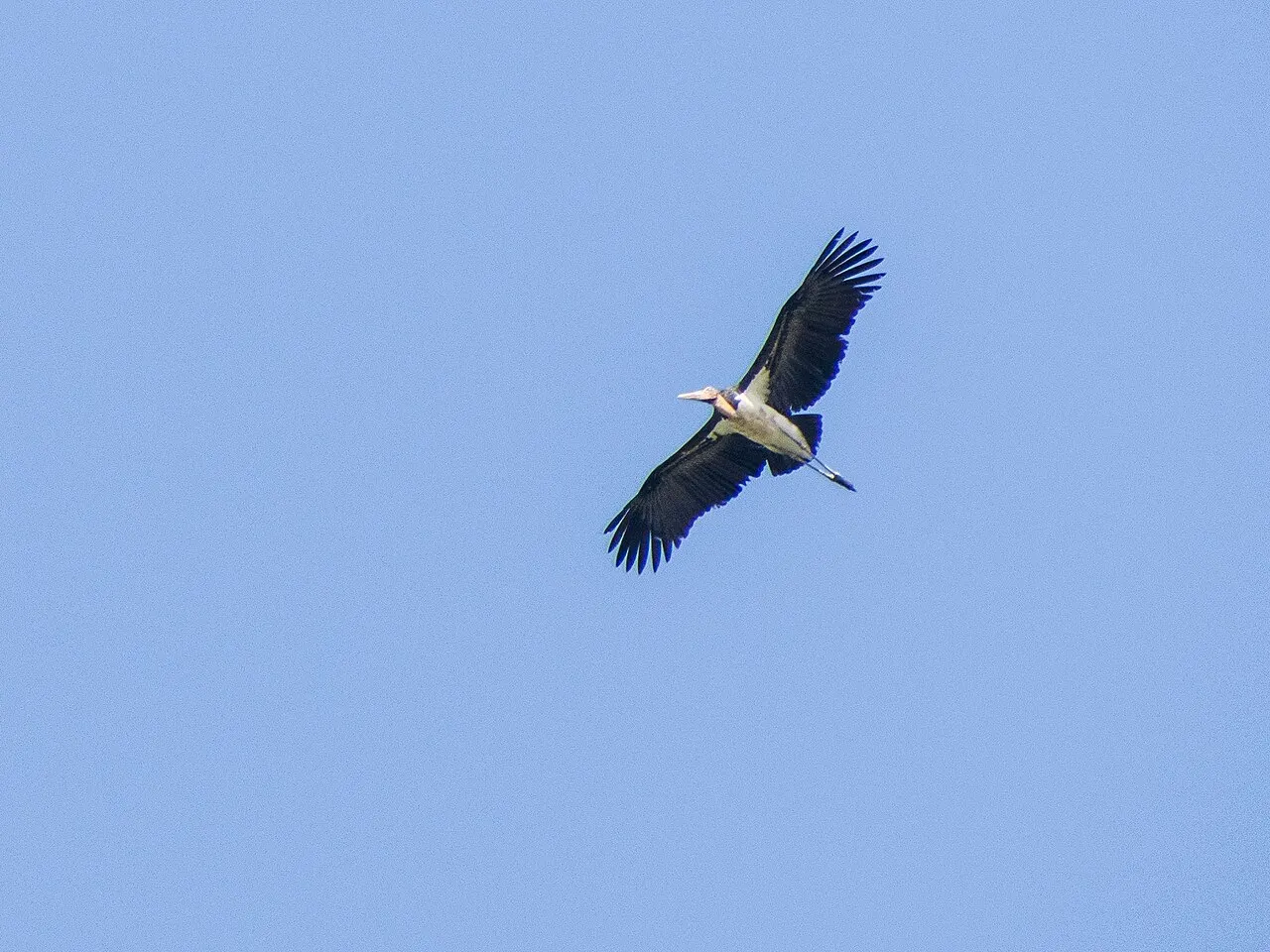
The lesser adjutant is a long-legged wading bird in the stork family.
Sources & references · 2
www.tnsebangau.com · Sebangau National Park, Sungai Paduran Alam (2015)www.nature.com · Lesser adjutant: natural historyDaily life
Sebangau's official records include it at Sungai Paduran Alam. Its range extends across South and Southeast Asia. A 2025 study notes that the 2023 IUCN assessment changed its global category from Vulnerable to Near Threatened.
Sources & references · 2
www.tnsebangau.com · Sebangau National Park, Sungai Paduran Alam (2015)www.nature.com · Lesser adjutant: natural historyRange and local records
Published research has documented this species at Sebangau NLPSF; Sungai Paduran Alam, Sebangau National Park. These observations provide a historical picture of its Bornean forest range.
Sources & references · 2
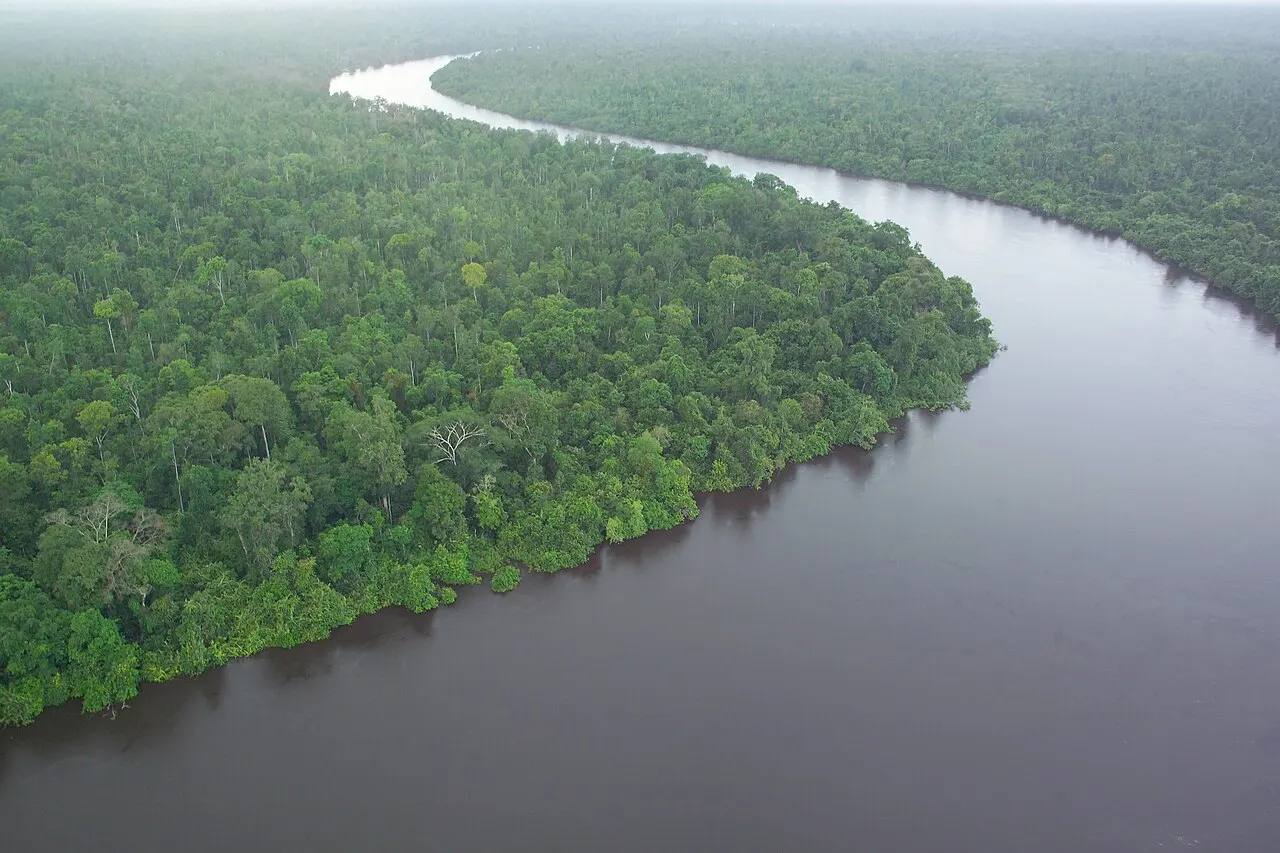
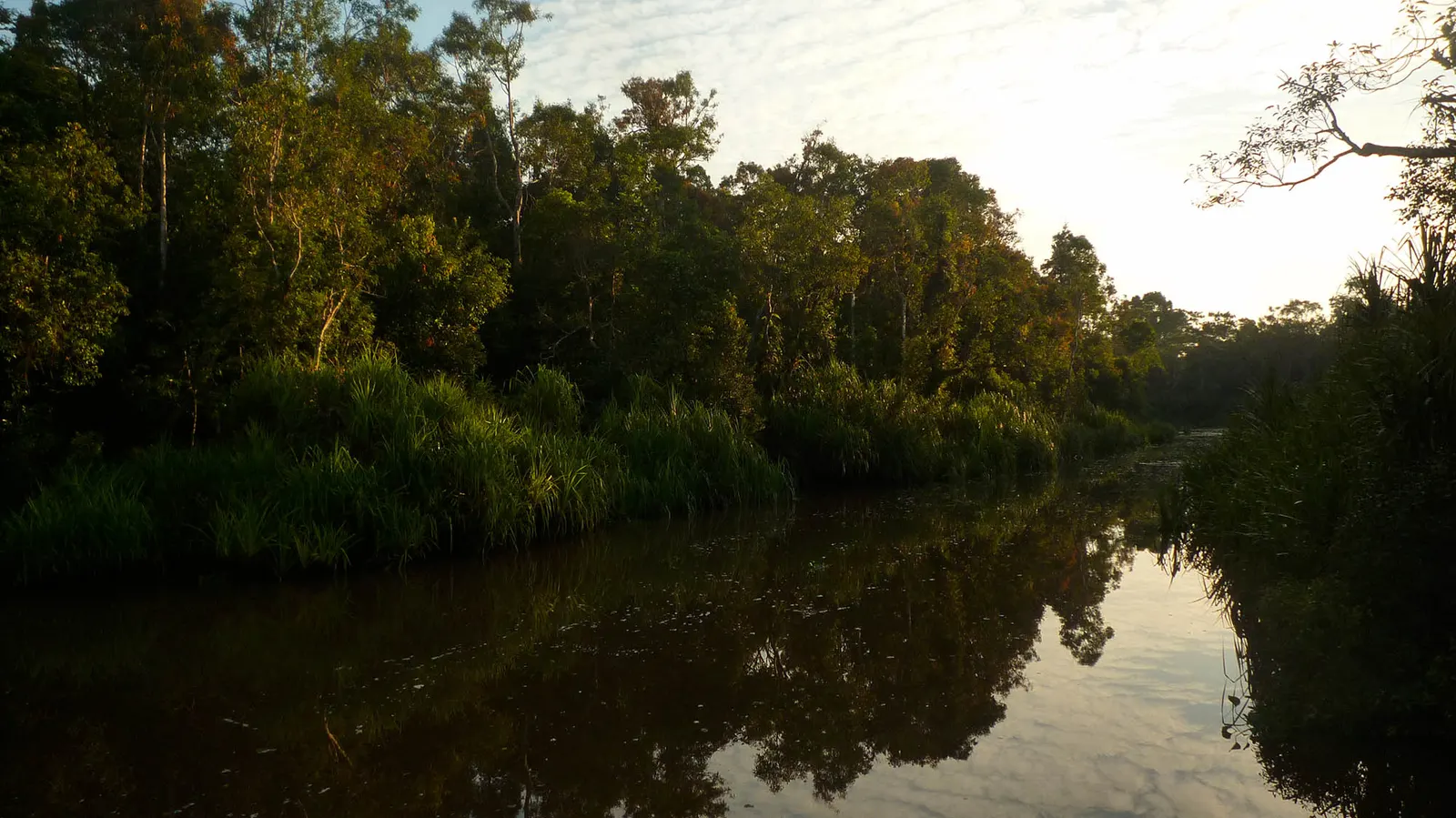
Mires and Peat · Husson et al. (2018), Biodiversity of the Sebangau tropical peat swamp forest, Indonesian Borneowww.tnsebangau.com · Sebangau National Park, Sungai Paduran Alam (2015)Forest and water
The linked habitat is the documented Sebangau peat-swamp landscape. Observation dates and locality remain attached to the evidence, so a park-wide abundance or sighting probability is not inferred.
Sources & references · 2
Mires and Peat · Husson et al. (2018), Biodiversity of the Sebangau tropical peat swamp forest, Indonesian Borneowww.tnsebangau.com · Sebangau National Park, Sungai Paduran Alam (2015)A wetland and its nesting forest
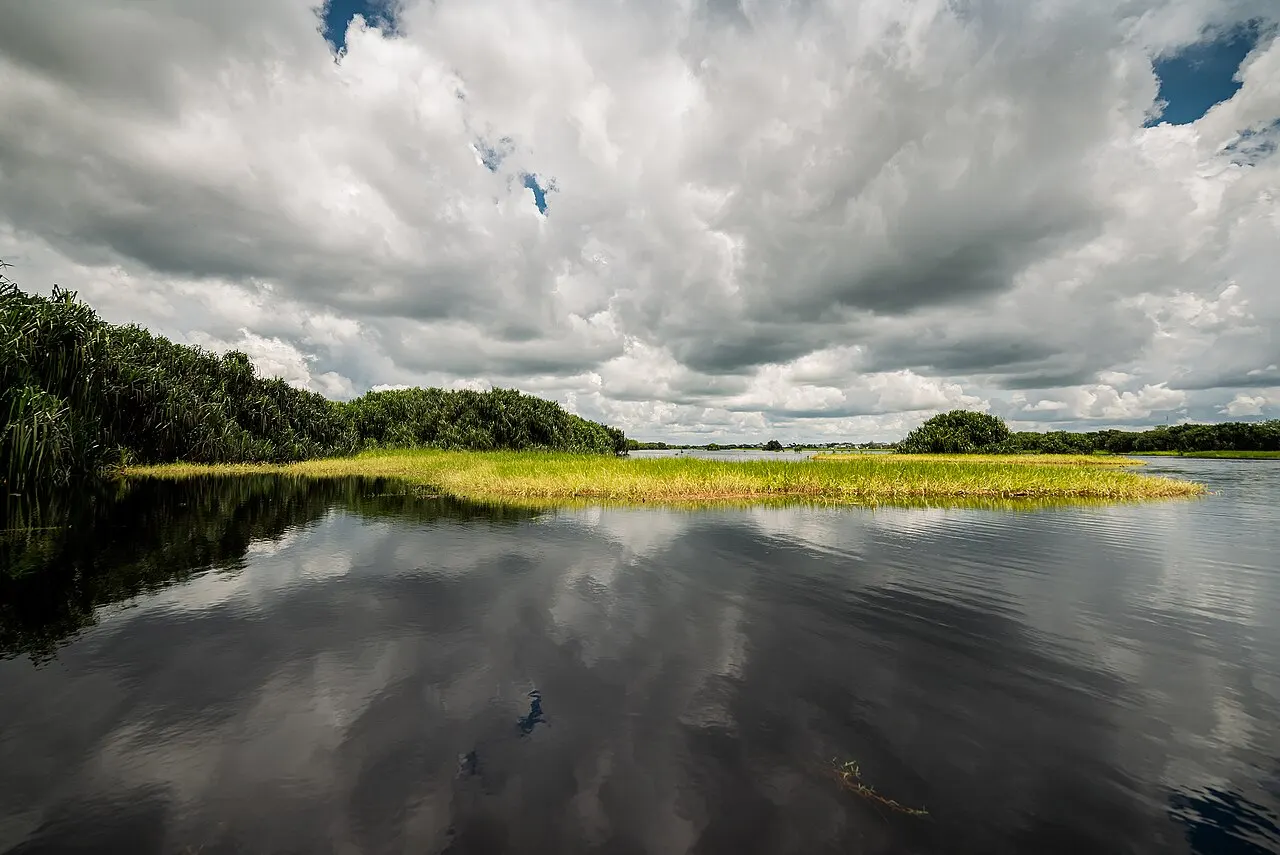
RASI surveys established Metau forest in West Kutai as a breeding locality beside the feeding wetlands of Jempang Lake. The report describes nesting in Shorea balangeran and documents nestling capture. This historical evidence connects protection of nesting trees with adjoining floodplain habitat; it does not establish today's colony size.
Sources & references · 1
Yayasan Konservasi RASI / Budiono and Kreb · Protecting the breeding habitat of the lesser adjutant in tropical lowland Metau forest, West Kutai District, East KalimantanQuiet at the water's edge
The massive bill, bare head and absence of a throat pouch distinguish it from the greater adjutant. Sarawak's account describes wet fields, flooded grassland, mud banks and mangroves. Birds may soar alone or in small groups. Their usual silence contrasts with bill clapping and buzzing at nests.