Borneo range and identity
This cave-roosting nectar bat lives on Borneo and across a wider Asian range. It has been documented at Madai Caves in Sabah. The larger greater dawn bat, Eonycteris major, is a different, Borneo-endemic relative that shares parts of its range.
Sources & references · 3
American Society of Mammalogists, MDD v2.5 · Eonycteris spelaea: taxonomy and linked categoryBiodiversitas, Ng, Mohd-Azlan and Wong · Floral biology and pollination strategy of Durio in Sarawak, Malaysian BorneoWestern Australian Museum · Studies on the bat genus EonycterisFeeding and activity
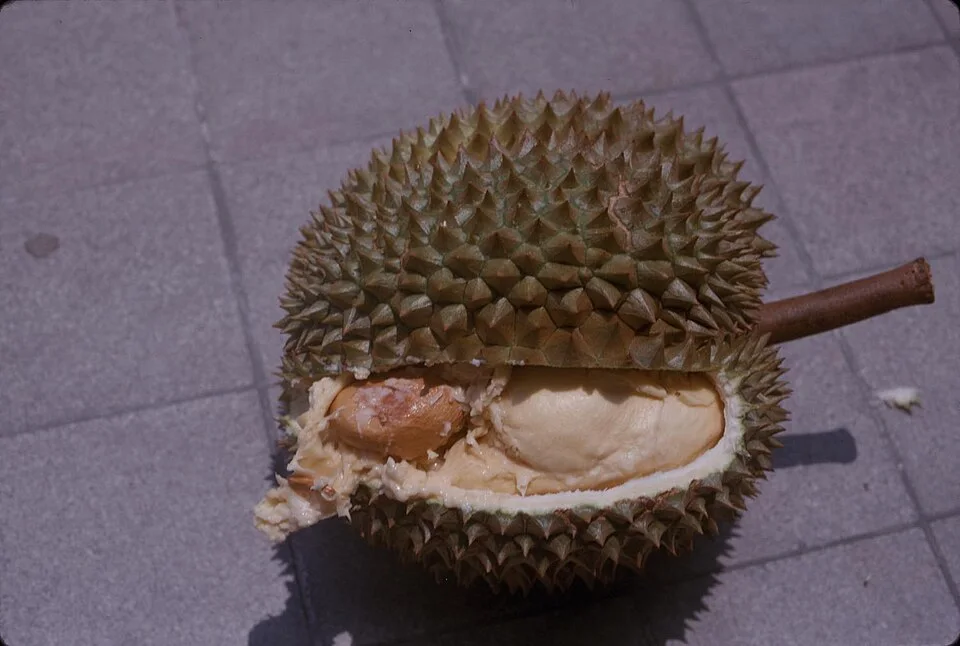
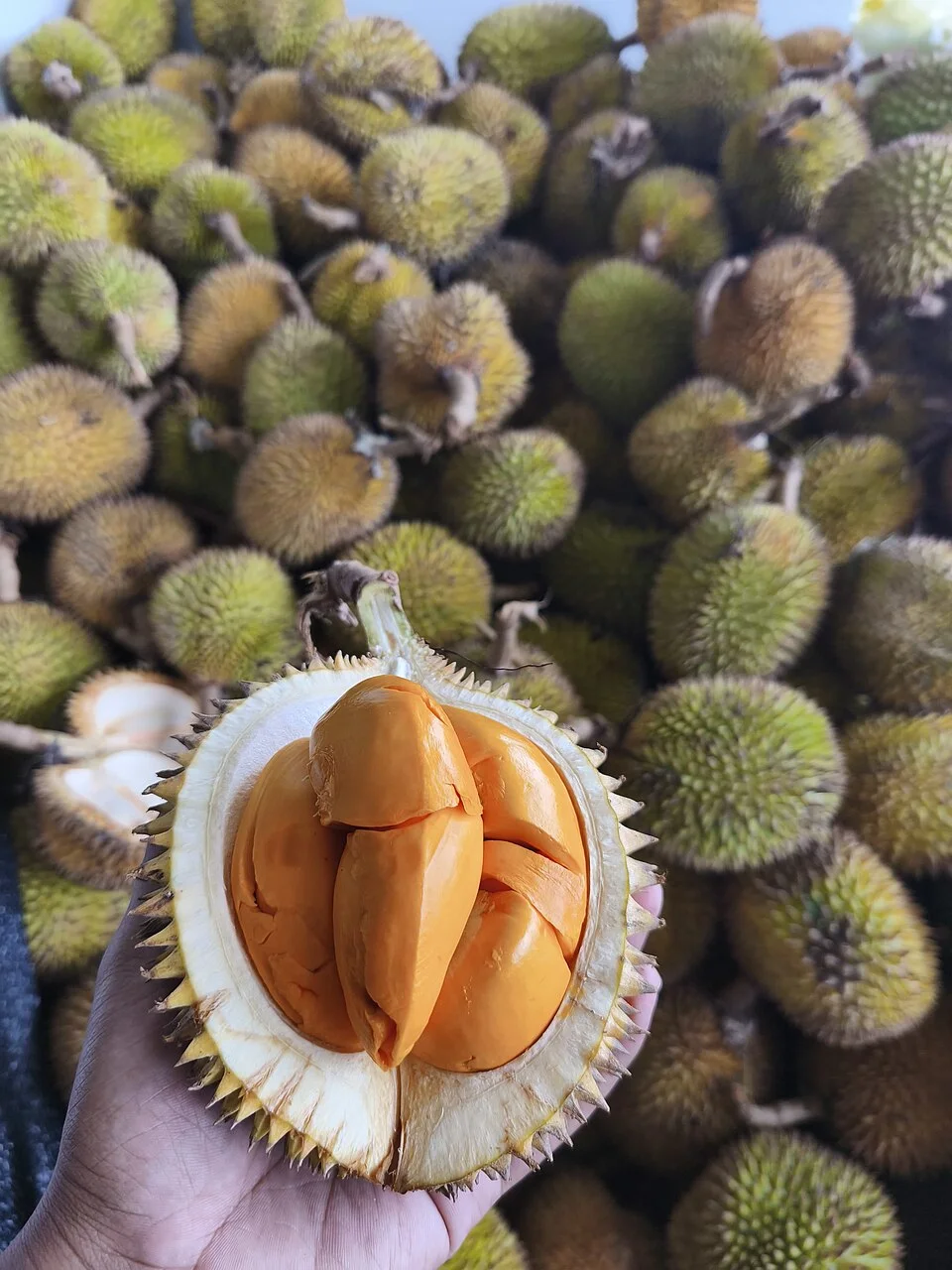
The bat visits flowers for nectar and pollen at night. A Sarawak study identifies E. spelaea as an important pollinator of Durio graveolens, D. kutejensis and D. zibethinus. The flowers' opening and nectar supply extend into evening and night, making bat activity relevant to fruit production.
Sources & references · 3
American Society of Mammalogists, MDD v2.5 · Eonycteris spelaea: taxonomy and linked categoryBiodiversitas, Ng, Mohd-Azlan and Wong · Floral biology and pollination strategy of Durio in Sarawak, Malaysian BorneoWestern Australian Museum · Studies on the bat genus EonycterisEcological role and observation
The lesser dawn bat is globally Least Concern. Its pollination connects cave roosts with flowering trees across the landscape. In Sarawak, durian flowers also attract other visitors, including spiderhunters and insects. Evening flowering activity offers an observation context, while the cave colony supports this ecological service beyond the roost.
Sources & references · 3
American Society of Mammalogists, MDD v2.5 · Eonycteris spelaea: taxonomy and linked categoryBiodiversitas, Ng, Mohd-Azlan and Wong · Floral biology and pollination strategy of Durio in Sarawak, Malaysian BorneoWestern Australian Museum · Studies on the bat genus EonycterisA face adapted to flowers
A narrow muzzle and a tongue with a brush-like tip help this bat reach nectar. Pollen picked up around the face can travel to the next flower. Its short fur is brown, and males may develop a more conspicuous neck ruff. Unlike many fruit bats, it lacks a claw on the second finger.
Sources & references · 1
Handbook of the Mammals of the World / Lynx Edicions · Eonycteris spelaea: Handbook of the Mammals of the WorldThe timing of durian flowers
In the Sarawak study, Durio graveolens and D. zibethinus flowers opened during the afternoon, while D. kutejensis opened later. Nectar remained available into the night. This staggered flowering provides feeding opportunities beyond dusk. The bat was the principal pollinator of all three studied species, with other visitors also contributing to some flowers.