Flowers, fruits & reproduction
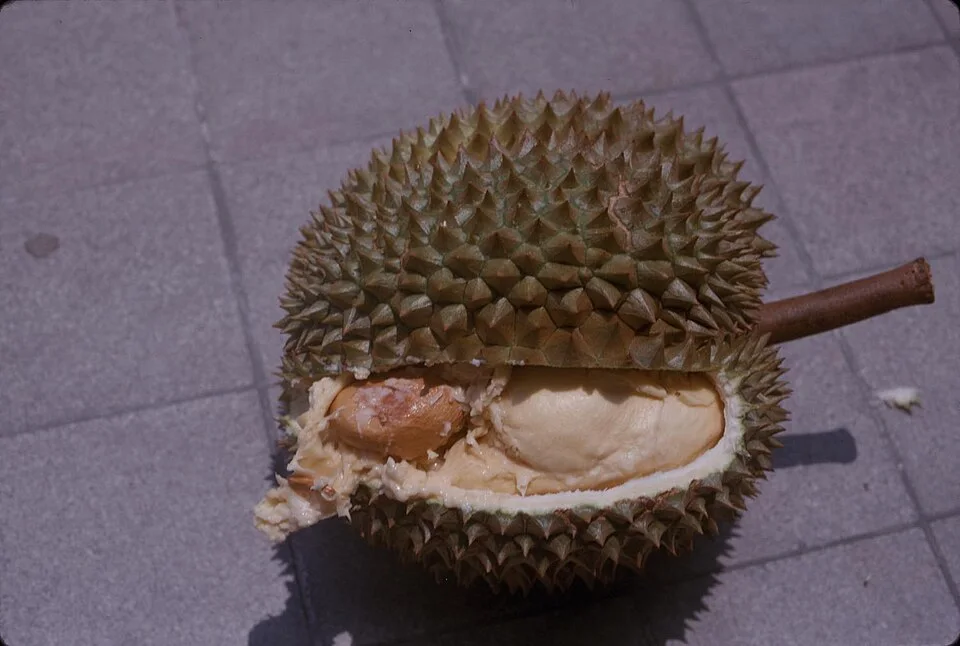
Durian produces flower clusters on older branches, followed by large spiny fruits. Night-opening flowers connect the tree with nectar-feeding bats and other visitors. That does not mean every bat species pollinates durian: insect-eating bats occupy a different feeding niche. The native range includes Borneo and Sumatra, while selected fruit varieties are now cultivated much more widely.
Sources & references · 1
National Parks Board Singapore · Durio zibethinus — Flora & Fauna WebEdible parts, flavour & texture
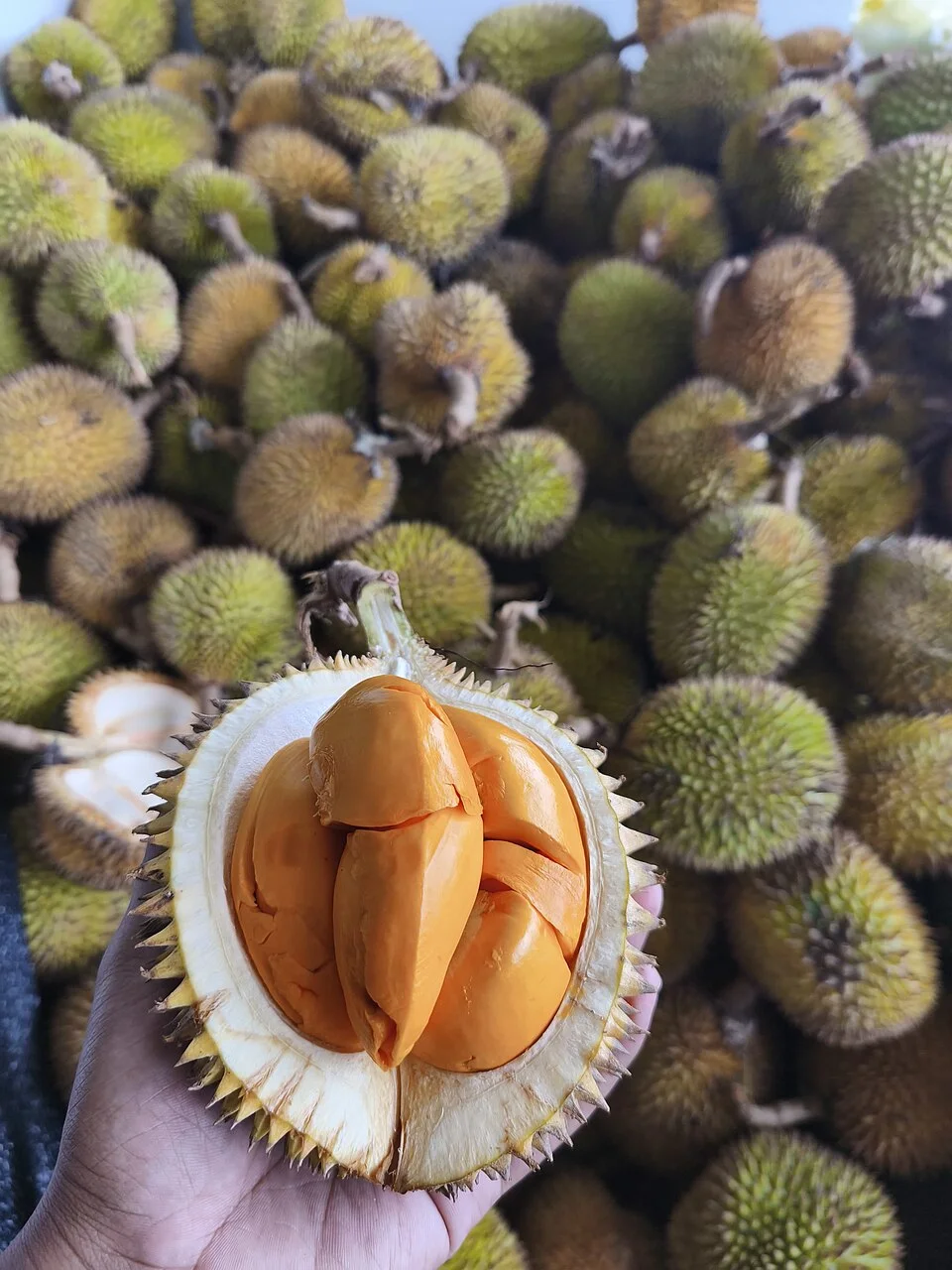
The creamy flesh around the seeds is the edible aril. Its strong smell, sweetness and texture vary between cultivars. The hard outer husk is not the food, and an orchard variety name is not a new botanical species. Lai and red-fleshed forest durian are useful comparisons precisely because they are different species, not just different grades of this one.
Sources & references · 1
National Parks Board Singapore · Durio zibethinus — Flora & Fauna WebEcological relationships
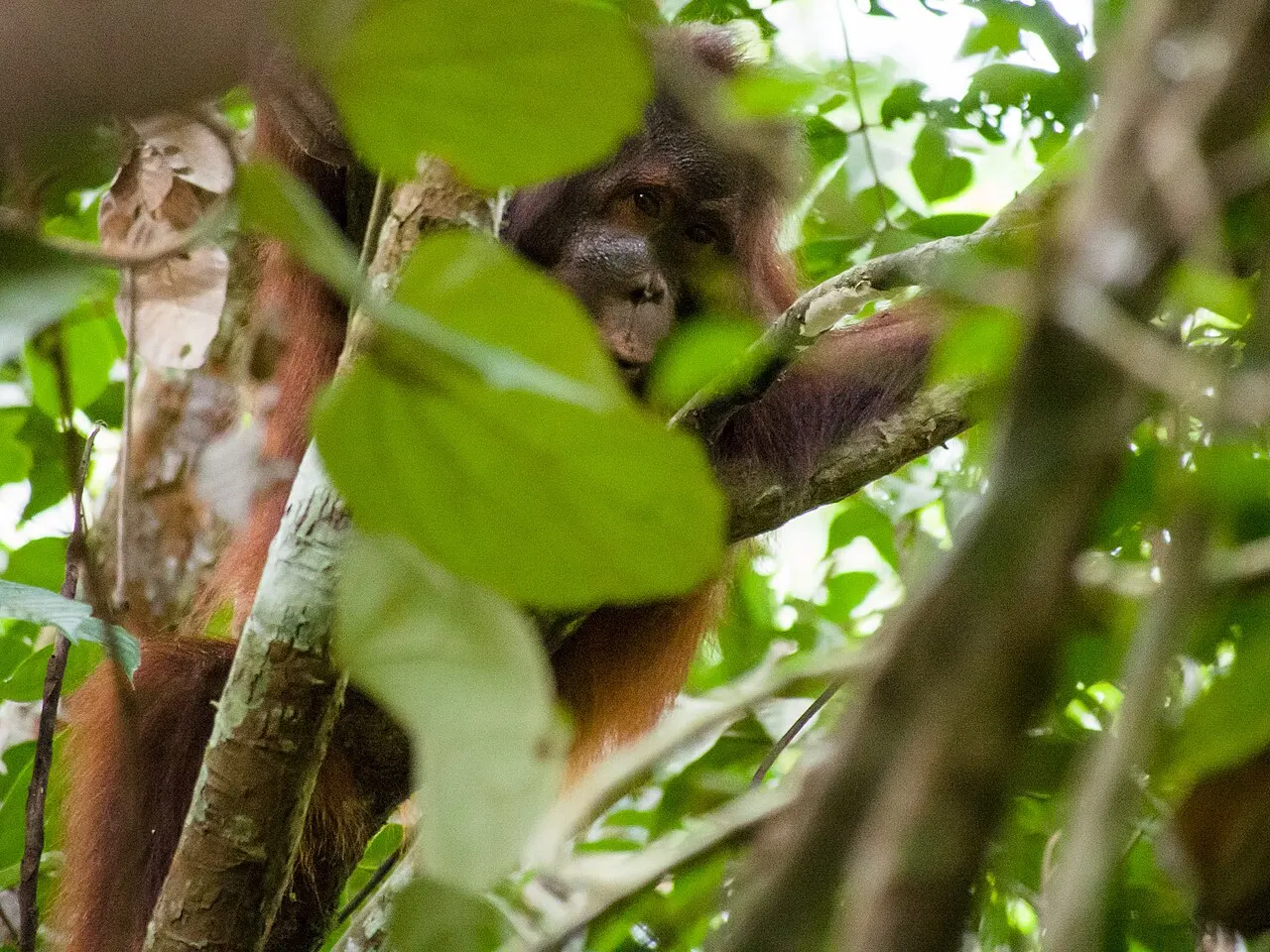
In Danum Valley, Bornean orangutans consumed both fruit and leaves of Durio zibethinus. The tree therefore offers more than the ripe fruit familiar from markets.
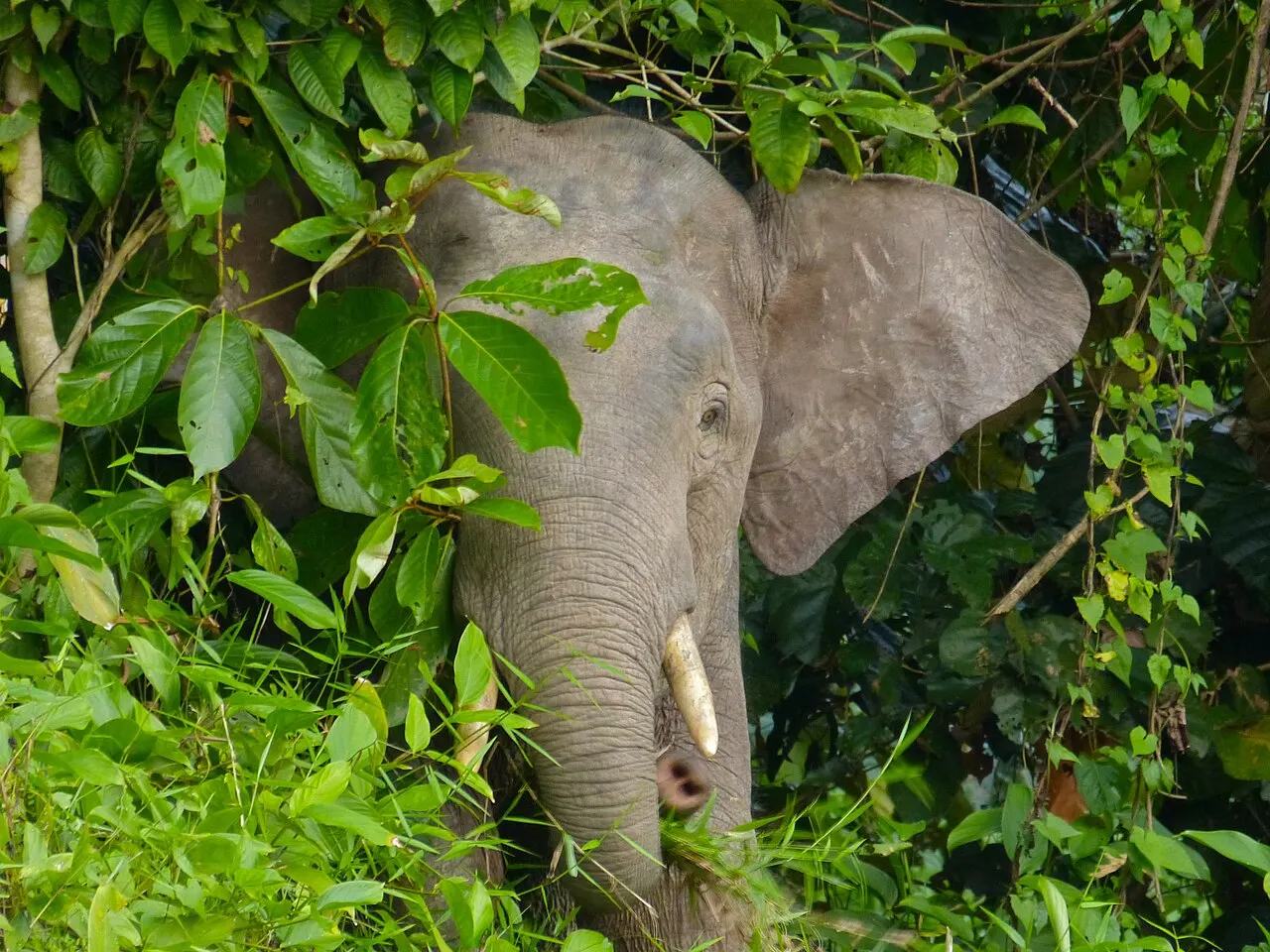
In Limbang, Sarawak, flower observations recorded nectar-feeding bats and bees from Apis and Tetrigona. The researchers proposed bats as major pollinators and insects as additional contributors. The bats were considered most likely Eonycteris spelaea, so that species identification remains qualified.