Appearance & recognition
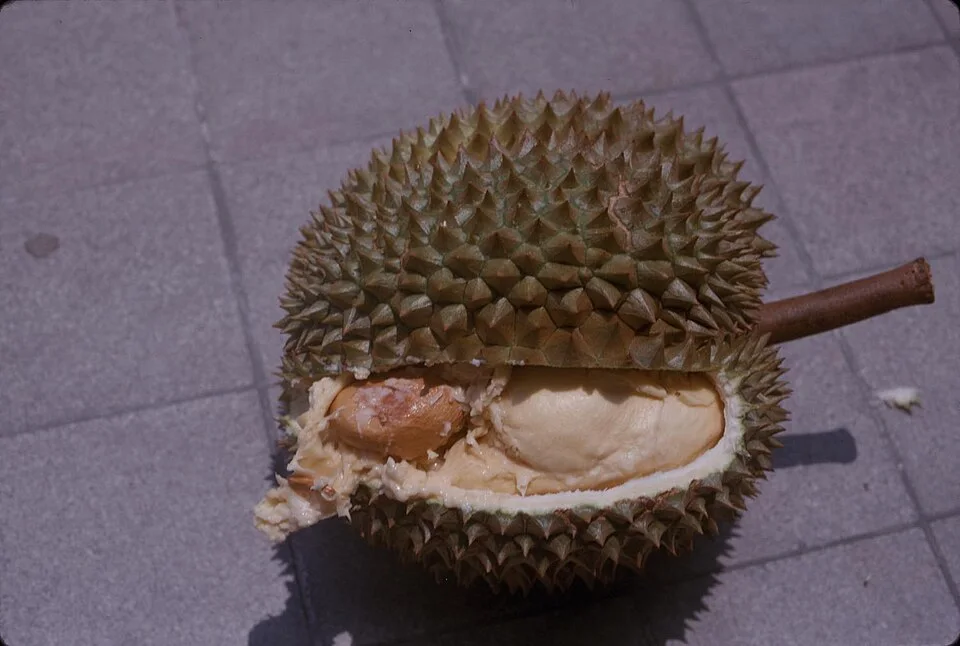
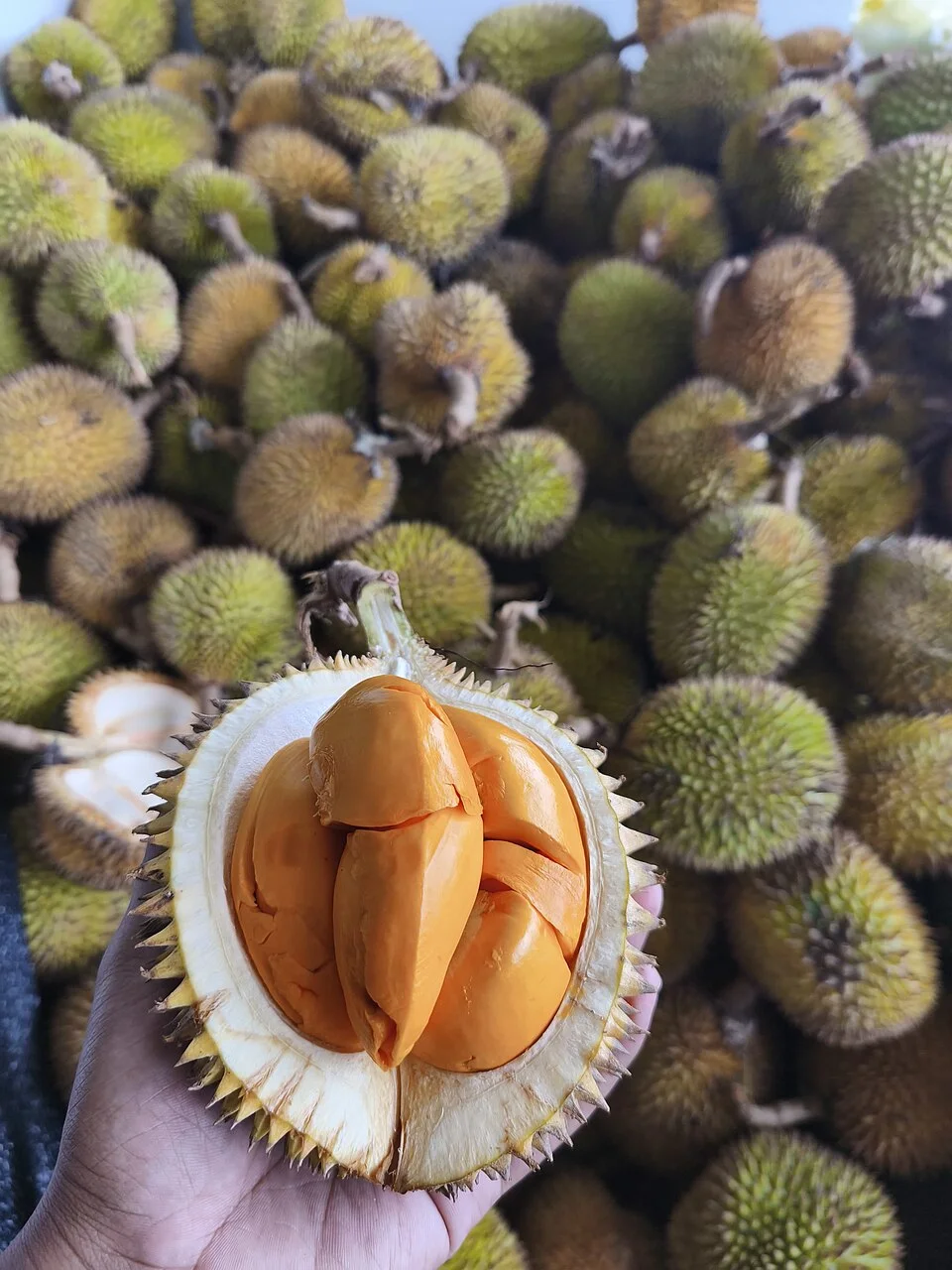
Durio graveolens is a forest durian distinct from the cultivated varieties of Durio zibethinus. Its edible aril can be red, orange or yellow; flesh colour alone is therefore not a species diagnosis. The fruit has a spiny exterior and separate seed-bearing compartments. Botanical descriptions distinguish this species from other Bornean durians using more than the market name “red durian”.
Sources & references · 1
Malvaceae taxonomic research portal · Durio graveolens: botanical descriptionEdible parts, flavour & texture
The fleshy covering around the seeds is the food, rather than the spiny shell. Aroma and texture vary between fruits and colour forms, making a single flavour description unreliable. In Borneo this species connects local fruit consumption with forest diversity. Keeping it separate from lai preserves both culinary differences and the identity of the trees producing them.
Sources & references · 1
Malvaceae taxonomic research portal · Durio graveolens: botanical descriptionRange & habitat
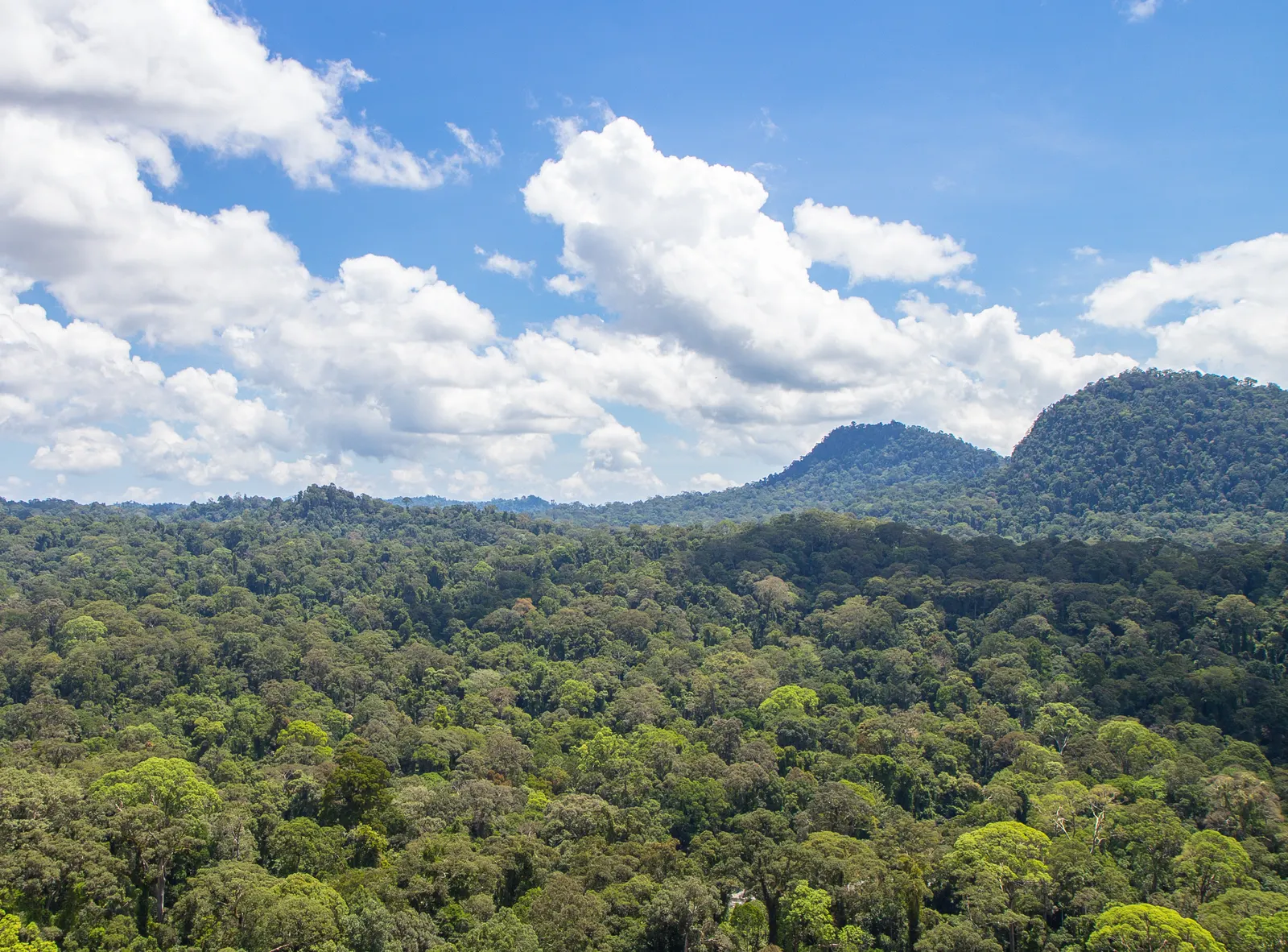
ACIAR’s forestry and crop literature describes Durio graveolens in damp coastal alluvial ground and peat-swamp settings. This differs from lai, whose tolerance of waterlogged soil is lower in the cited cultivation account. The distinction is useful when moving from a fruit market back to the forest: durian species do not all occupy identical soils, even when their fruits share a familiar spiny shell.
Sources & references · 1
Australian Centre for International Agricultural Research · Diversity and management of Phytophthora in Southeast Asia: Durio ecologyEcological relationships
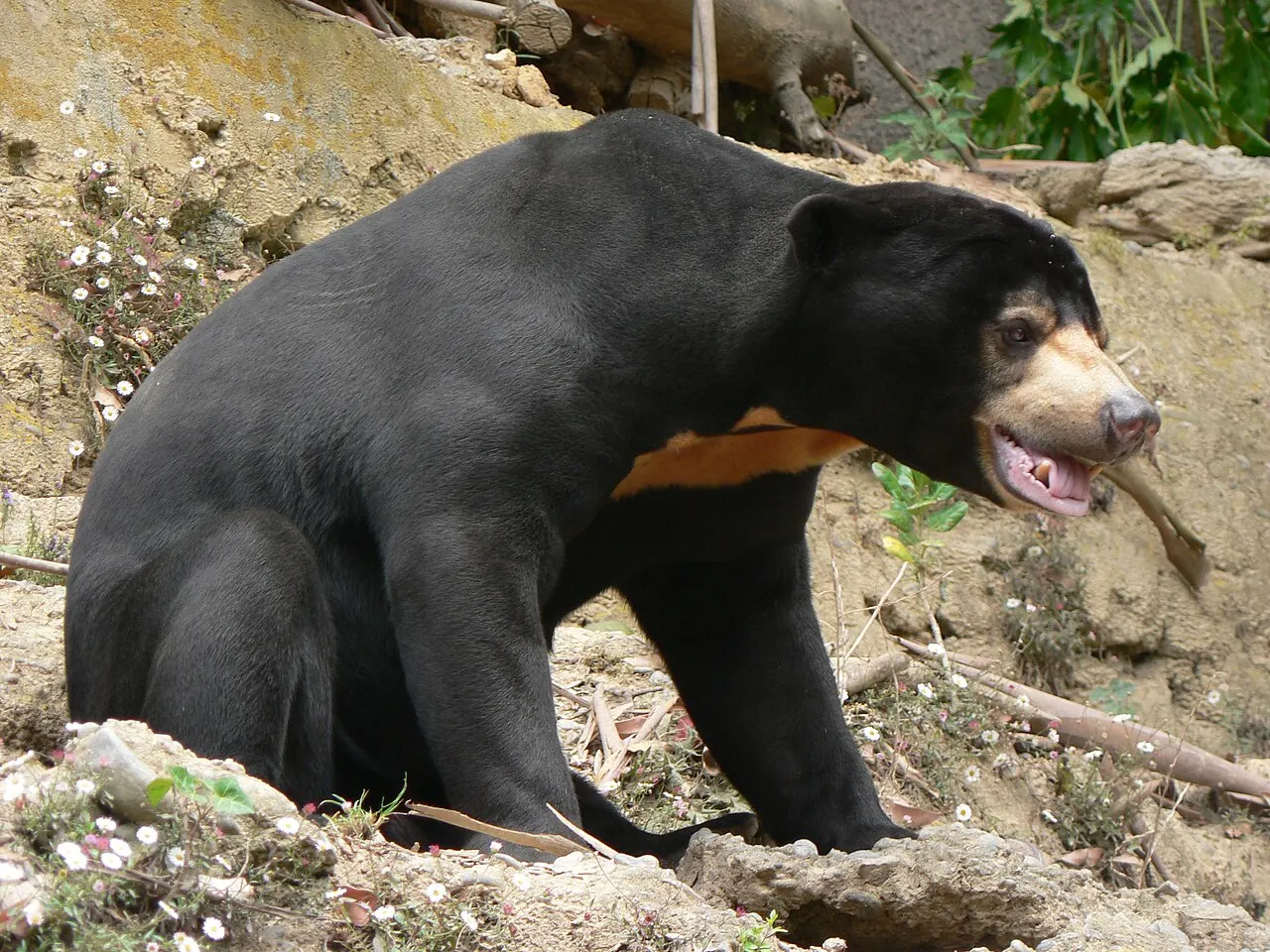
Fruit remains in sun bear scats from Sungai Wain identify this wild durian as food. This record is based on scat analysis, rather than a direct feeding sighting.
In Limbang, Sarawak, flower observations recorded nectar-feeding bats and bees from Apis and Tetrigona. The researchers proposed bats as major pollinators and insects as additional contributors. The bats were considered most likely Eonycteris spelaea, so that species identification remains qualified.