Identification
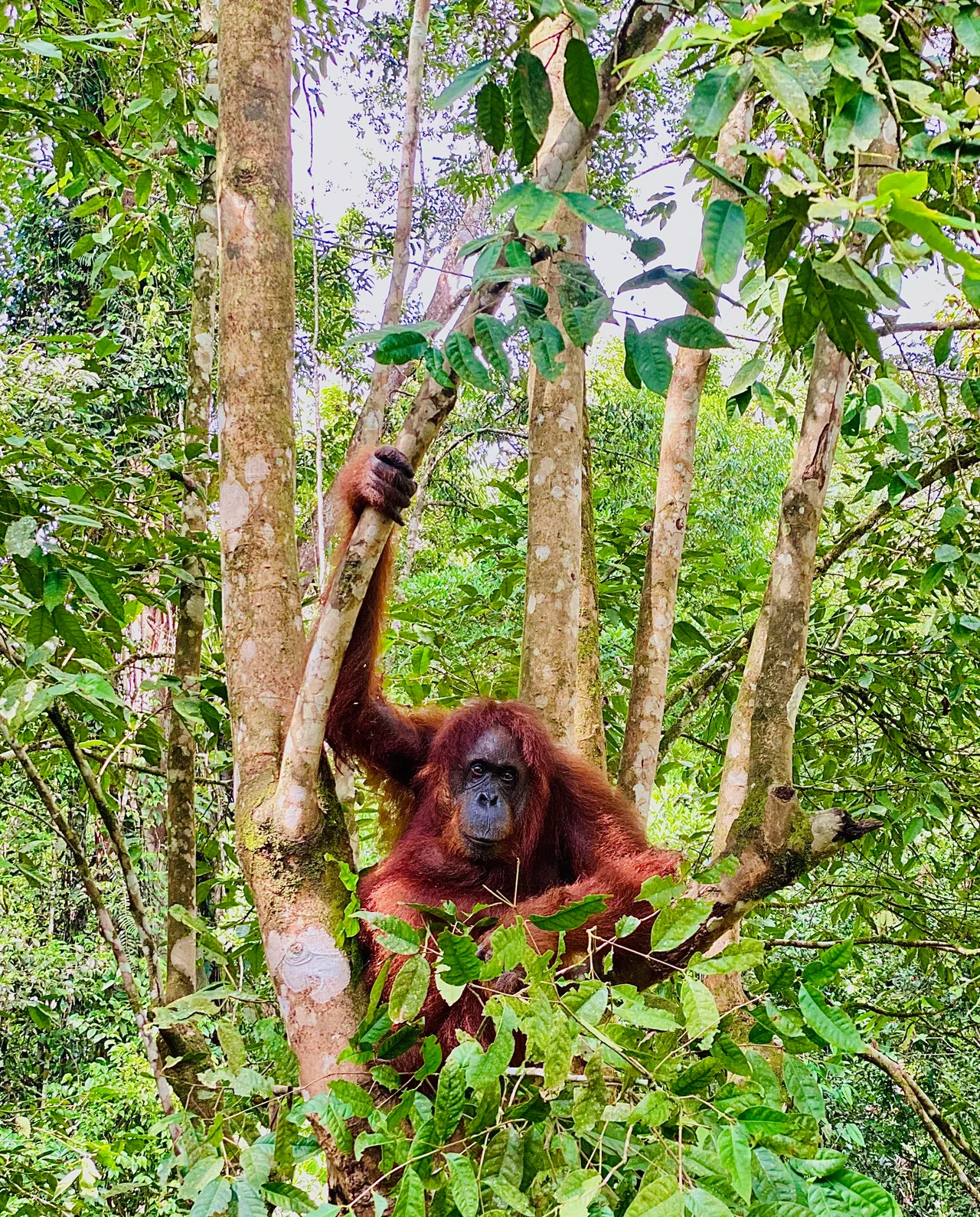
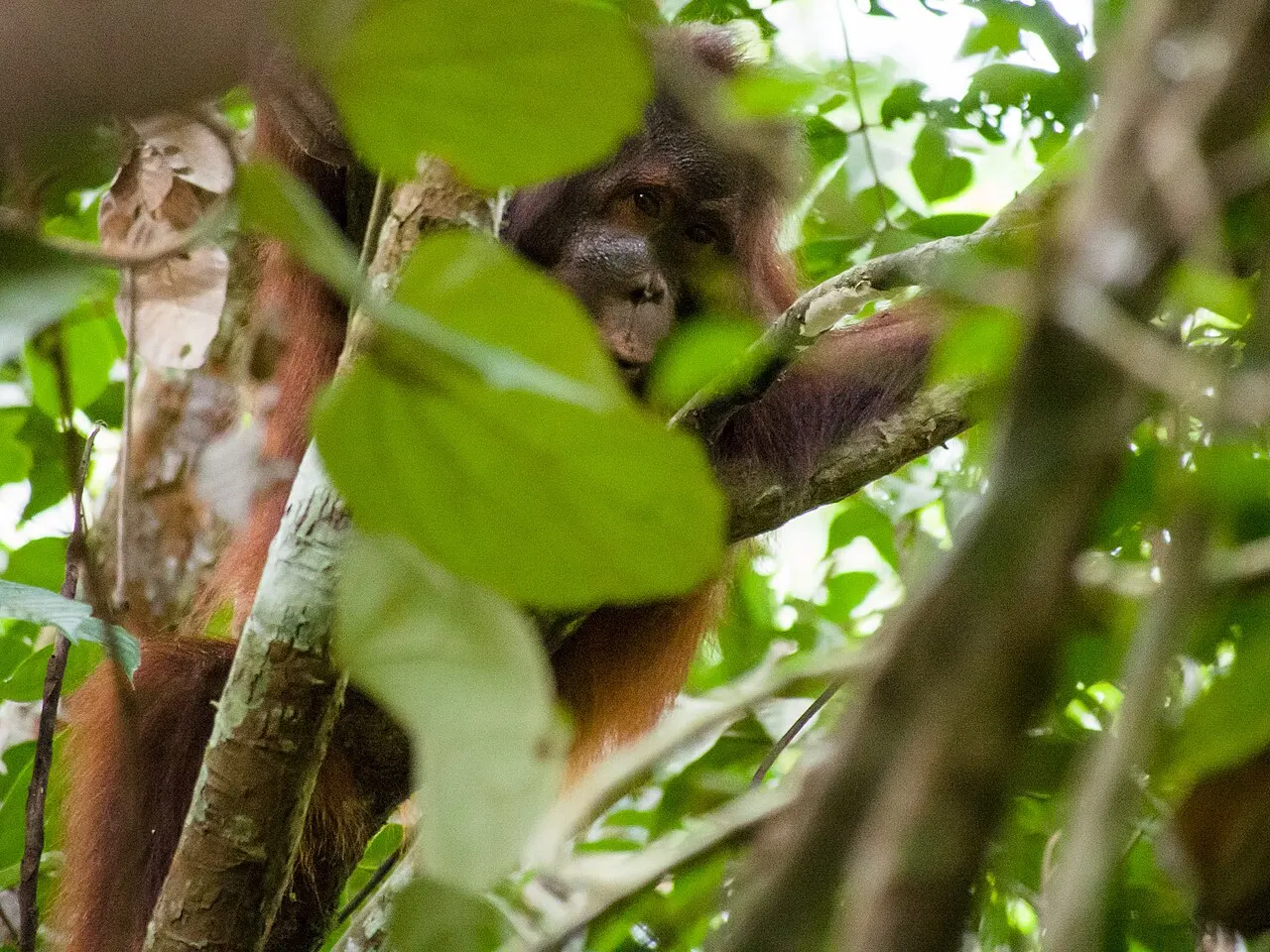
Reddish hair, long arms and grasping hands and feet suit this ape to moving through trees. Adult males can have broad cheek pads, called flanges; some sexually mature males remain unflanged. Females are smaller. The size and weight figures below are published reference averages, not measurements of a particular park population.
Sources & references · 1
University of Michigan, Animal Diversity Web · Bornean orangutan: natural historyDaily life
Orangutans have a largely solitary social system, with the mother and her dependent young forming the most enduring association. They build resting nests from branches and foliage. Flanged males give long calls that carry through the forest. Solitary does not mean without social contact: associations vary with age, sex and circumstances.
Sources & references · 1
Orangutan Foundation International Australia · Orangutan behaviourRange on Borneo
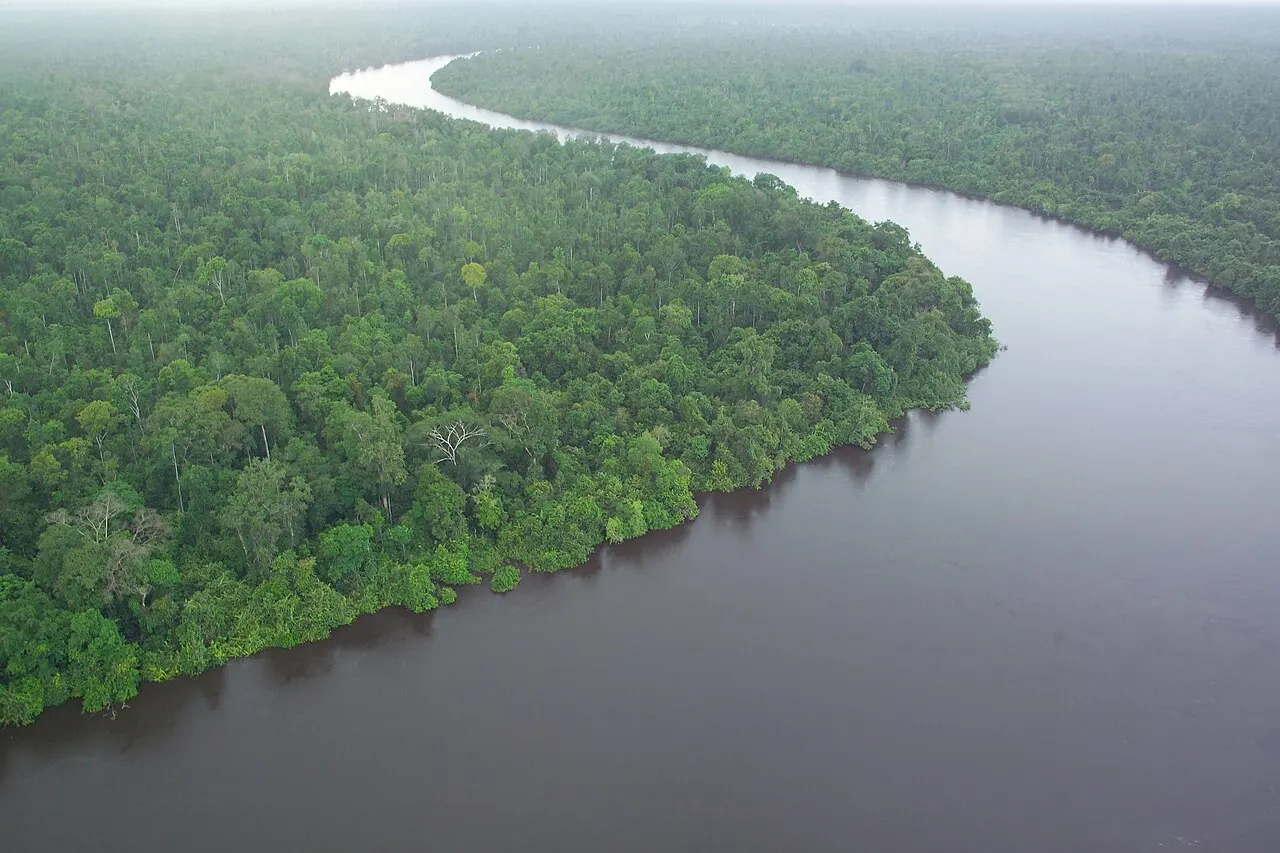
The Bornean orangutan is native to Borneo. Central Kalimantan supports populations of the subspecies Pongo pygmaeus wurmbii, including animals studied in the Sebangau peat-swamp landscape. Orangutans also live in Tanjung Puting, where forest and wetland habitats form a large protected landscape.
Sources & references · 4
University of Michigan, Animal Diversity Web · Bornean orangutan: natural historyMires and Peat · Husson et al. (2018), Biodiversity of the Sebangau tropical peat swamp forest, Indonesian BorneoDirectorate General KSDAE, Ministry of Forestry · Profil TN SebangauUNESCO Man and the Biosphere Programme · Tanjung Puting Biosphere ReserveForest and habitat
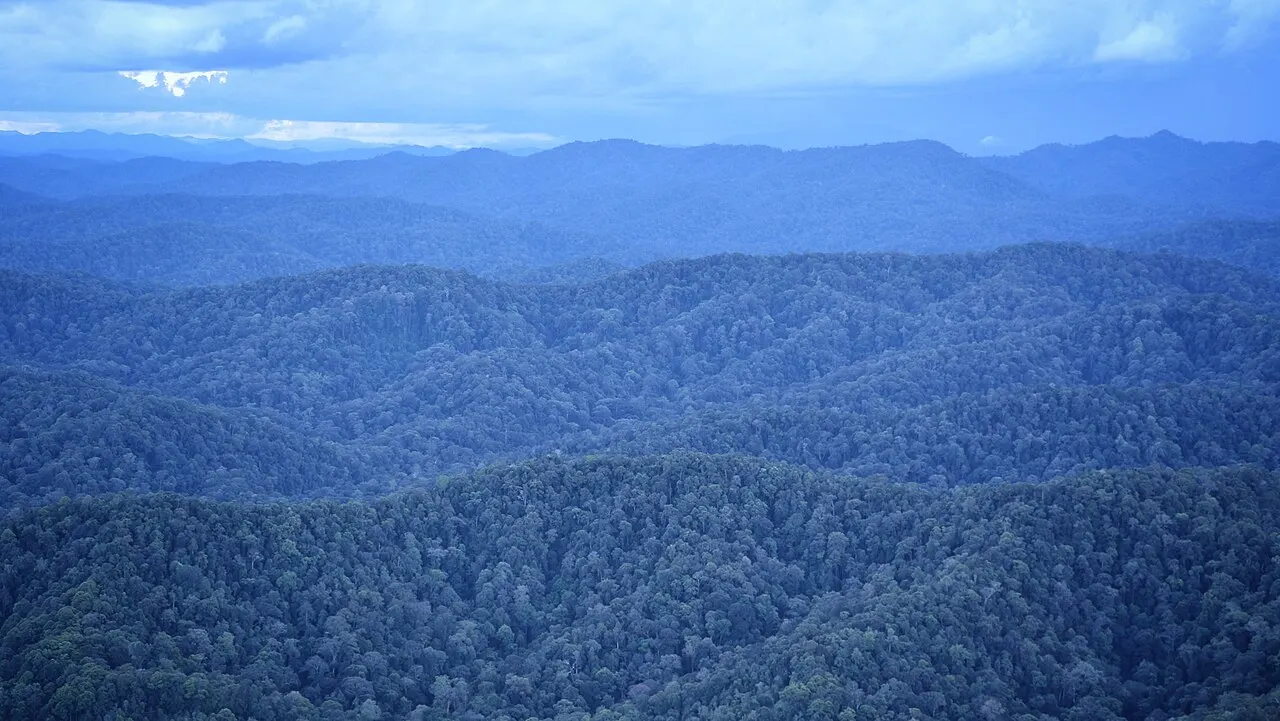
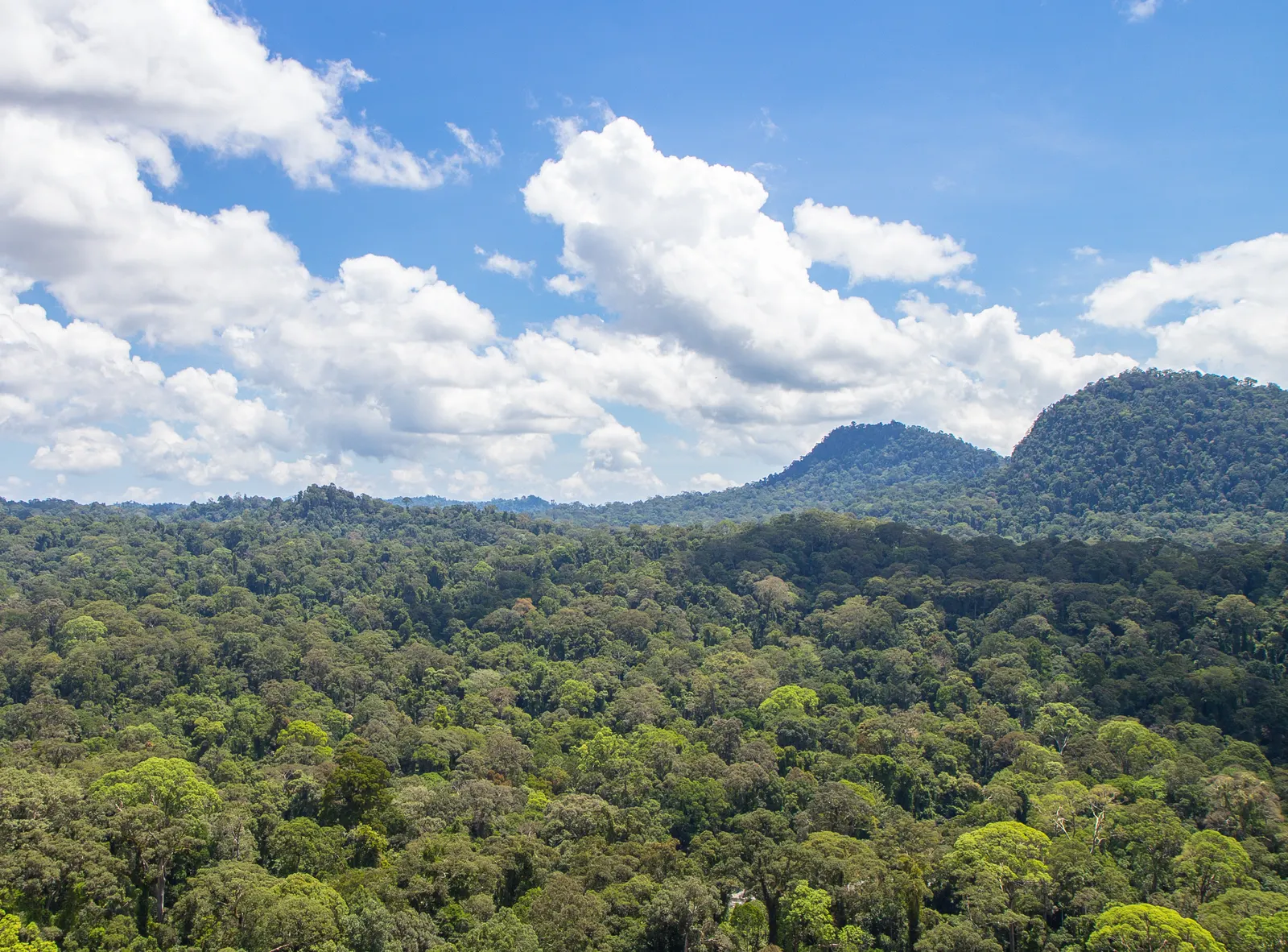
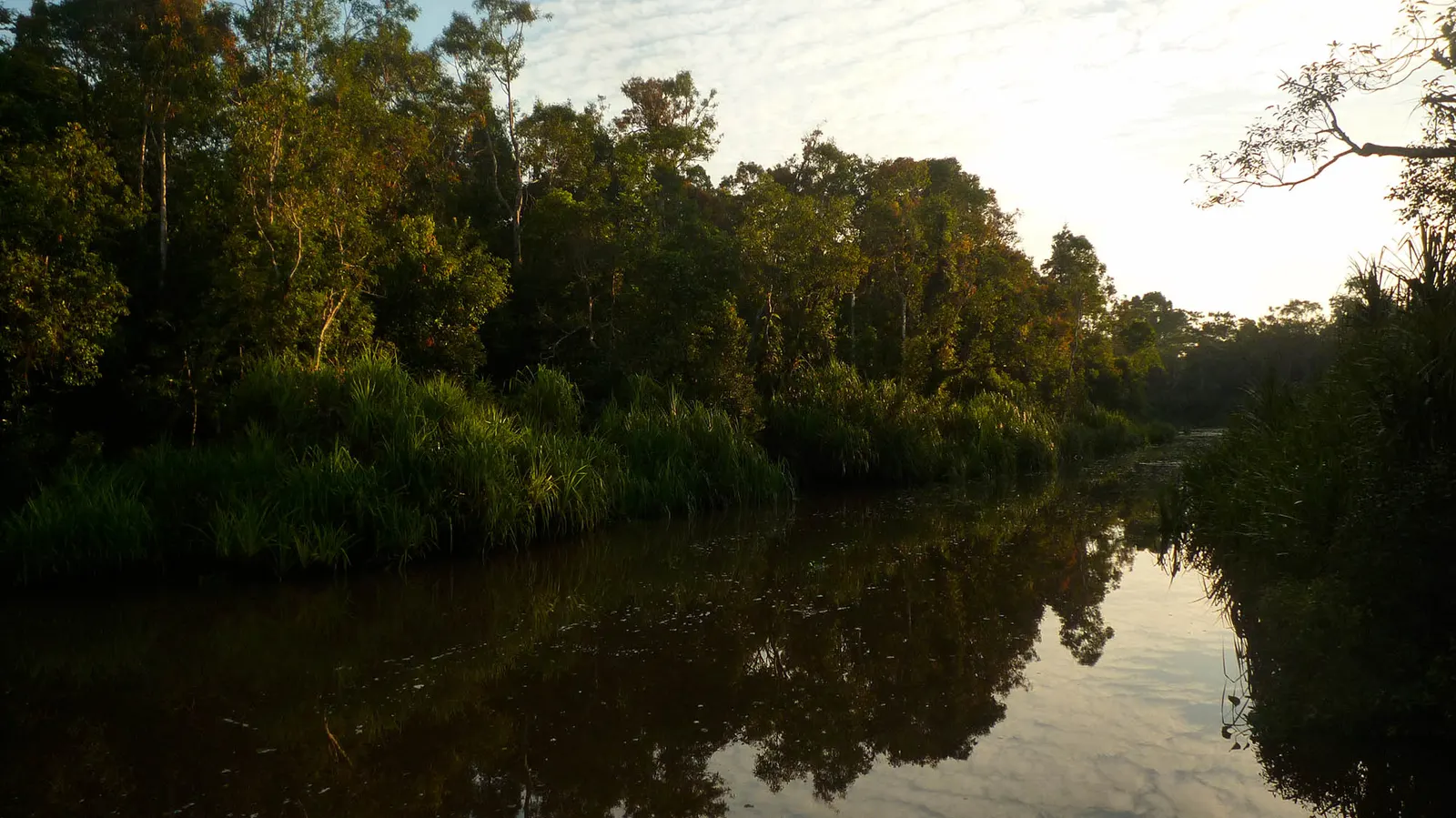
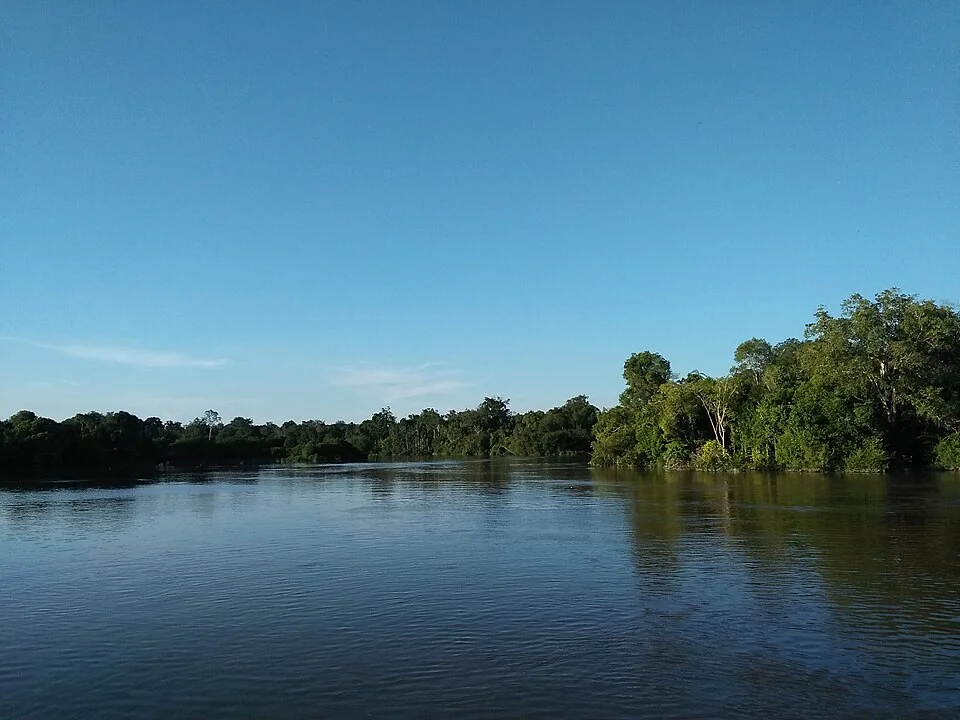
Lowland rainforest and swamp forest provide feeding trees, climbing routes and places to build nests. Peat-swamp forest is especially important in Sebangau. Orangutans move through the canopy to find food, so conserving connected forest helps protect both their movement routes and the changing resources they depend on.
Sources & references · 3
University of Michigan, Animal Diversity Web · Bornean orangutan: natural historyMires and Peat · Husson et al. (2018), Biodiversity of the Sebangau tropical peat swamp forest, Indonesian BorneoUNESCO Man and the Biosphere Programme · Tanjung Puting Biosphere ReserveConservation
The Bornean orangutan is globally Critically Endangered. Habitat protection and preventing killing and capture are central to its survival. Its presence in a protected area does not by itself demonstrate recovery: populations need forest that provides food and safe routes between feeding areas.
Sources & references · 2
American Society of Mammalogists, Mammal Diversity Database · Pongo pygmaeus: taxonomyWWF · Bornean orangutan: conservation and threatsObservation
Tanjung Puting and the Sebangau landscape are documented orangutan areas in Central Kalimantan. Use authorized visitor routes and local guides, keep your distance and avoid disturbing feeding or resting animals. Encounters depend on where animals are moving and feeding; a visit never guarantees a sighting.
Sources & references · 2
Mires and Peat · Husson et al. (2018), Biodiversity of the Sebangau tropical peat swamp forest, Indonesian BorneoUNESCO Man and the Biosphere Programme · Tanjung Puting Biosphere ReserveMothers and young
Females generally have a single infant, with intervals of roughly six to eight years between births. Young remain dependent on their mother for an extended period. This slow reproductive cycle limits how quickly depleted populations can recover.
Sources & references · 1
University of Michigan, Animal Diversity Web · Bornean orangutan: natural historyFeeding
Fruit is a major food, supplemented by leaves, bark and other items as availability changes. Swallowed seeds can be carried away from the feeding tree and dispersed in the forest. Food availability helps explain movements and habitat use; a forest that retains trees but loses important food resources is not necessarily equivalent habitat.
Sources & references · 2
University of Michigan, Animal Diversity Web · Bornean orangutan: natural historyWWF · Bornean orangutan: conservation and threatsThreats
Forest conversion, damaging logging, fire, hunting and illegal capture threaten orangutans. Fragmented habitat can bring them into contact with farms, where conflict adds a further risk. Their slow reproduction makes losses difficult to replace. An orangutan’s presence in disturbed forest should therefore not be read as evidence that the disturbance is harmless.
Sources & references · 1
WWF · Bornean orangutan: conservation and threatsFeeding and forest ecology
In Danum Valley, researchers followed orangutans through two mast-fruiting events, when many forest trees produced fruit together. Feeding changed with the forest's supply: abundant fruit brought an almost wholly fruit-based diet, while leaner periods required leaves and bark as well. The orangutan's ability to use these alternatives helps it survive an uneven food calendar. At Tuanan in Central Kalimantan, a separate seven-year study also linked food availability with feeding time, travel and nutrient intake. Borneo's forests therefore offer different food landscapes, rather than one fixed orangutan menu.
Sources & references · 2
American Journal of Primatology, Kanamori et al. · Feeding ecology of Bornean orangutans in Danum Valley: a 3-year record including two mast fruitingsAmerican Journal of Primatology · Nutritional ecology of wild Bornean orangutans in a peat swamp habitat: Effects of age, sex, and seasonRelationships with plants
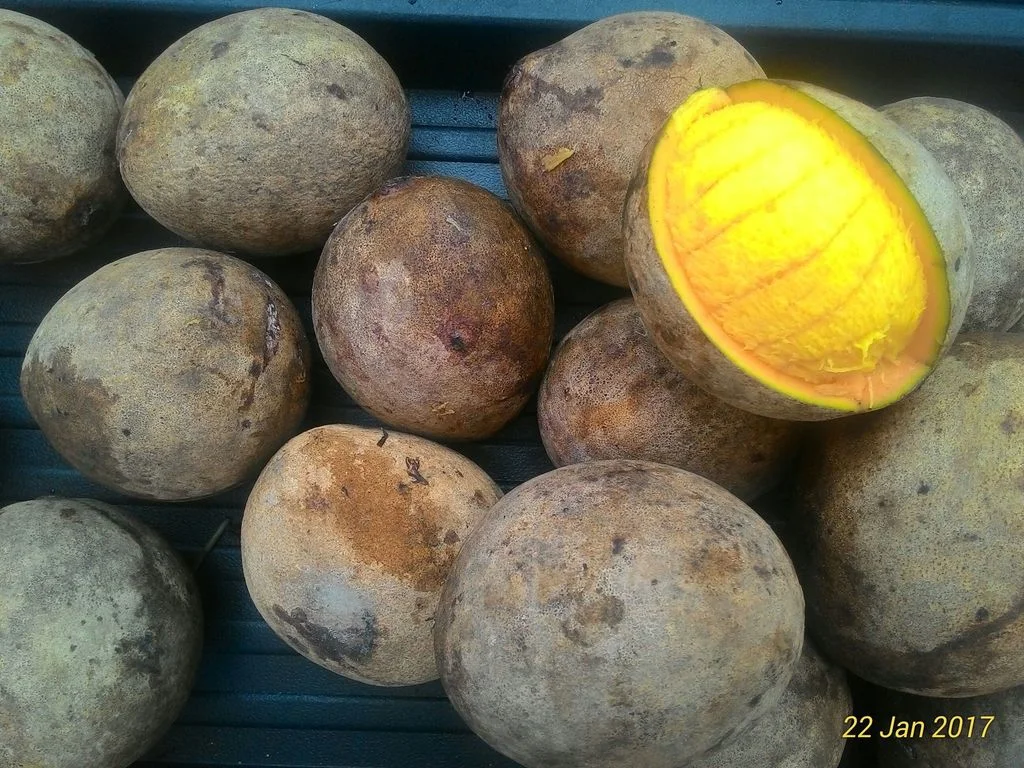
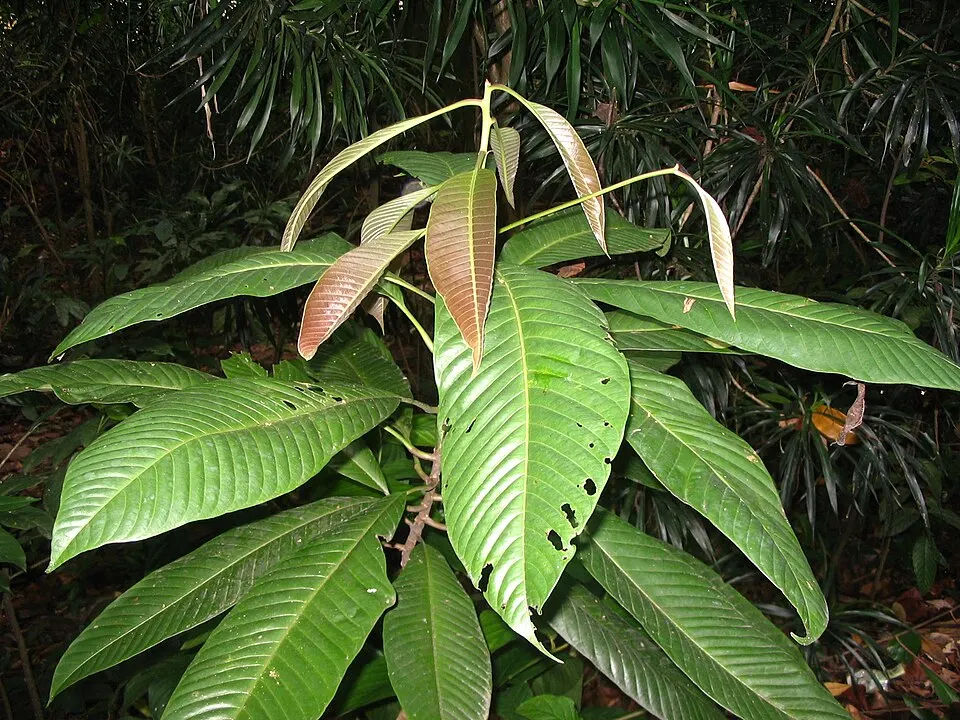
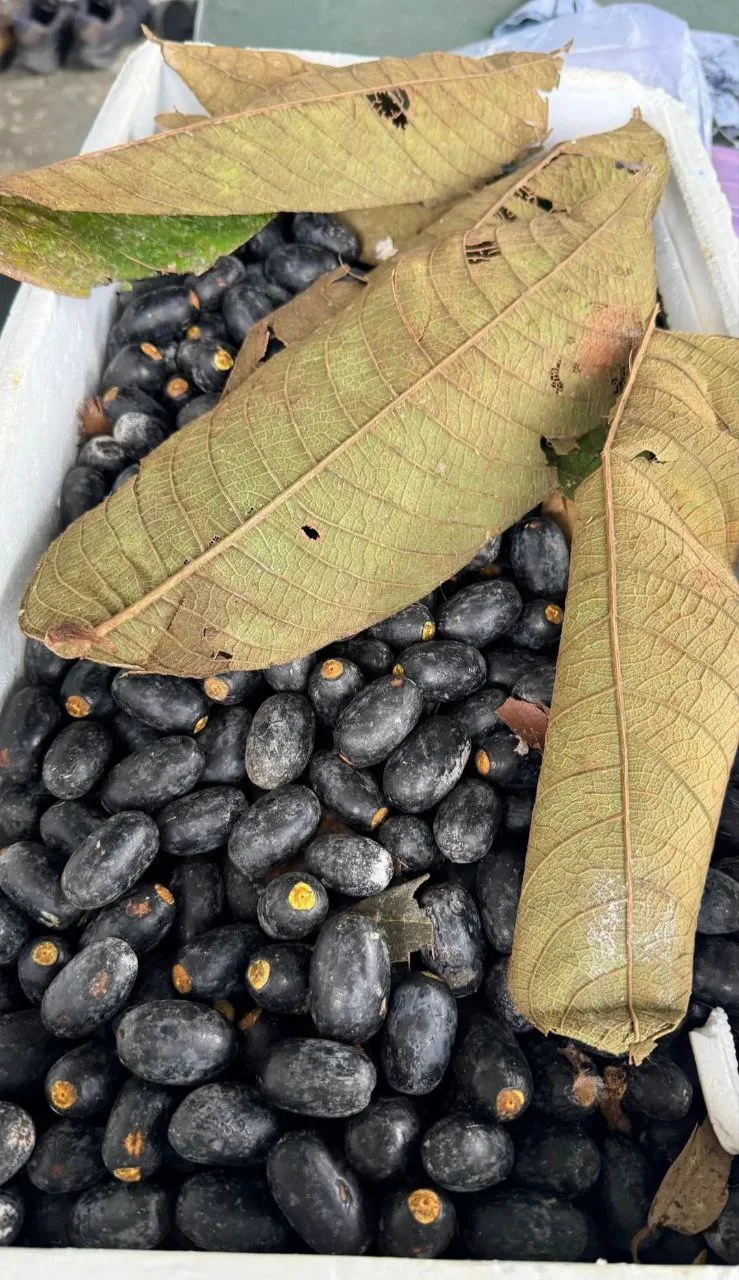
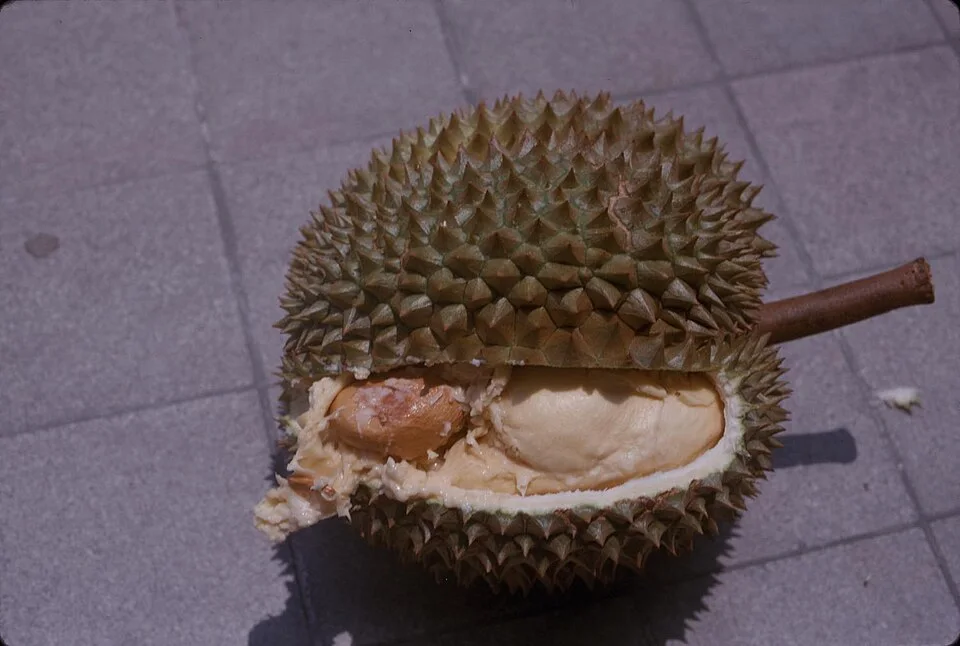
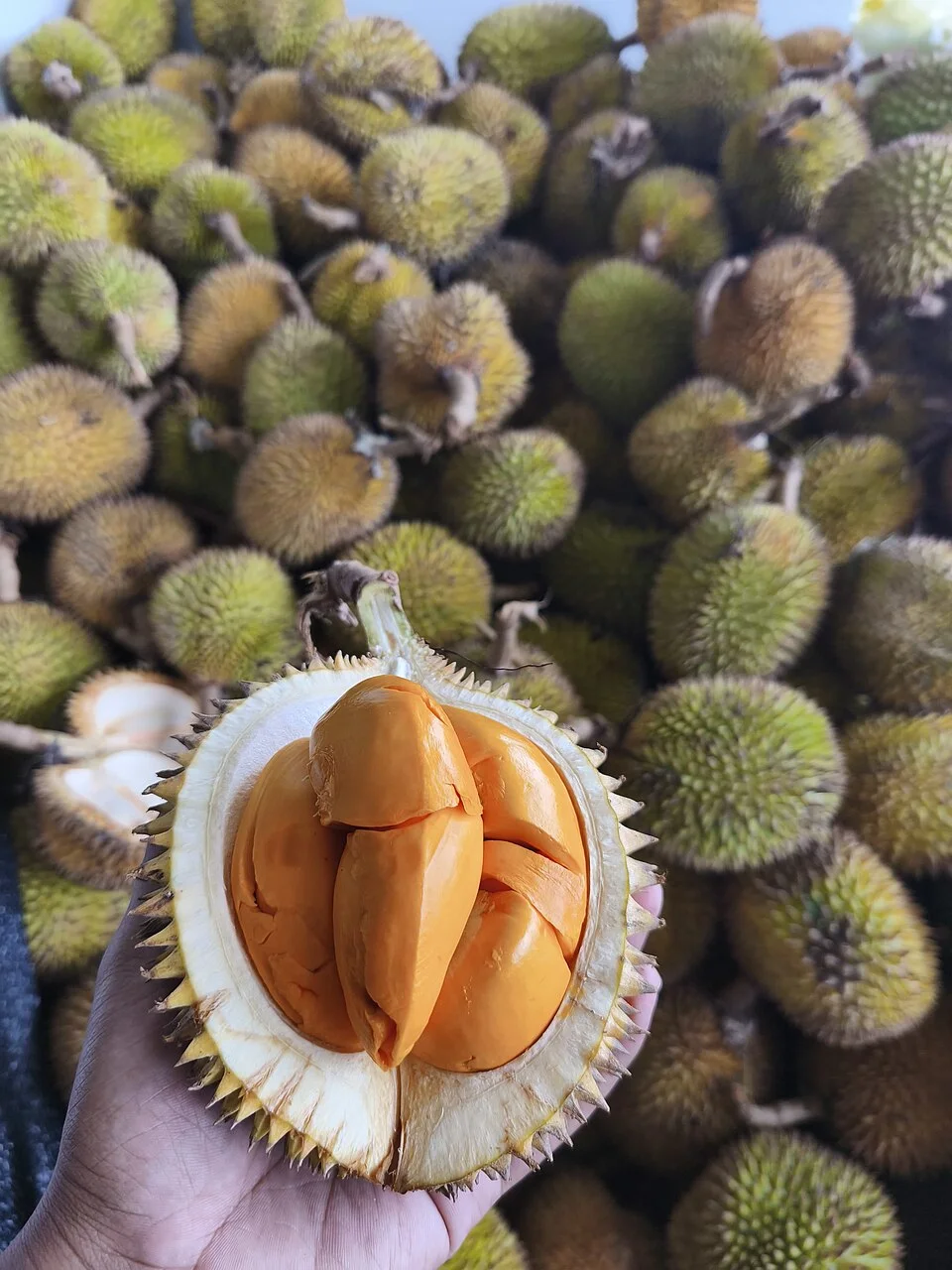
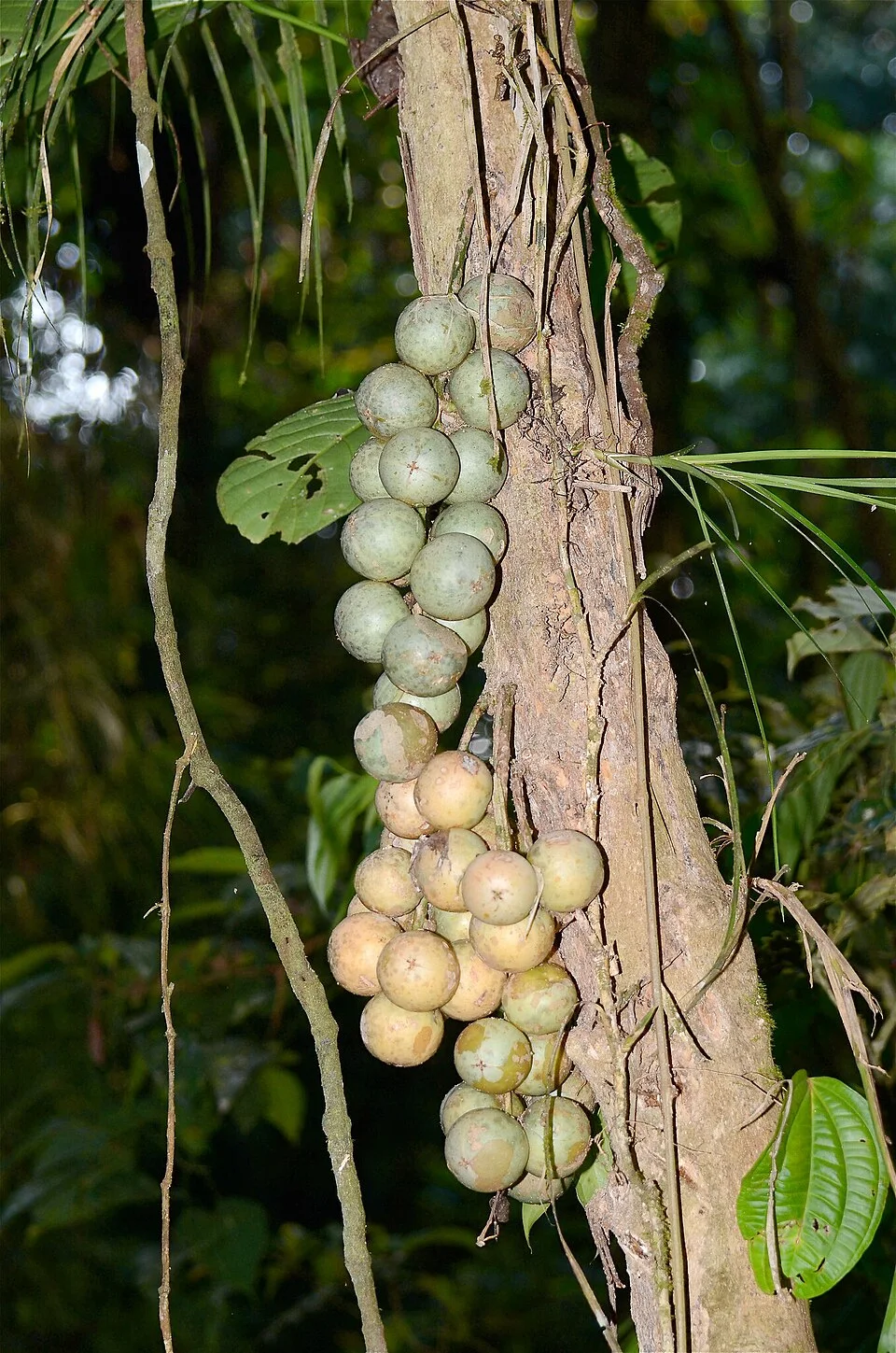
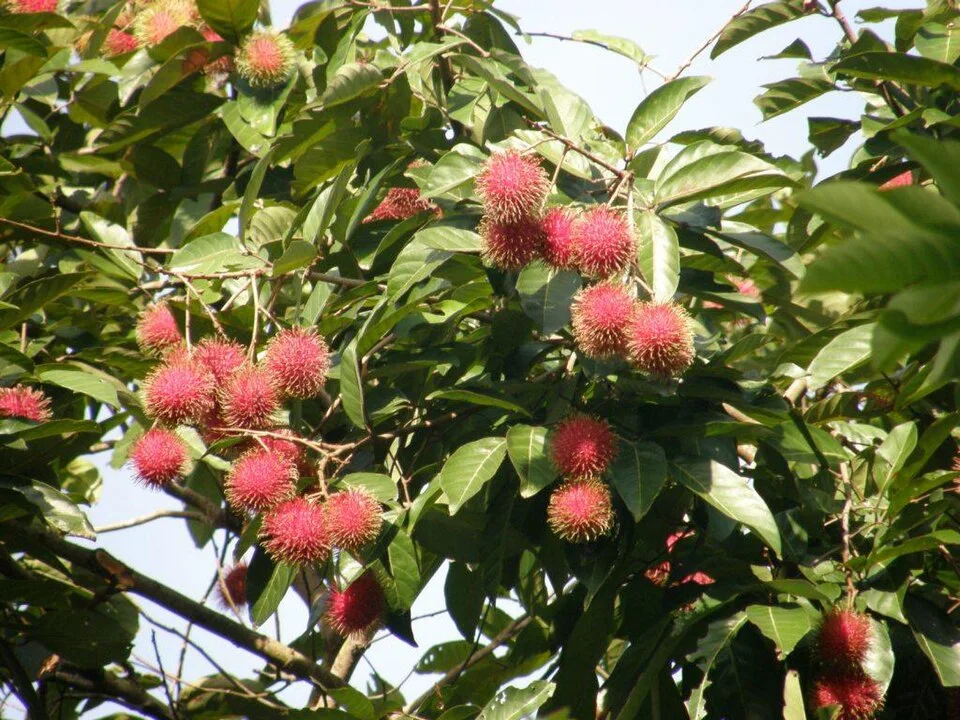
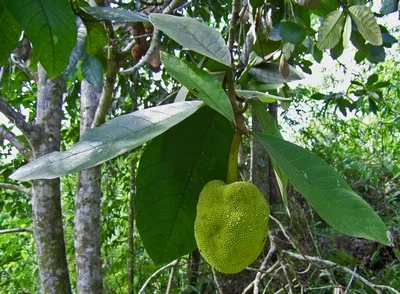
The Danum Valley food inventory reveals why naming the plant part matters. Bambangan, Mangifera pajang, supplied fruit, and Durio zibethinus supplied both fruit and leaves. For dabai, Canarium odontophyllum, the study records leaves and bark; for liposu, Baccaurea lanceolata, it records leaves. A human food crop's edible fruit is therefore not necessarily the part used by orangutans. Feeding also does not prove that every seed survives or that every food tree is successfully dispersed.