Appearance & recognition
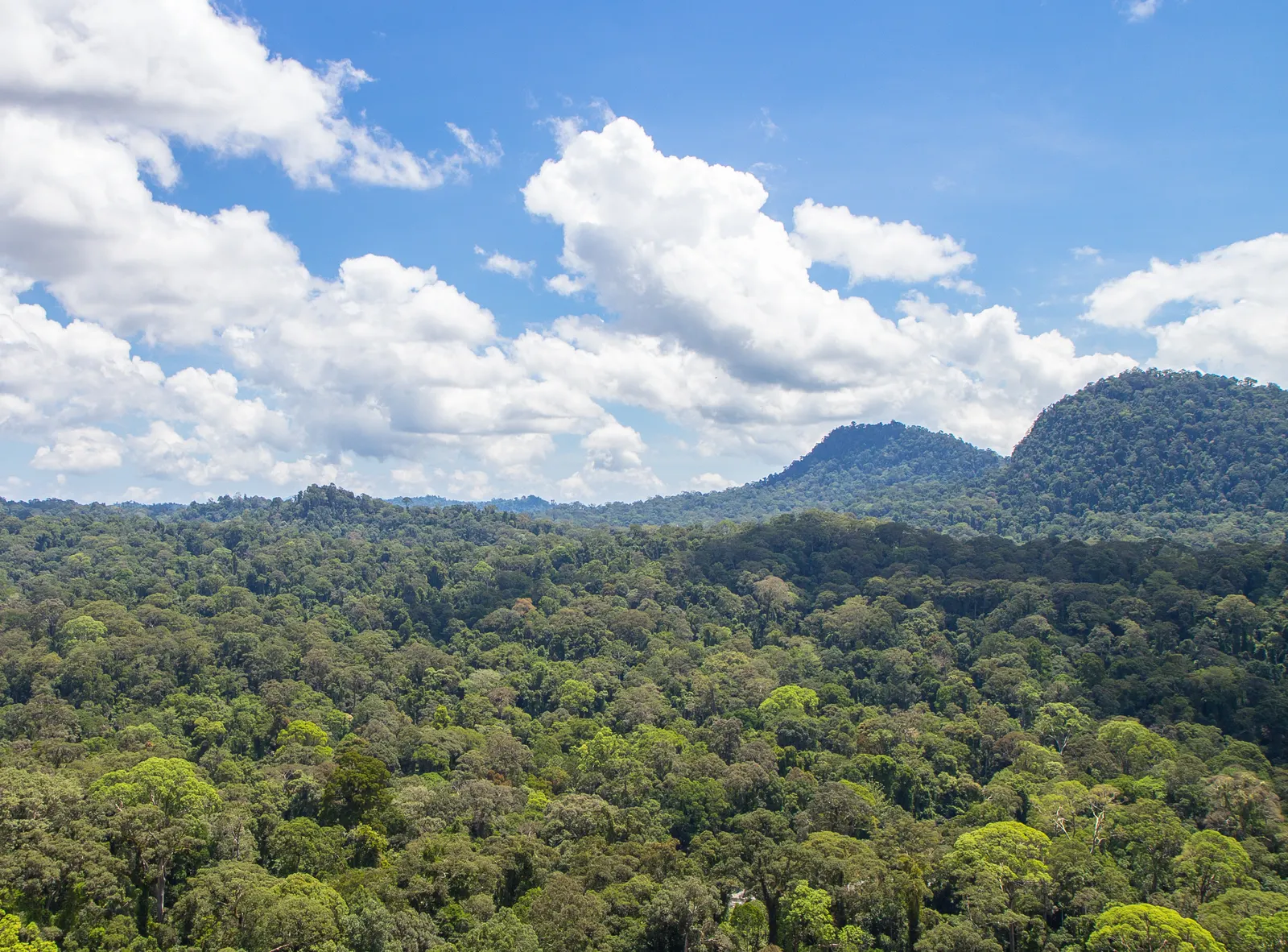
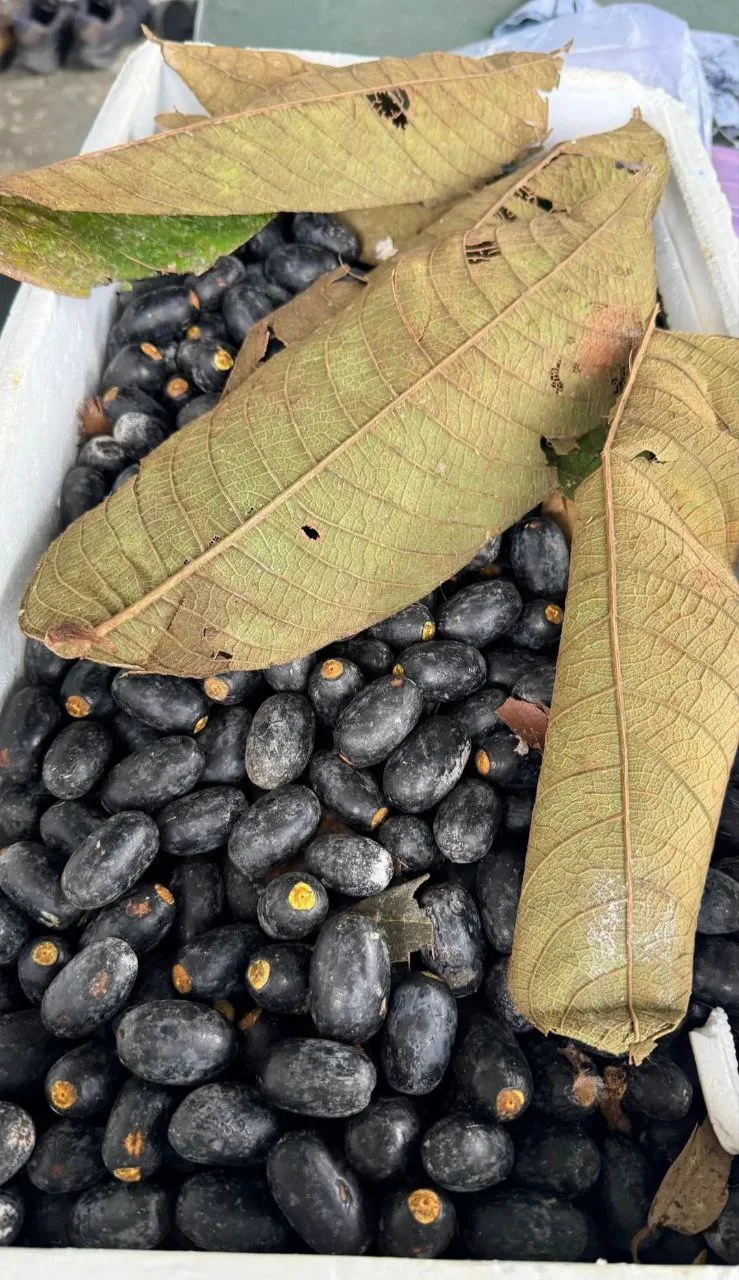
Dabai is a Burseraceae tree with buttresses and toothed leaflets. Its oblong fruits ripen purple-black around yellow flesh and a single stone. Despite occasional comparisons with olives, it is not an olive-tree species. It grows in lowland forest landscapes, including riverbanks; botanical descriptions record trees reaching about 36 metres.
Sources & references · 1
National Parks Board Singapore · Canarium odontophyllum — Flora & Fauna WebEdible parts, flavour & texture
Warm water softens the fruit flesh, bringing out its creamy texture. The flesh and seed kernel are separate food parts and should not be treated as interchangeable. Dabai adds a different sensory experience to Borneo’s fruit diversity: richness and softness rather than the juicy translucence of rambai. Preparation belongs to the fruit’s identity as much as its dark skin.
Sources & references · 1
National Parks Board Singapore · Canarium odontophyllum — Flora & Fauna WebEcological relationships
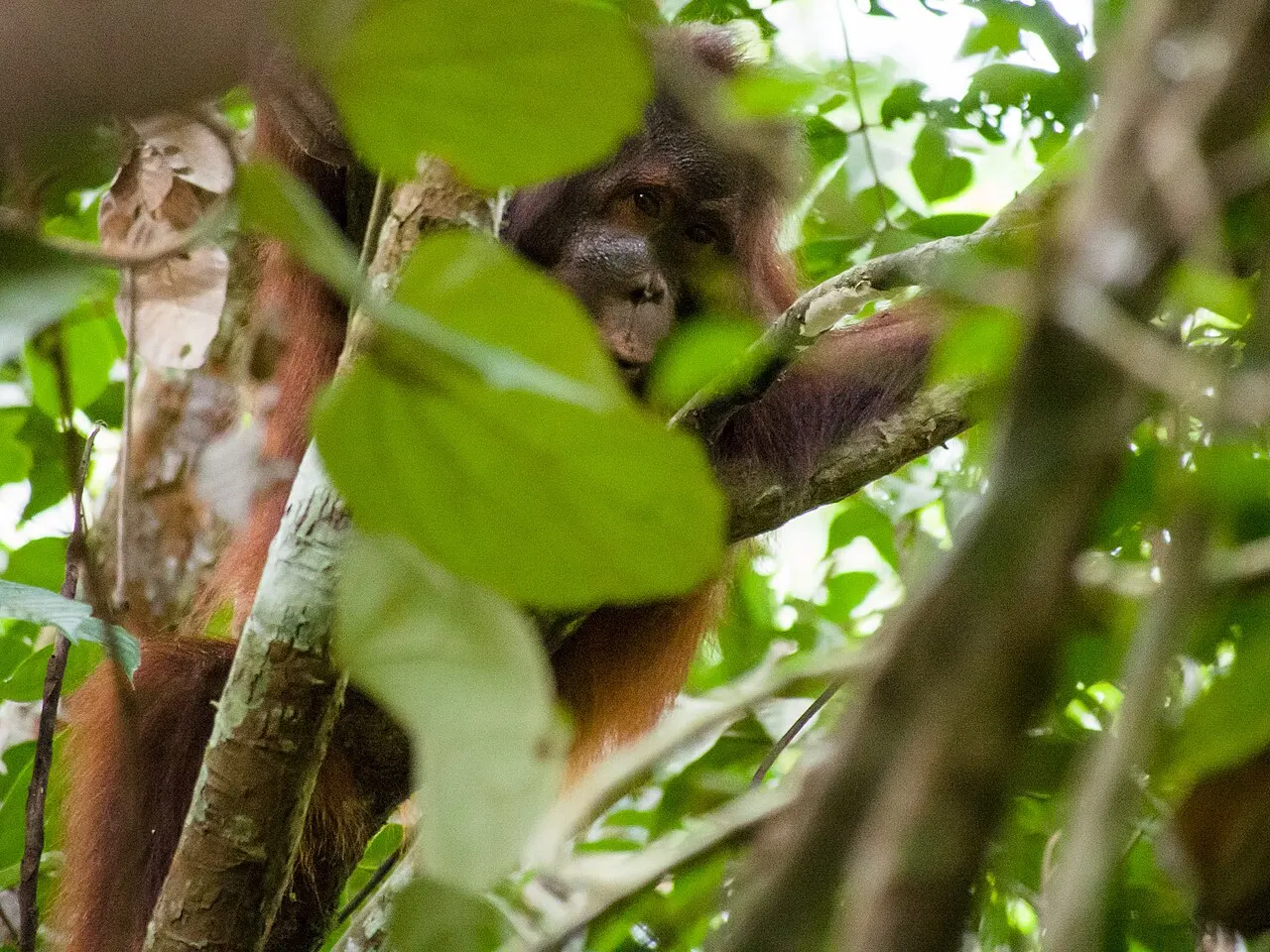
Dabai’s role in wildlife diets is not limited to its familiar edible fruit. The Danum Valley food inventory records Bornean orangutans eating Canarium odontophyllum leaves and bark; it does not record fruit feeding for this species in that study.