Recognition
Adult Paedocypris carbunculus are miniature fishes: the original specimens reached roughly eleven millimetres in standard length, excluding the tail fin. Much of the body is translucent. Mature males show a striking red underside and reddish head markings, reflected in the name carbunculus, meaning a ruby. The pattern of pigment rows and patches distinguishes the species from its close relatives; these are microscopic characters rather than an easy field colour test. A tiny transparent fish should not be identified from size alone.
Sources & references · 1
Raffles Bulletin of Zoology / NUS · Britz & Kottelat (2008): Paedocypris carbunculus, a miniature fish from BorneoHabitat and Borneo range
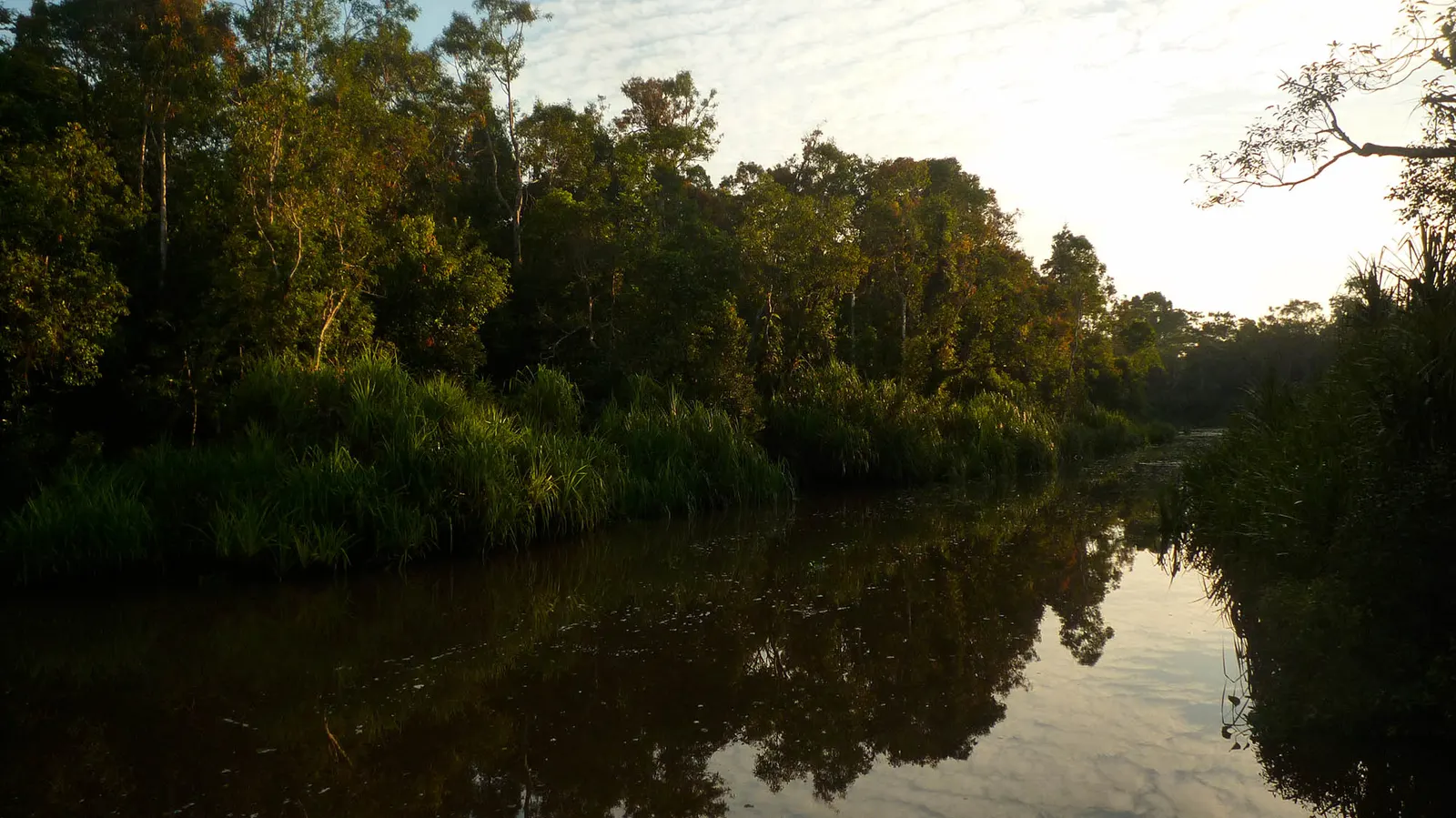
The type material came from the Sungei Pasir Panjang on the outskirts of Pangkalan Bun, along the road toward Kumai. This is the Kotawaringin basin of Central Kalimantan. The stream carried flowing blackwater over a mixture of sand, detritus and peat. Fish gathered close to the surface in slow-current areas, often below overhanging branches or submerged leaves. Dense riparian vegetation kept the water shaded. The account connects an extremely small vertebrate with the structure of an entire stream corridor.
Sources & references · 1
Raffles Bulletin of Zoology / NUS · Britz & Kottelat (2008): Paedocypris carbunculus, a miniature fish from BorneoReproduction
Captive observations described in the original paper reveal an unusual spawning technique. A male attracts a female toward the underside of a leaf; the pair turns upside down and deposits adhesive eggs there. Modified pelvic fins and a keratinised pad form part of the male’s contact with the spawning surface. Eggs receive no subsequent parental care. This is a documented aquarium account, not a claim that every detail has been observed in a Bornean stream. It illustrates how miniaturisation can accompany specialised reproductive anatomy.
Sources & references · 1
Raffles Bulletin of Zoology / NUS · Britz & Kottelat (2008): Paedocypris carbunculus, a miniature fish from BorneoConservation and observation
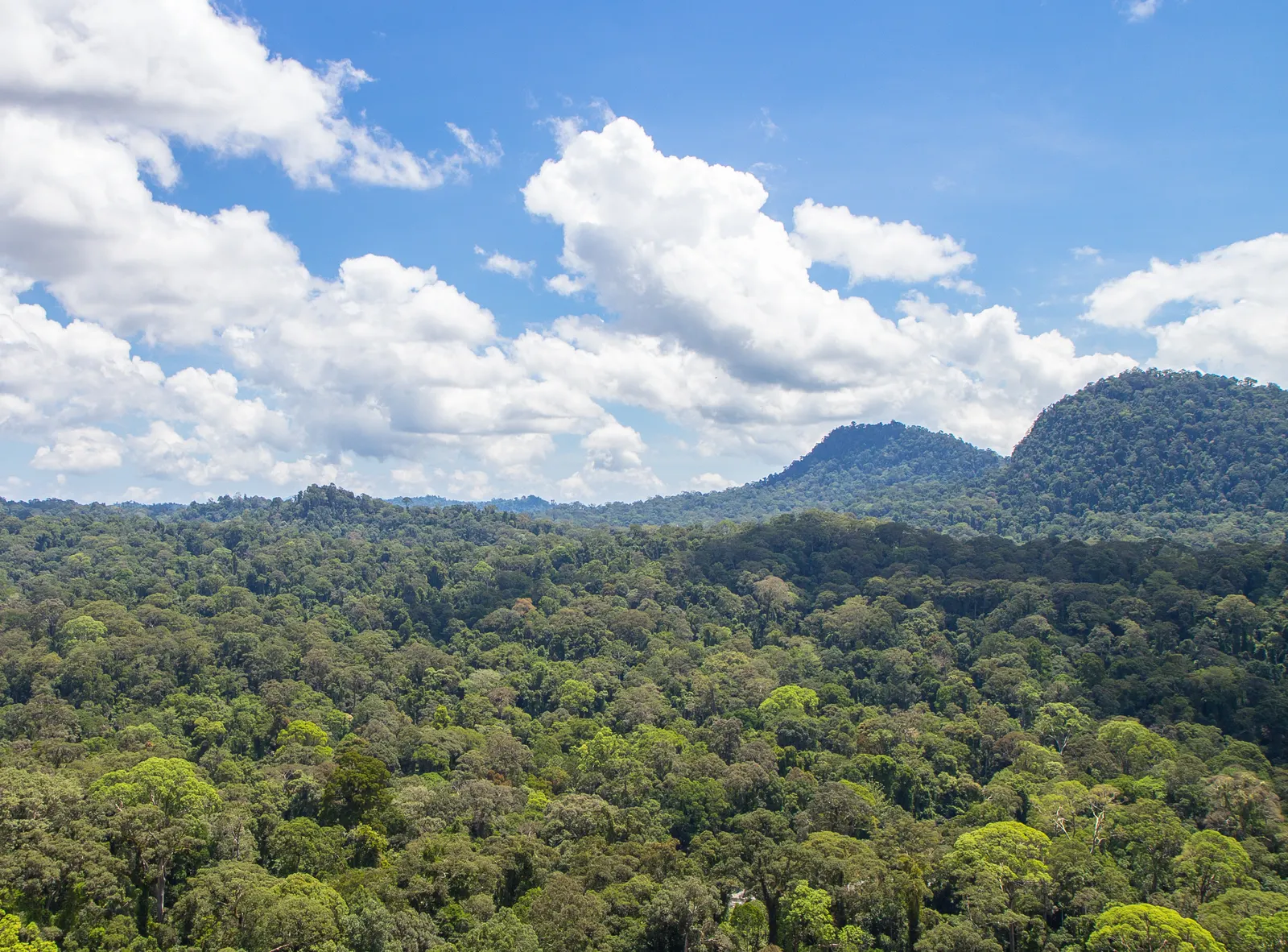
Shaded blackwater channels and their riparian vegetation are central to the documented habitat. Keeping the forest–water connection intact is more meaningful than treating the fish as an isolated aquarium curiosity. The named type locality does not establish present-day abundance or public access. For visitors, the surrounding Pangkalan Bun–Kumai landscape offers context; this fish is not a dependable wildlife-viewing target. Close species identification requires expertise, and collecting small fishes should not be part of a casual visit.