Recognition
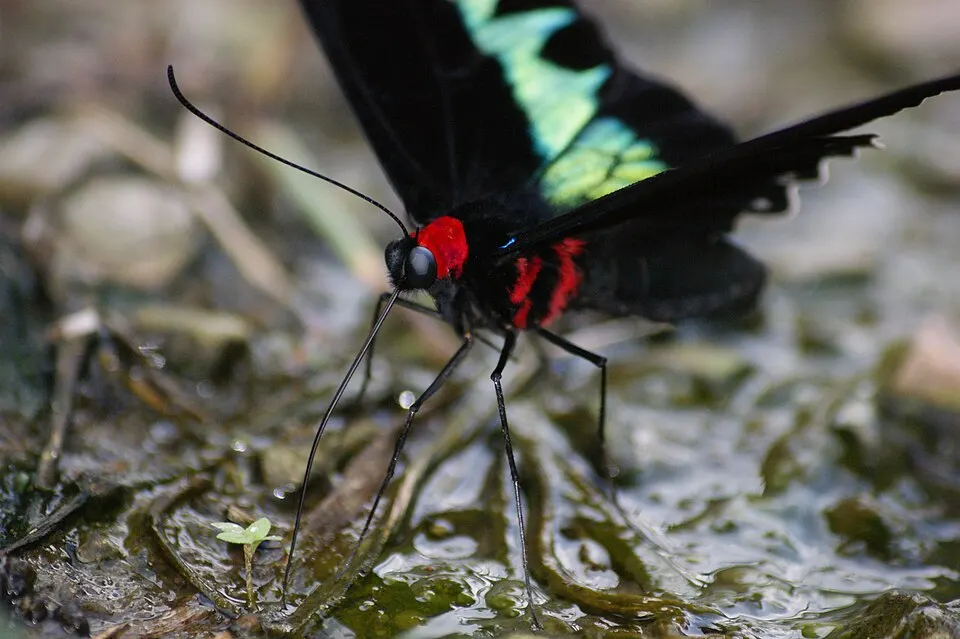
The male has long, narrow black forewings marked with bright green triangles, and smaller green areas on the hindwings. Red hairs behind the head and at the front of the thorax add another distinctive feature. Females are larger and duller, with brown, white and green patterning. The difference is strong enough that photographs of only the male give an incomplete impression of the species.
Sources & references · 1
Species account or primary research · National Museum of Natural Science: Trogonoptera brookianaHabitat and Borneo range
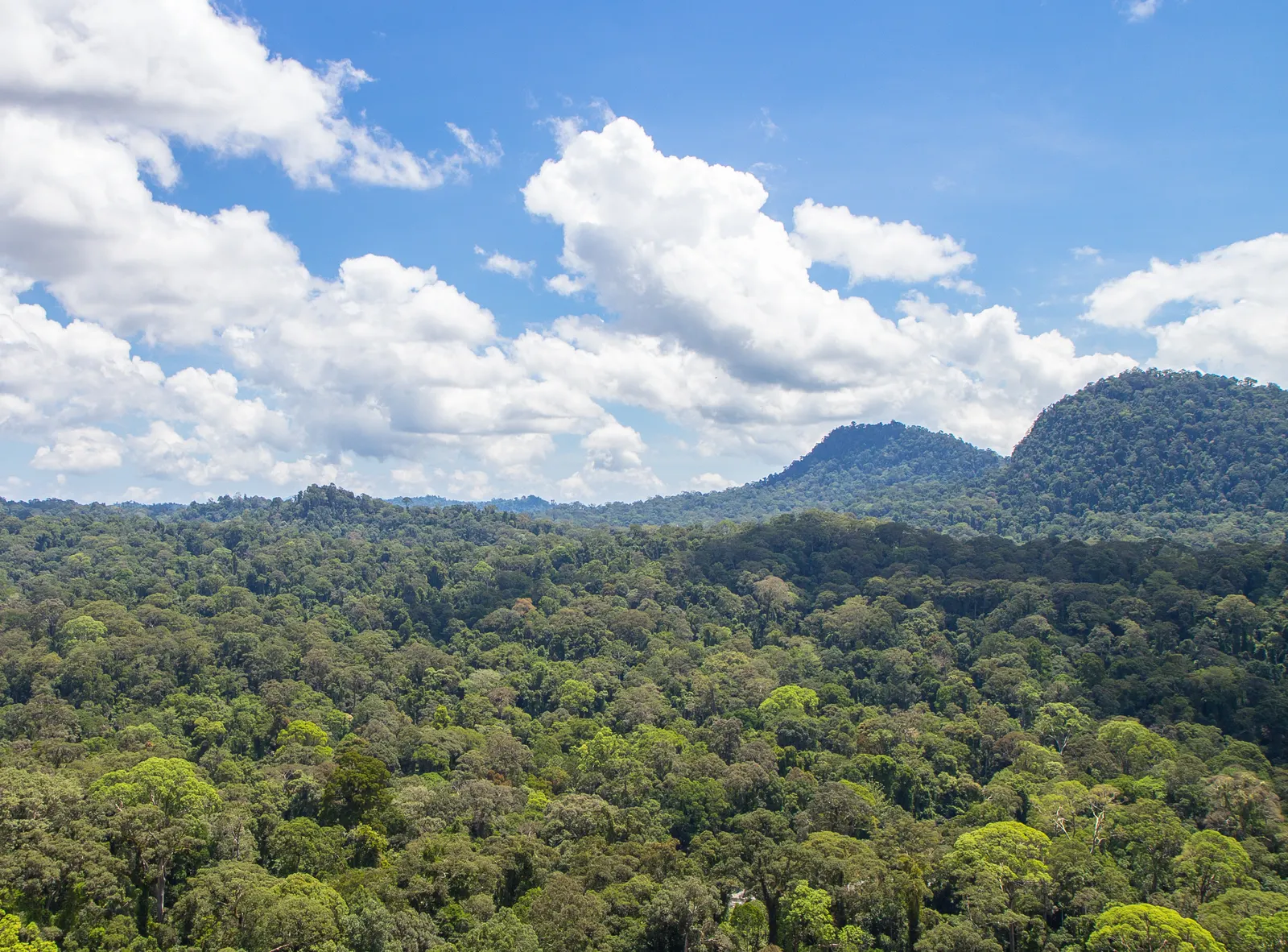
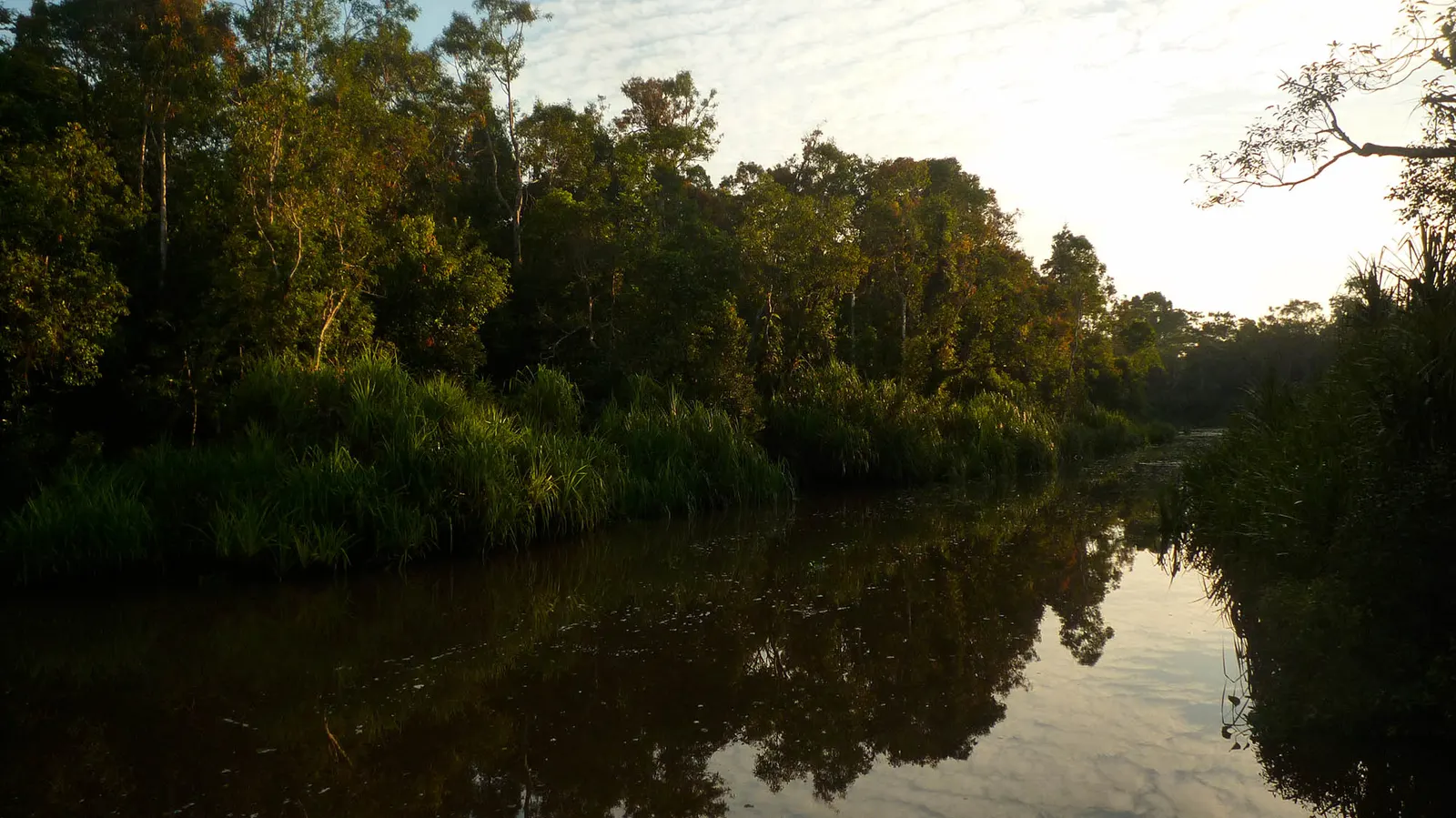
It flies in the forest canopy and along open forest margins. Bornean records include Kutai National Park in East Kalimantan. The wider distribution extends beyond Borneo into the Malay Peninsula and islands near Sumatra. Forest edges, flowering areas and damp ground offer different resources, while the forest plants used by caterpillars support the next generation.
Sources & references · 2
KSDAE, Ministry of Forestry · Mengenal flora dan fauna Taman Nasional KutaiSpecies account or primary research · National Museum of Natural Science: Trogonoptera brookianaBehaviour
Males may gather on damp riverbeds to take up water and minerals, producing the memorable groups often associated with this butterfly. Females more often visit flowers. These activities serve different needs from feeding as a caterpillar. A gathering of males on the ground is therefore a temporary resource-use event, not a nest or a colony comparable with a social bee colony.
Sources & references · 1
Species account or primary research · National Museum of Natural Science: Trogonoptera brookianaFood and ecological role
Caterpillars feed on Aristolochia plants. Adults instead use nectar and mineral-bearing moisture, so preserving flowers alone does not preserve the whole life cycle. The species is subject to CITES Appendix II trade controls, an additional reason to appreciate living butterflies in their habitat rather than remove them.