Appearance & recognition
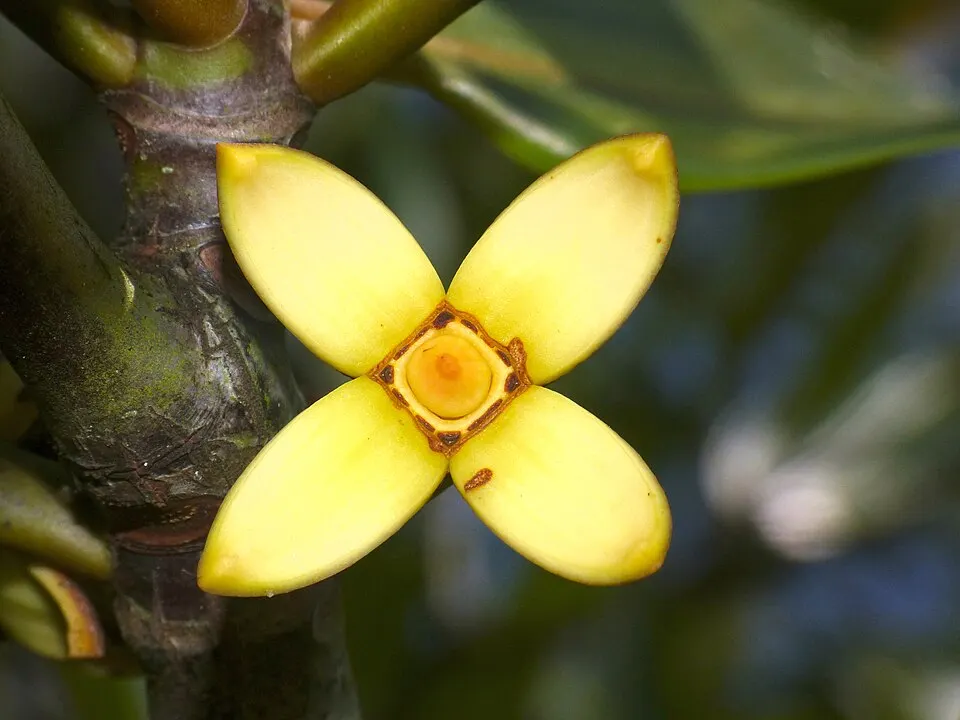
Rhizophora apiculata is identified by arching stilt roots, leathery leaves, reddish leaf stalks and long red stipules. Those features should be considered together: roots alone do not distinguish every mangrove species. It has a wider tropical Asian and western Pacific distribution and is not Borneo endemic.
Sources & references · 2
Singapore National Parks Board · Rhizophora apiculataRoyal Botanic Gardens Kew POWO · Rhizophora apiculataFlowers, fruits & reproduction
Elongated propagules develop while still attached to the parent plant and can disperse by water. This viviparous development helps explain why the tree’s reproductive structures look different from ordinary dry forest seeds.
Sources & references · 1
Singapore National Parks Board · Rhizophora apiculataProtecting the plant and its habitat
The cited global category is Least Concern. A global assessment does not describe the condition of every local population, nor promise protection from habitat loss. Observe without disturbance and keep local evidence separate.
Sources & references · 1
Royal Botanic Gardens Kew POWO · Rhizophora apiculataLife in the ecosystem
Rhizophora apiculata’s conspicuous supporting roots make the tidal forest a three-dimensional habitat. Its propagules develop on the parent tree before dispersal. Mangrove structure, water movement and successful establishment are connected; planting any tree in any mudflat is not equivalent to restoring that ecosystem.
Sources & references · 1
NParks · Rhizophora apiculataRange & habitat
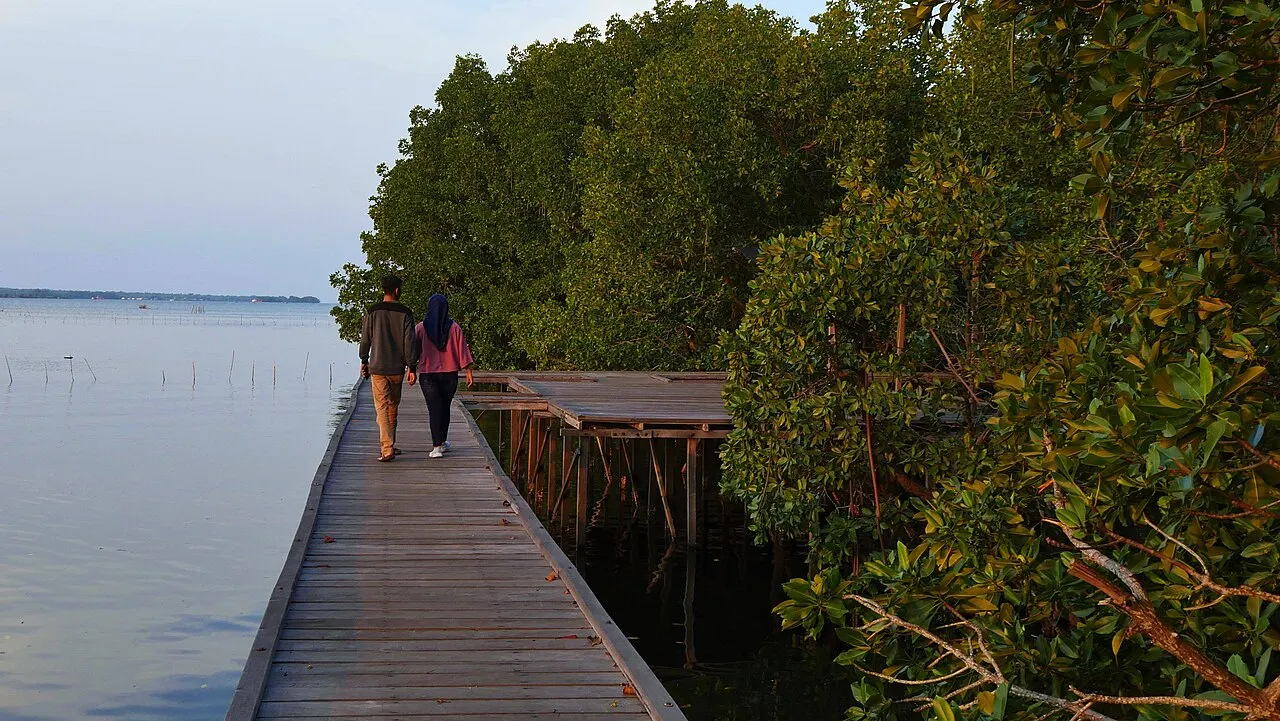
Rhizophora apiculata grows in tidal mud rather than ordinary dry garden soil. Arching stilt roots support the tree and create a complex framework in which water, sediments and organisms interact. Its native range extends beyond Borneo. Kutai’s official ecological account documents it locally; that specific occurrence complements the broader mangrove setting without implying that every mangrove photograph shows this species.
Sources & references · 2
KSDAE, Ministry of Forestry · Mengenal flora dan fauna Taman Nasional KutaiNParks · Rhizophora apiculataConnections with animals
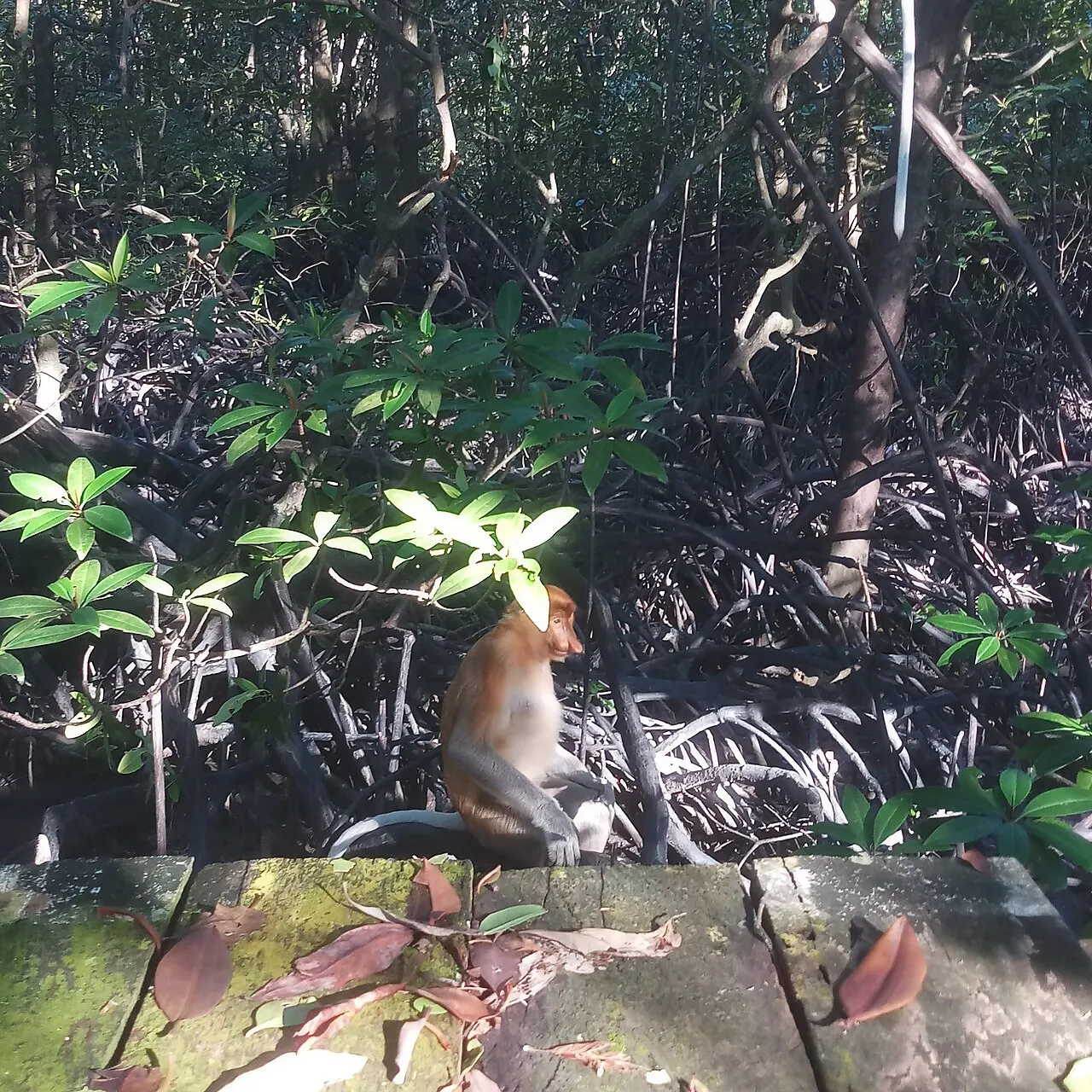
At Labuk Bay in Sabah, studies document proboscis monkeys eating this mangrove’s young leaves and other plant parts. The relationship is feeding on a named tree species in a studied landscape, not a claim that all primates eat all mangroves. The tree also reproduces through elongated propagules that begin developing on the parent before dropping. Their establishment depends on suitable tidal conditions, so conserving natural water movement matters alongside keeping adult trees.
At Labuk Bay in Sabah, proboscis monkeys eat young Rhizophora apiculata leaves and other recorded parts. This is a specific food-tree relationship within mangrove habitat.