
Caves & karst
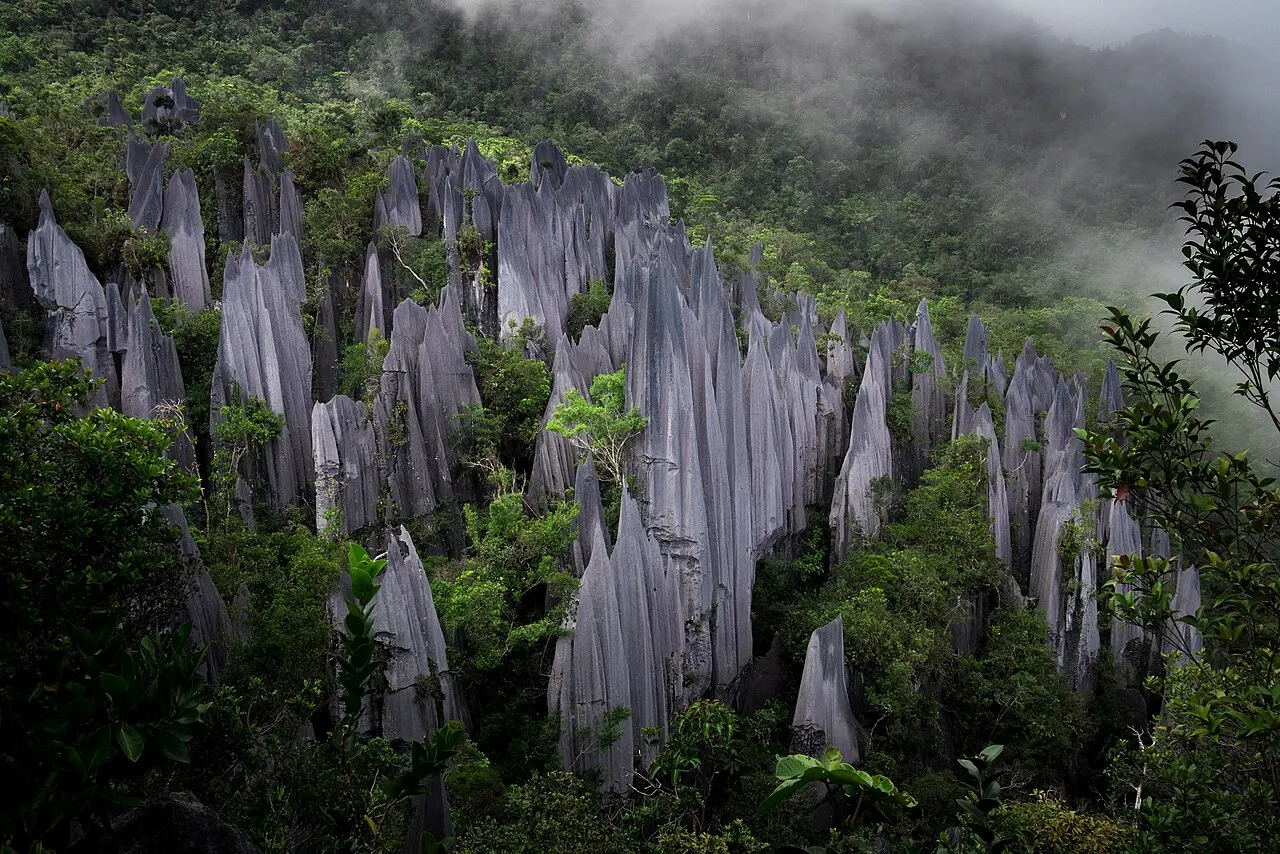
At Mulu, natural heritage begins with the scale and complexity of the karst landscape. Limestone, forest and water form a setting that reaches from surface ridges into underground passages. The famous Pinnacles are above ground, not a cave interior. That distinction matters when imagining a visit: seeing a striking photograph of exposed rock does not tell you what a particular cave route involves or which equipment and permissions it requires.
Sources & references · 1
UNESCO World Heritage Centre · Gunung Mulu National ParkHistory
Niah’s 2024 World Heritage inscription concerns the archaeological heritage of its cave complex. Here the meaning of a cave also includes traces of human presence and the long relationship between people and place. This is different from Mulu’s natural inscription. Neither label makes the other dimension disappear: archaeological landscapes remain ecosystems, and natural landscapes have human histories. The recognised properties also should not be confused with every boundary of the surrounding parks.
Sources & references · 1
UNESCO World Heritage Centre · The Archaeological Heritage of Niah National Park’s Caves Complex

Ecosystems
Darkness does not make a cave lifeless. Bats link underground spaces to the world outside, and their guano contributes to food webs. Recent research at Mulu also describes biological contributions to limestone dissolution in studied passages. It is a reminder that rock formations and living processes belong in the same story, while the findings from particular passages should not be extended uncritically to every cave.
Sources & references · 1
British Geological Survey (2025) · How bat excrement is sculpting Borneo’s hidden cavesPractical information
Approach each site with its own itinerary and current guidance. Niah access from the Miri region and a journey to Mulu are separate travel questions. Stay on authorised routes, avoid touching archaeological surfaces and formations, and leave cave animals undisturbed. Reading the area and habitat profiles before visiting can turn a dramatic view into a more informed encounter with both the landscape and its history.