Read the objects in context
The provincial museum was established in 1973 in a building associated with the 1963 Gedung Monumen Dewan Nasional. The tourism department describes ten collection classifications, spanning ethnography, history, archaeology, ceramics, natural history and other disciplines. This breadth matters: the museum is not simply a room of decorative souvenirs. Read labels for provenance, use and period, and ask staff when an object’s ritual or everyday role is unclear. Avoid treating all Dayak communities as one interchangeable tradition or assuming that every object on display is still used in the same way today.
Allow time for interpretation
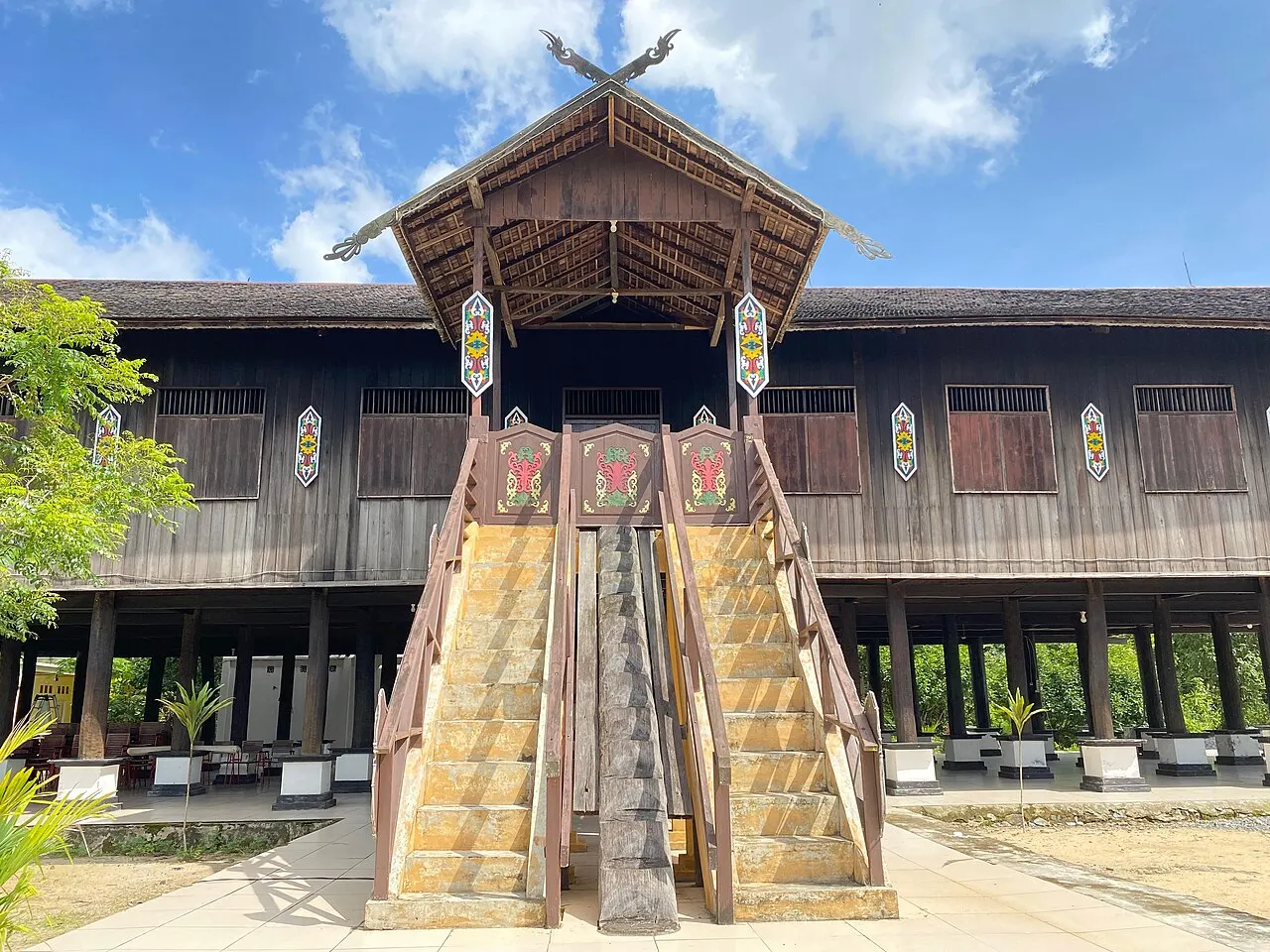
Allow approximately 1–2 hours as a planning guide, especially if you enjoy reading labels or can arrange interpretation. A shorter look may suit children, but let their interest determine the pace. Confirm today’s opening, ticket arrangements, gallery availability and photography policy directly. Older catalogue prices and hours are historical information, not a present-day promise. Ask in advance about guided explanations and language options; do not assume a guide is included. If steps, seating or accessible toilets are essential, confirm these individually rather than inferring accessibility from the exterior photograph.
Location and a balanced city day
The documented address is Jalan Tjilik Riwut Km 2.5 in Palangka Raya. The 2018 national catalogue provides a museum-site coordinate, not a confirmed present entrance: use the museum name for a driver drop-off. Combine it with a cultural visit in Central Kalimantan or read Ngaju-specific perspectives before exploring farther. Kereng Bangkirai can offer a separate waterside outing when access and transport are arranged, but the museum does not sell or guarantee that trip. Keeping both visits distinct allows time for collections rather than rushing through on the way to a boat.