Overview
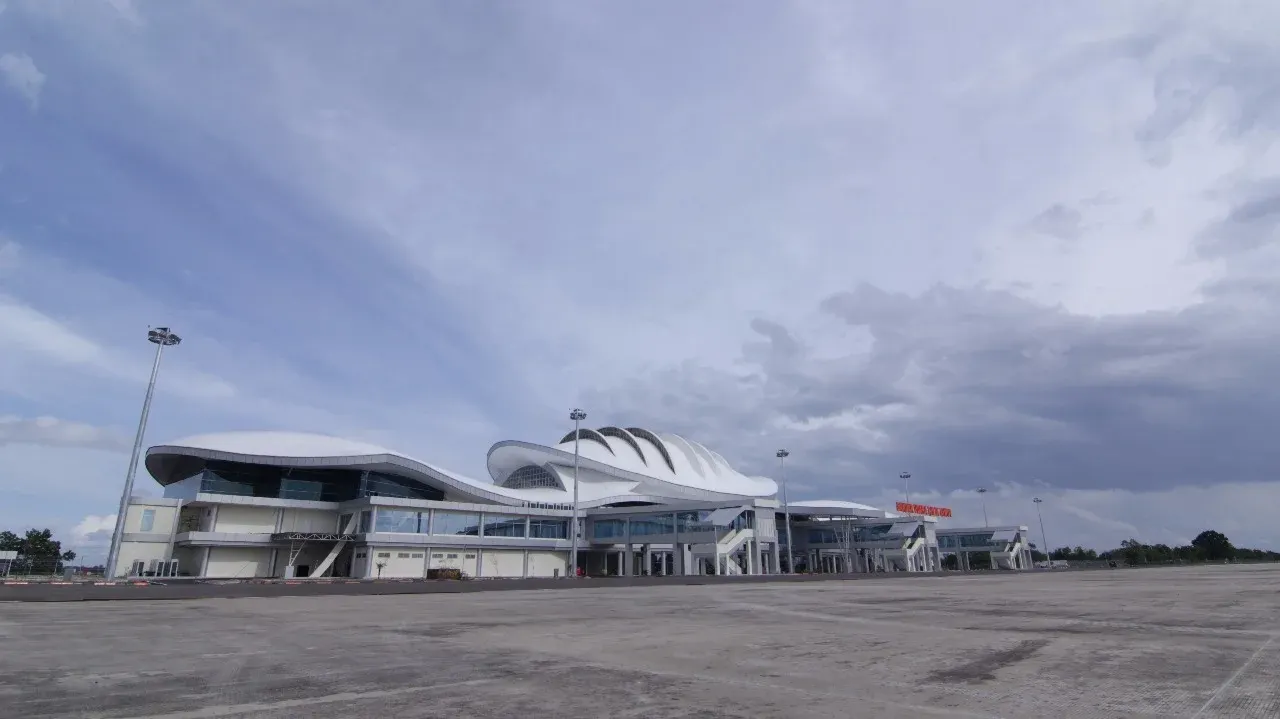
Palangka Raya is an arrival base, a provincial administrative centre and a river city. Those roles overlap without being identical. The city’s modern foundation story begins with a deliberate act of planning, but the Kahayan setting also preserves a longer history of settlement. Treating the place only as a convenient airport stop misses that relationship.
Sources & references · 15
Indonesia Ministry of Tourism · PalangkarayaPalangka Raya City Government · Sejarah Kota Palangka RayaCentral Kalimantan Provincial Tourism Department · Profil UPT Museum BalangaIndonesia Ministry of Tourism, JADesta · Desa Wisata Kereng BangkiraiDirectorate General of Civil Aviation, Ministry of Transportation · Tjilik Riwut airport profileBMKG Tjilik Riwut Meteorological Station · Seasonal climate information for Central KalimantanSwiss-Belhotel International · Swiss-Belhotel Danum Palangkaraya official hotel pagepetabahasa.kemendikdasmen.go.id · Ngaju language and community: official regional documentationwww.indonesia.travel · Huma Betang: Ngaju communal architecture: official regional documentationbahasa-dev.kemendikdasmen.go.id · Huma Betang: Ngaju communal architecture: official regional documentationIndonesian Ministry of Education and Culture · Tiwah in Ngaju Kaharingan tradition: official regional documentationrepositori.kemendikdasmen.go.id · Tiwah in Ngaju Kaharingan tradition: official regional documentationCentral Kalimantan Provincial Government · Juhu singkah uwei: official regional documentationCentral Kalimantan Provincial Government · Kalumpe / Karuang: official regional documentationCentral Kalimantan Provincial Government · Wadi: official regional documentationHistory
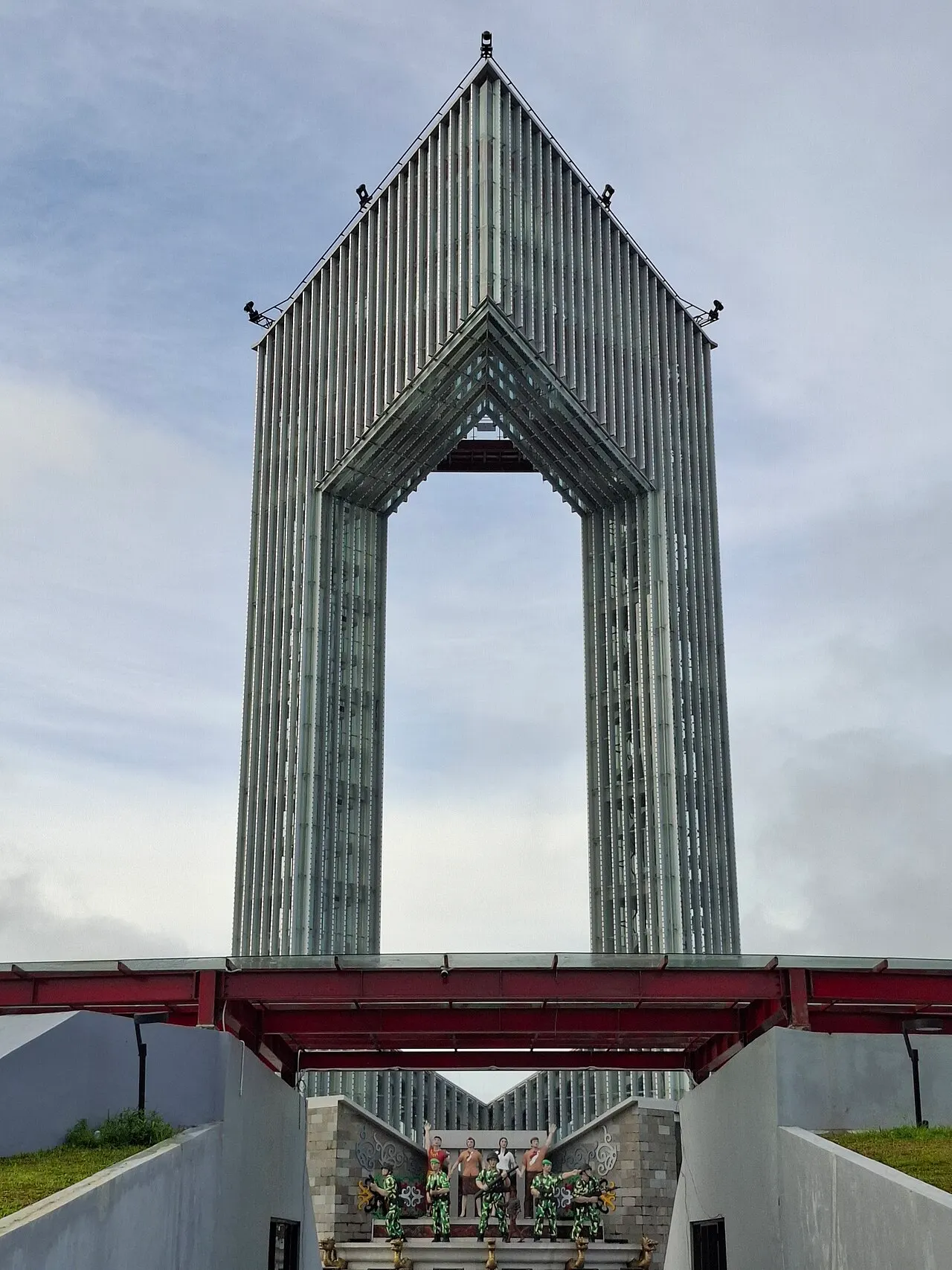
The official city history marks 17 July 1957 as the inauguration of development under President Sukarno. The older Pahandut settlement gives the planned capital an earlier river context. The founding date therefore belongs to a particular civic history; it does not mean that people, movement and settlement began here only in 1957.
Sources & references · 15
Indonesia Ministry of Tourism · PalangkarayaPalangka Raya City Government · Sejarah Kota Palangka RayaCentral Kalimantan Provincial Tourism Department · Profil UPT Museum BalangaIndonesia Ministry of Tourism, JADesta · Desa Wisata Kereng BangkiraiDirectorate General of Civil Aviation, Ministry of Transportation · Tjilik Riwut airport profileBMKG Tjilik Riwut Meteorological Station · Seasonal climate information for Central KalimantanSwiss-Belhotel International · Swiss-Belhotel Danum Palangkaraya official hotel pagepetabahasa.kemendikdasmen.go.id · Ngaju language and community: official regional documentationwww.indonesia.travel · Huma Betang: Ngaju communal architecture: official regional documentationbahasa-dev.kemendikdasmen.go.id · Huma Betang: Ngaju communal architecture: official regional documentationIndonesian Ministry of Education and Culture · Tiwah in Ngaju Kaharingan tradition: official regional documentationrepositori.kemendikdasmen.go.id · Tiwah in Ngaju Kaharingan tradition: official regional documentationCentral Kalimantan Provincial Government · Juhu singkah uwei: official regional documentationCentral Kalimantan Provincial Government · Kalumpe / Karuang: official regional documentationCentral Kalimantan Provincial Government · Wadi: official regional documentation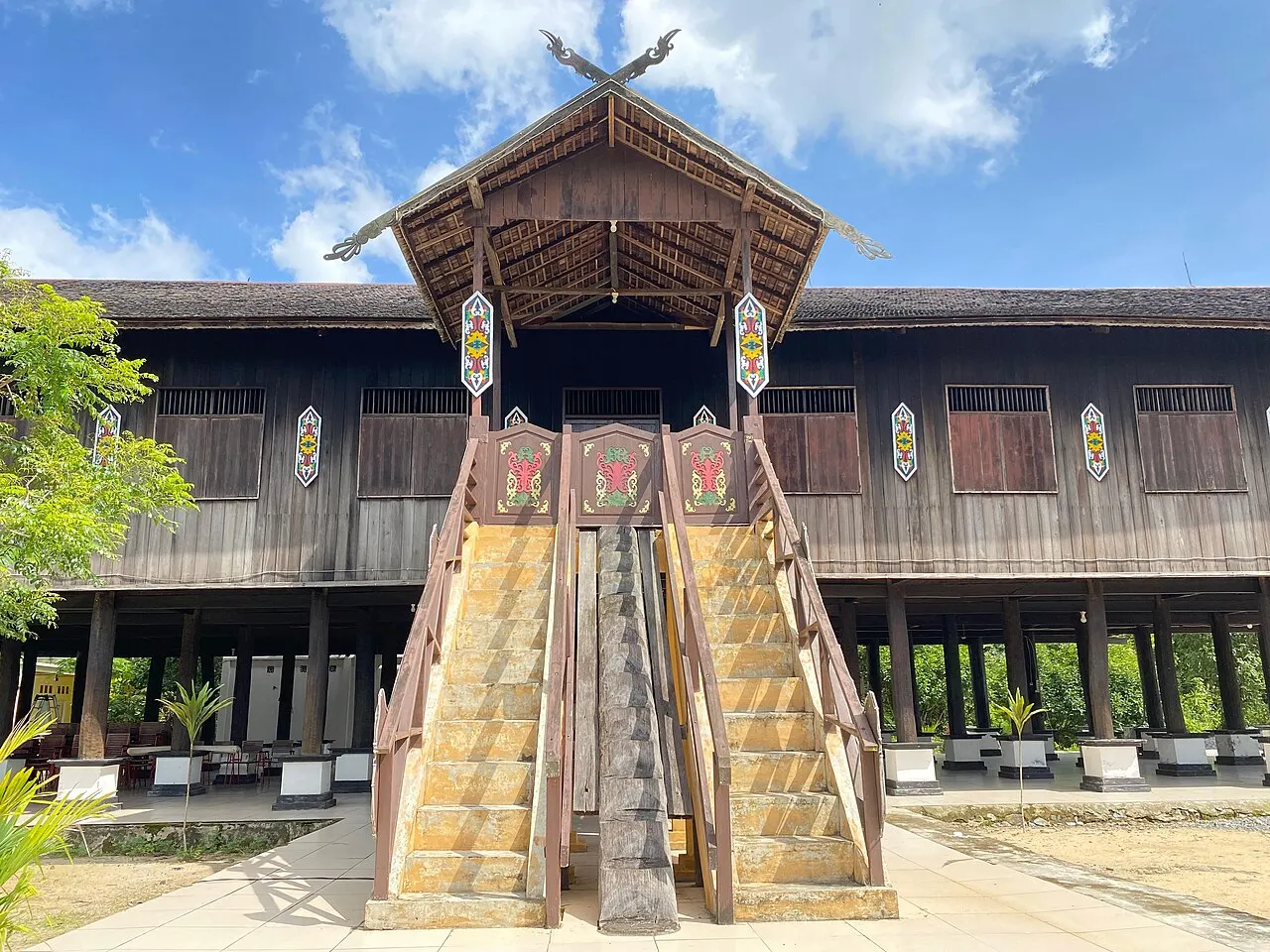
Culture in context
Museum Balanga offers a documented starting point for material heritage. Its ethnographic and historical objects should be read with attention to who made or used them, and in which period. The Ngaju language record adds another perspective: a specific community and its variations, rather than an undifferentiated category called Dayak culture. Museum interpretation and present-day community voices complement each other.
From city to forest
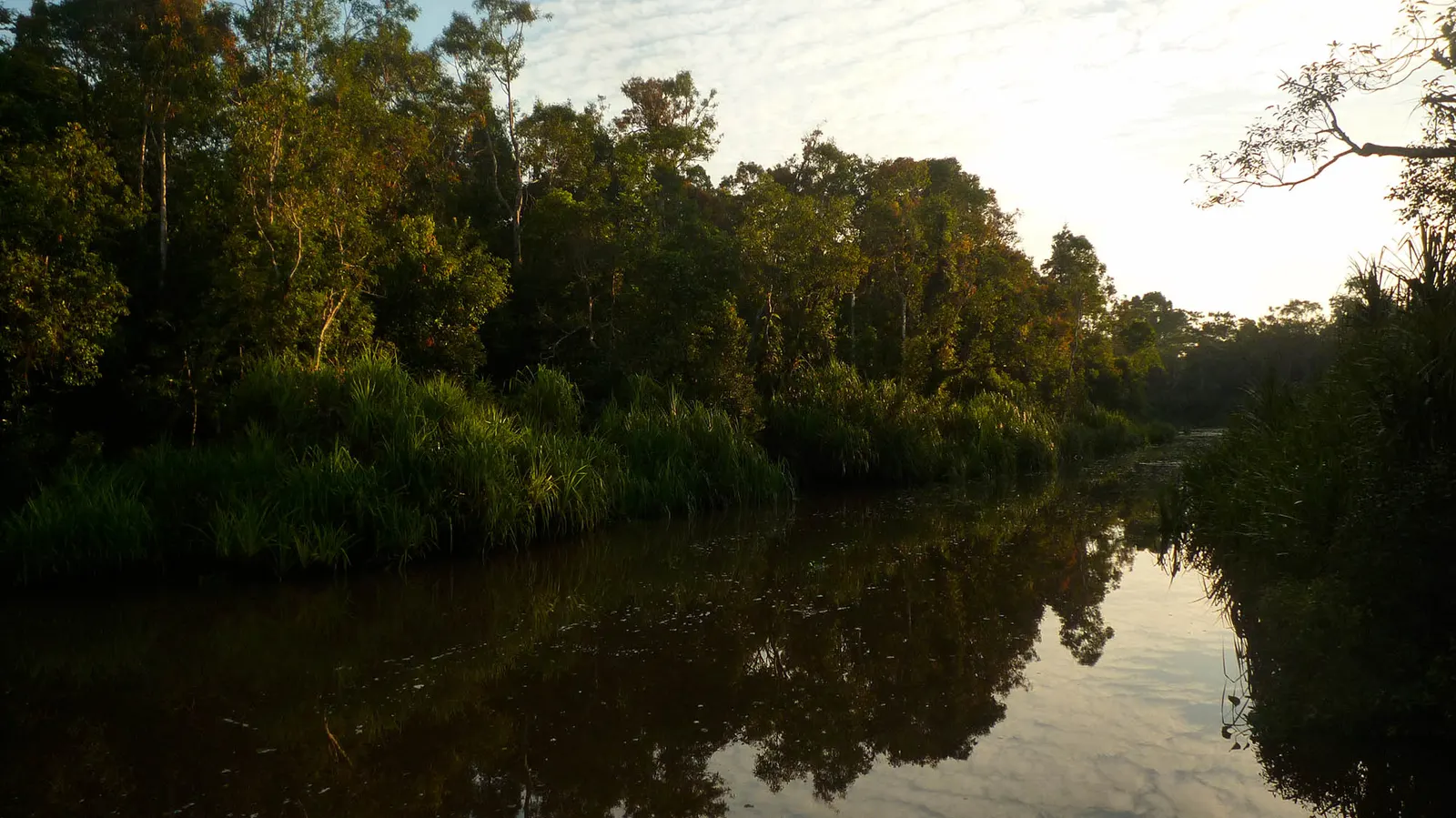
Kereng Bangkirai remains a locality within Palangka Raya in the geographic hierarchy. It is also an access community associated with a Sebangau route. Following that connection does not turn the park into a city district, or make every forest station open to visitors. A useful journey keeps city geography, protected-area extent and practical access separate while showing how they connect.