Recognition
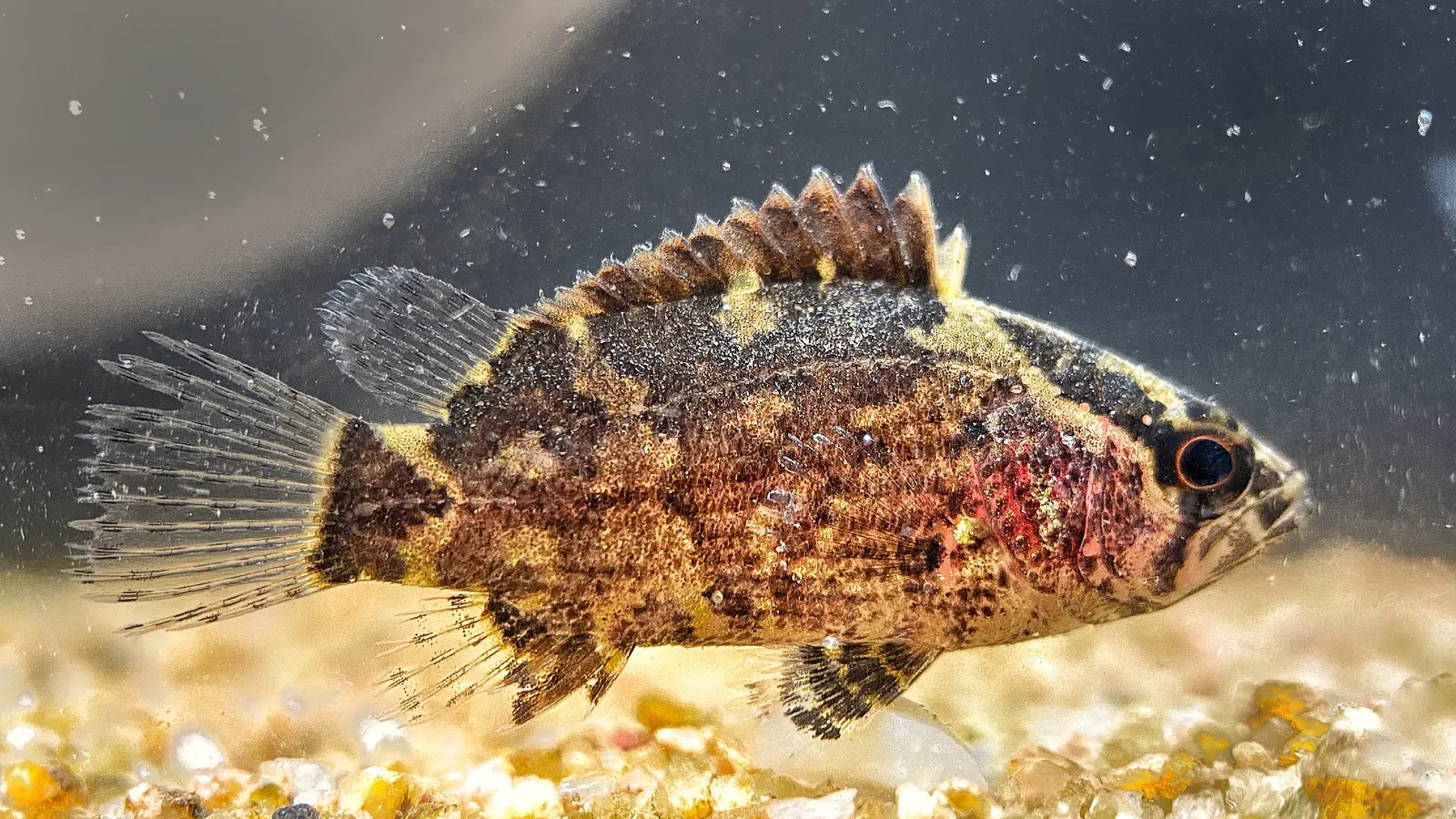
Mottled colour and an irregular leaf-like profile break up the fish’s outline. It resembles a piece of dead vegetation rather than a brightly marked open-water fish. The reported maximum total length is about twelve centimetres, with smaller individuals common in reference accounts. The leaf resemblance is its most useful first impression, while a clear view of the whole fish is better than a partly concealed head.
Sources & references · 1
Species account or primary research · FishBase: Nandus nebulosus, citing Kottelat and Widjanarti (2005)Habitat and Borneo range
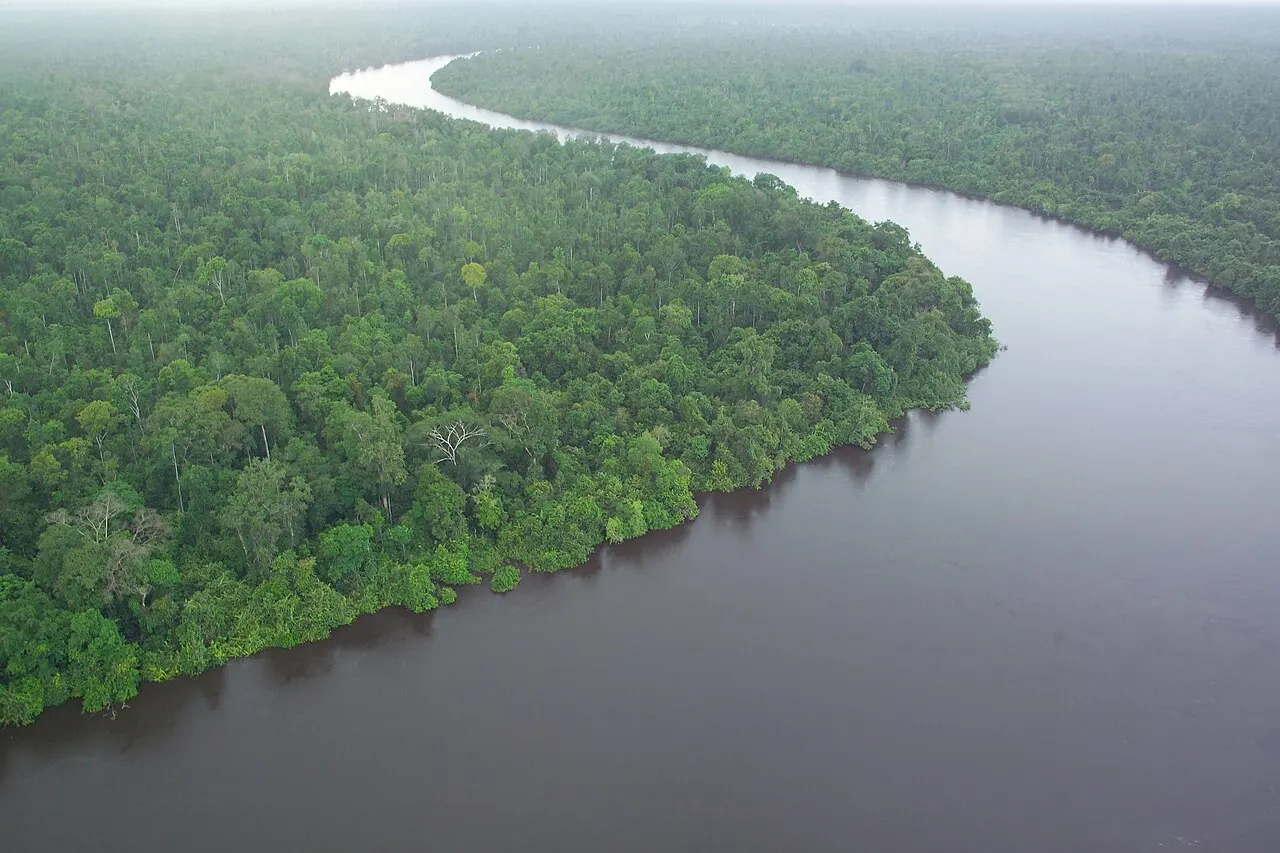
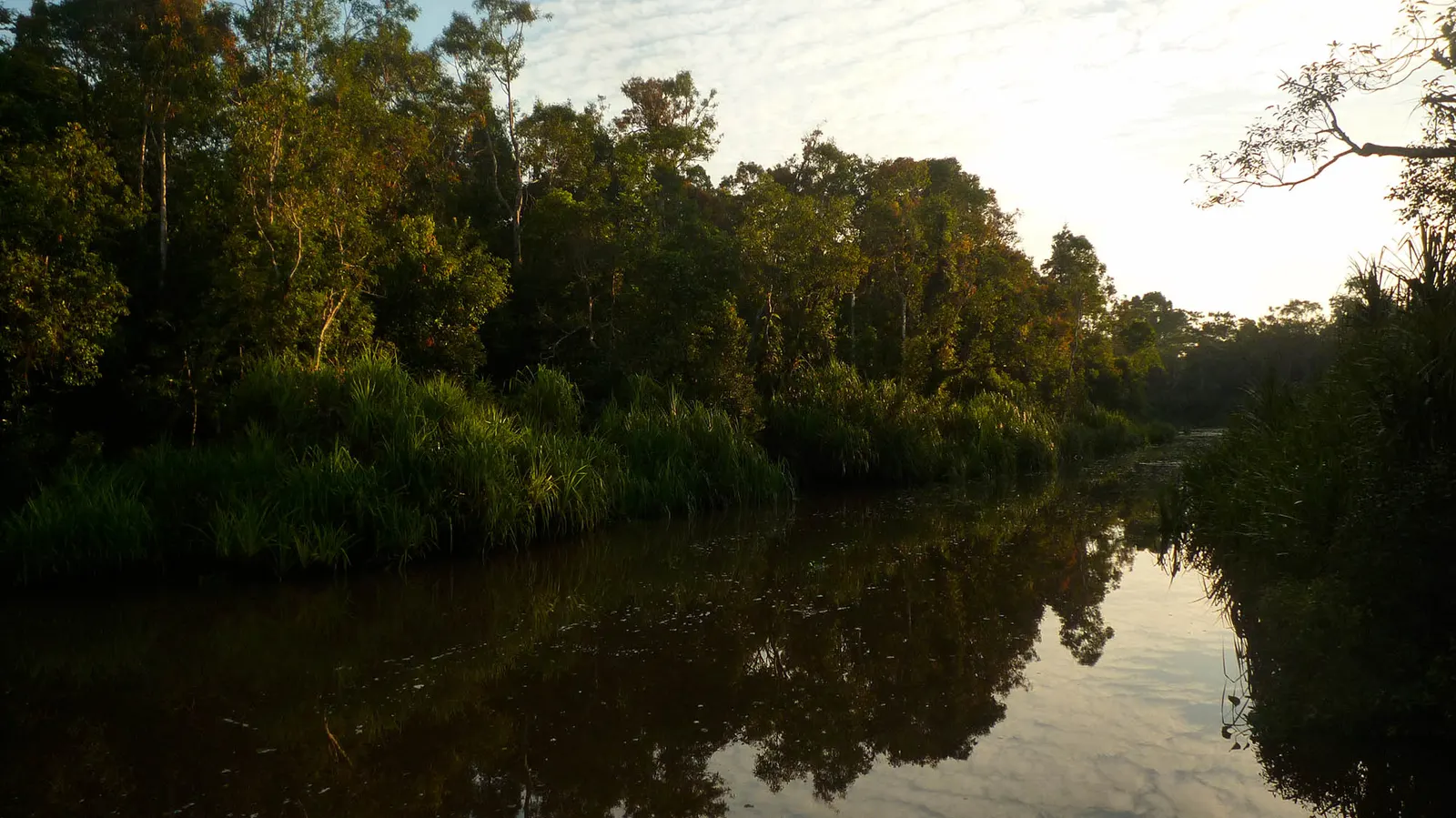
Small streams, flooded forest and peat-associated waters provide its habitat. The broader range runs from Thailand to Indonesia, so the common name does not mean that it occurs only on Borneo. In Central Kalimantan, Sebangau surveys place it within a landscape of blackwater river channels and seasonal forest pools. Fallen vegetation and flooding make water and forest inseparable parts of this setting.
Sources & references · 2
Species account or primary research · FishBase: Nandus nebulosus, citing Kottelat and Widjanarti (2005)Mires and Peat · Rasbora kalochroma: documented occurrenceFood and ecological role
The species is usually solitary and feeds on small fishes and crustaceans. Those animal prey distinguish its feeding role from algae-grazing gouramis in the same broader wetland fauna. Its cryptic appearance also makes it easy to overlook beside leaf litter. A quiet fish among dead leaves can therefore be an active member of the aquatic food web even when no chase is visible.