Colour among the shadows
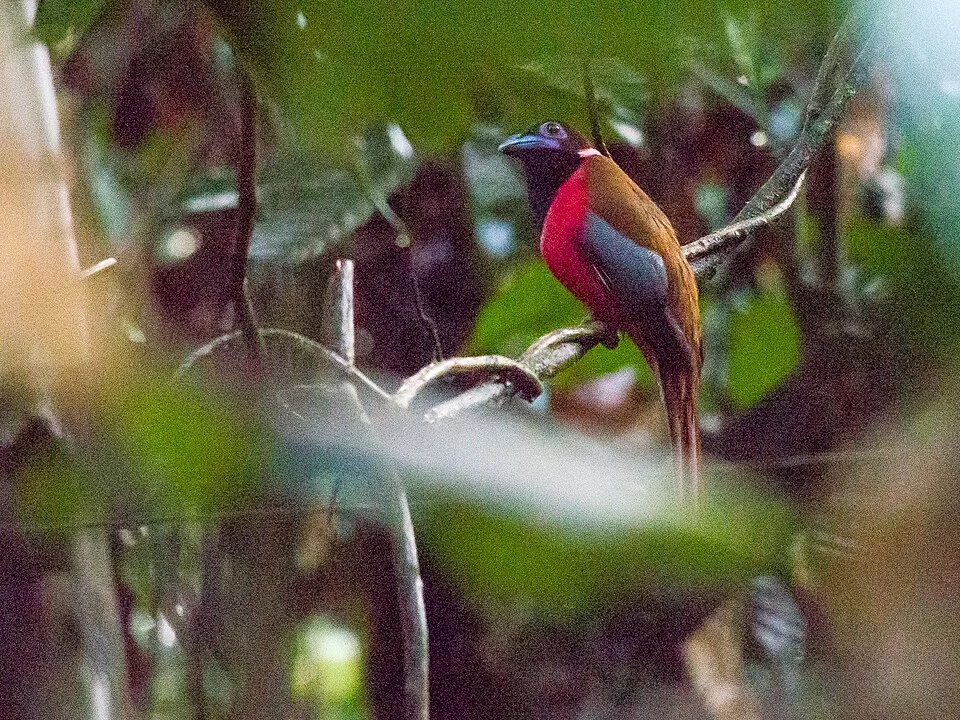
The male combines a black head with a crimson underside and a pink patch on the nape. The female has a brown head and a white band above the red belly. Birds often remain still on shaded branches, alone or in pairs. Listen for a sequence of rounded hooting notes: Sabah accounts describe a descending opening followed by notes at a steady pitch.
Sources & references · 2
Cornell Lab of Ornithology, eBird/Merlin · Diard's Trogon identificationSheldon F.H., Moyle R.G. and Kennard J.; Ornithological Monographs 52 · Ornithology of Sabah: History, Gazetteer, Annotated Checklist, and BibliographyShort flights to insect prey
A trogon can spend a long time watching from one perch before making a short flight to take prey from surrounding vegetation. Diard's trogon eats stick insects, caterpillars, beetles and orthopterans such as grasshoppers. Fruit, including figs, also features in published feeding accounts. Its quiet perch hunting makes it easy to overlook even where suitable forest remains; a red flash between branches may be the first sign of its presence.
Sources & references · 2
Sheldon F.H., Moyle R.G. and Kennard J.; Ornithological Monographs 52 · Ornithology of Sabah: History, Gazetteer, Annotated Checklist, and BibliographyCIFOR · Meijaard et al. 2005 Life after logging, bird ecology summariesForest perches and a low nest cavity
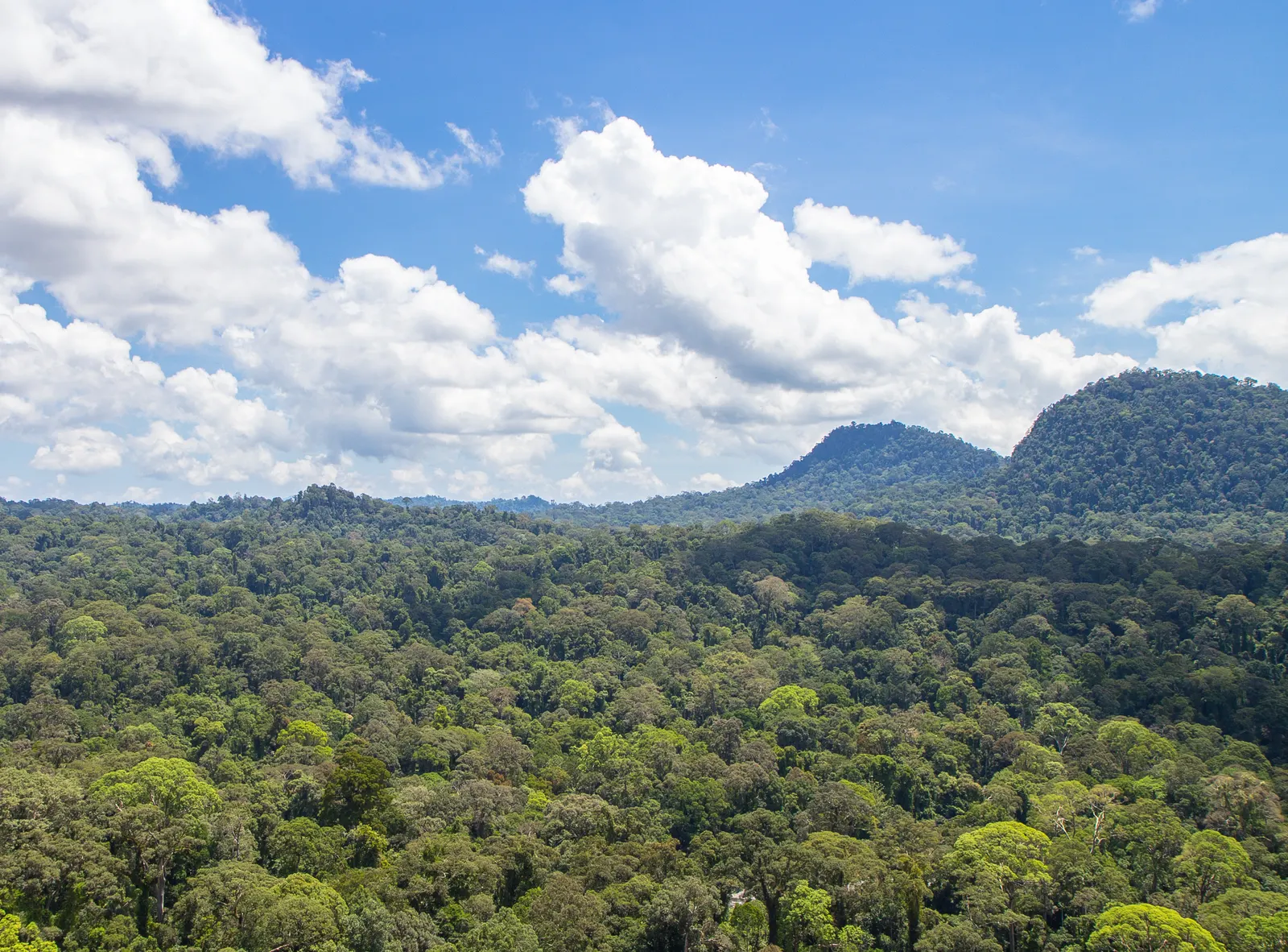
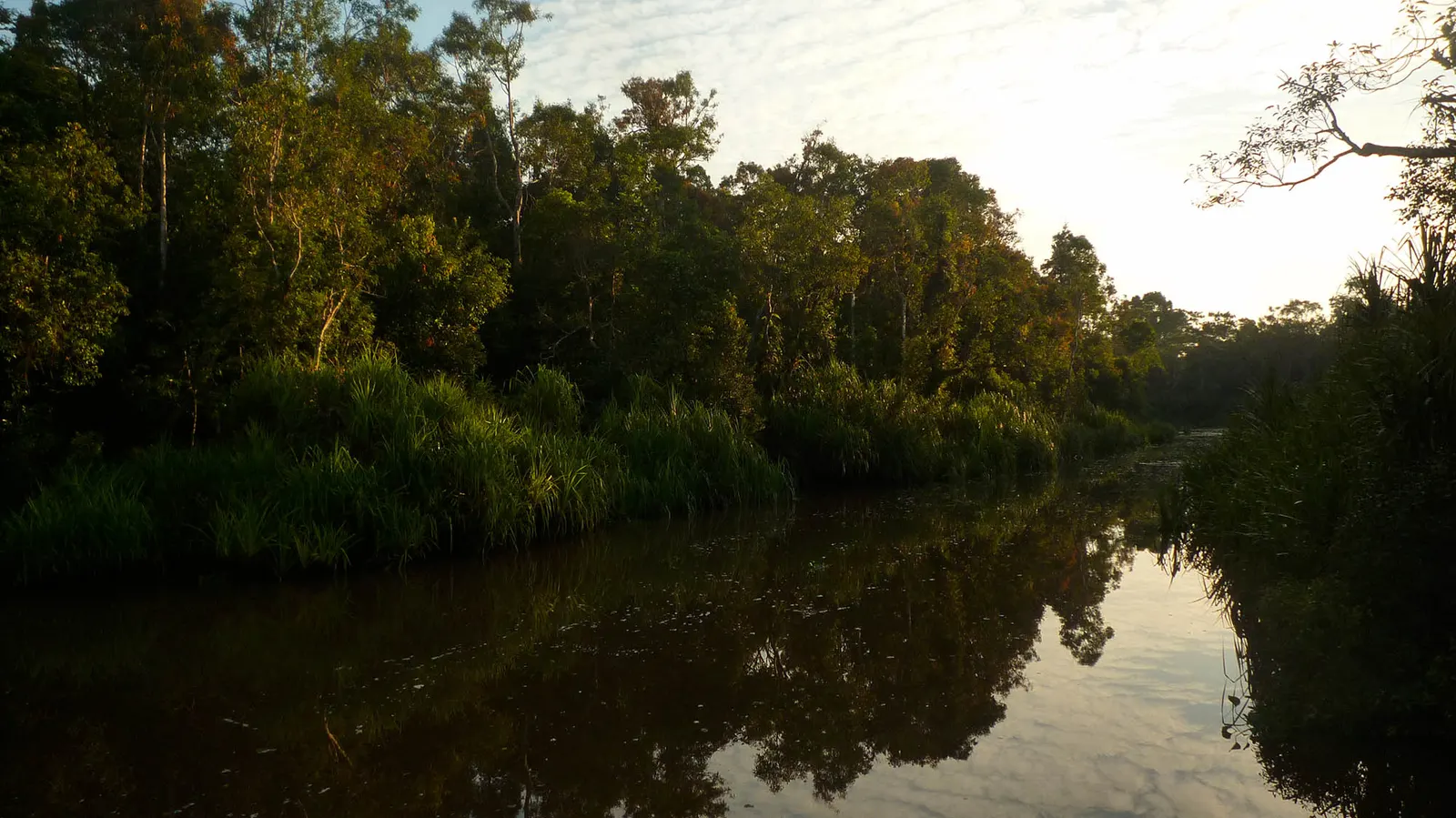
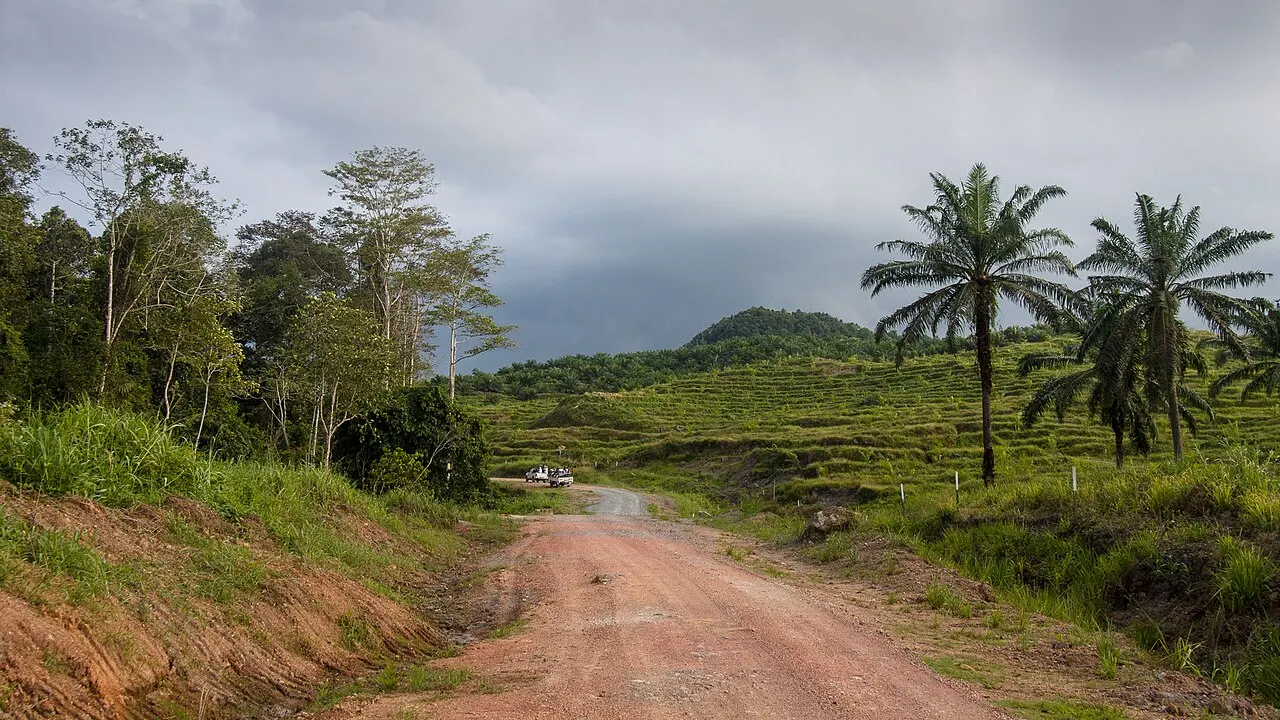
In Sabah it occurs from the lowlands to about 1,000 metres, with records at Danum, Sepilok, Tabin and Tawau Hills. It uses primary, riverine and logged forest, although it is generally less numerous after logging. At Tawau Hills on 23 May 2000, a nest in a stump about one metre above the ground contained a white egg and a naked chick. This dated observation reveals a real Borneo nest, rather than a fixed breeding calendar for the whole island. Shaded forest trails and patient listening offer a realistic way to search.