Recognition
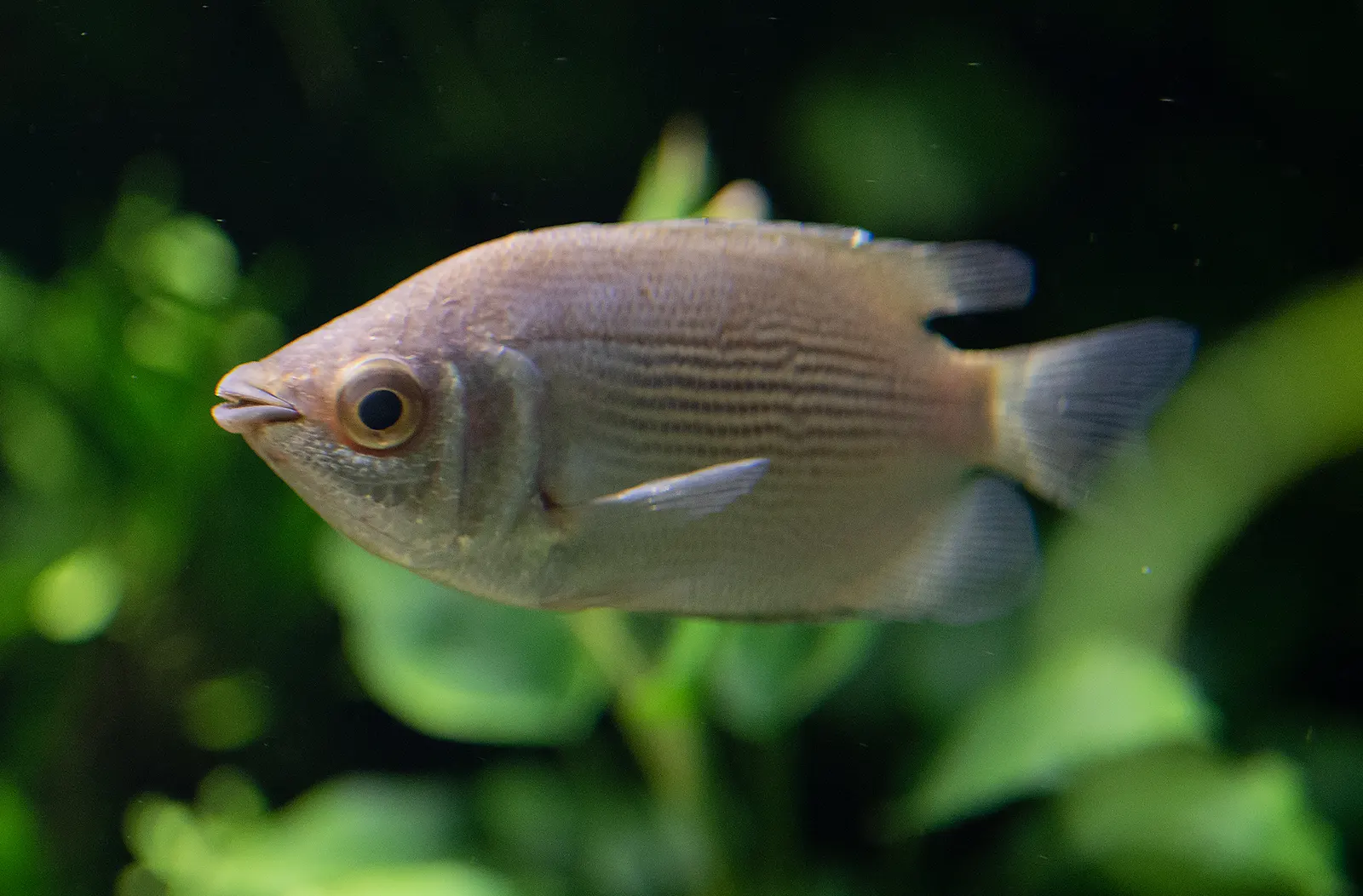
Its lips make sucking movements against plants, objects and other fish. This conspicuous action is the basis of the “kissing” name; it should not be interpreted as affection. The reported maximum total length is about thirty centimetres, making it substantially larger than many small forest fishes. Mouth shape and behaviour are more informative than judging the species only by the colour of an aquarium individual.
Sources & references · 1
Species account or primary research · FishBase: Helostoma temminckiiHabitat and Borneo range
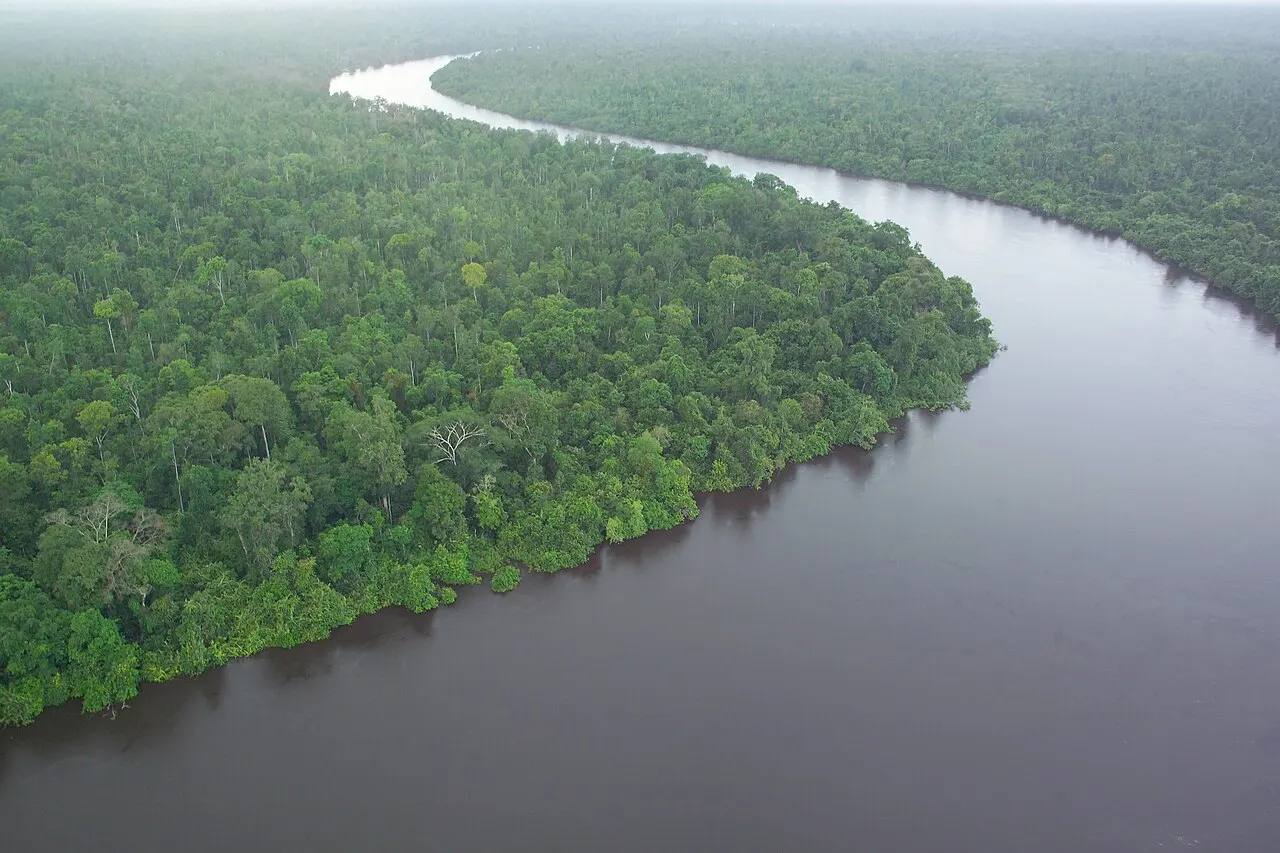
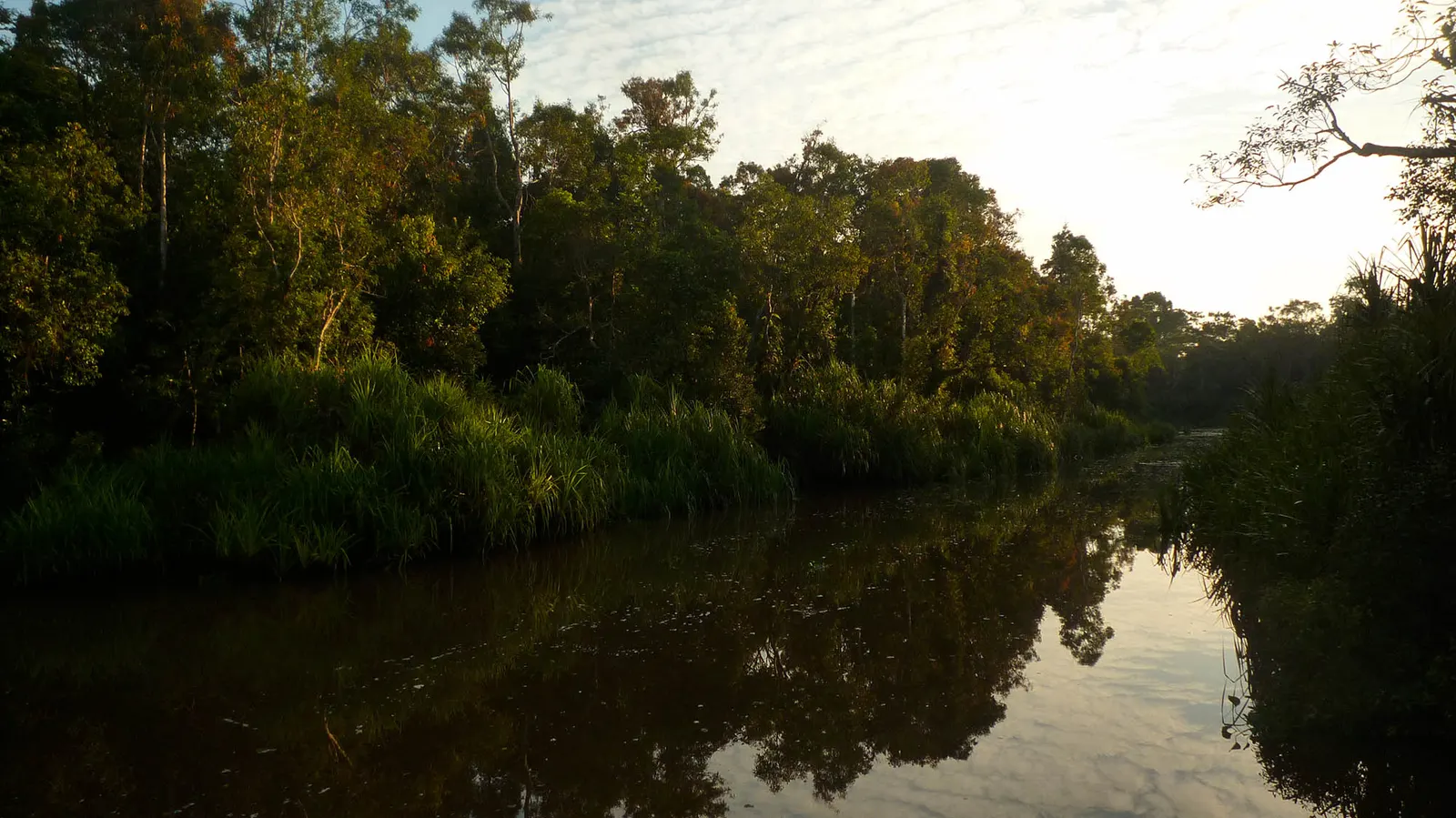
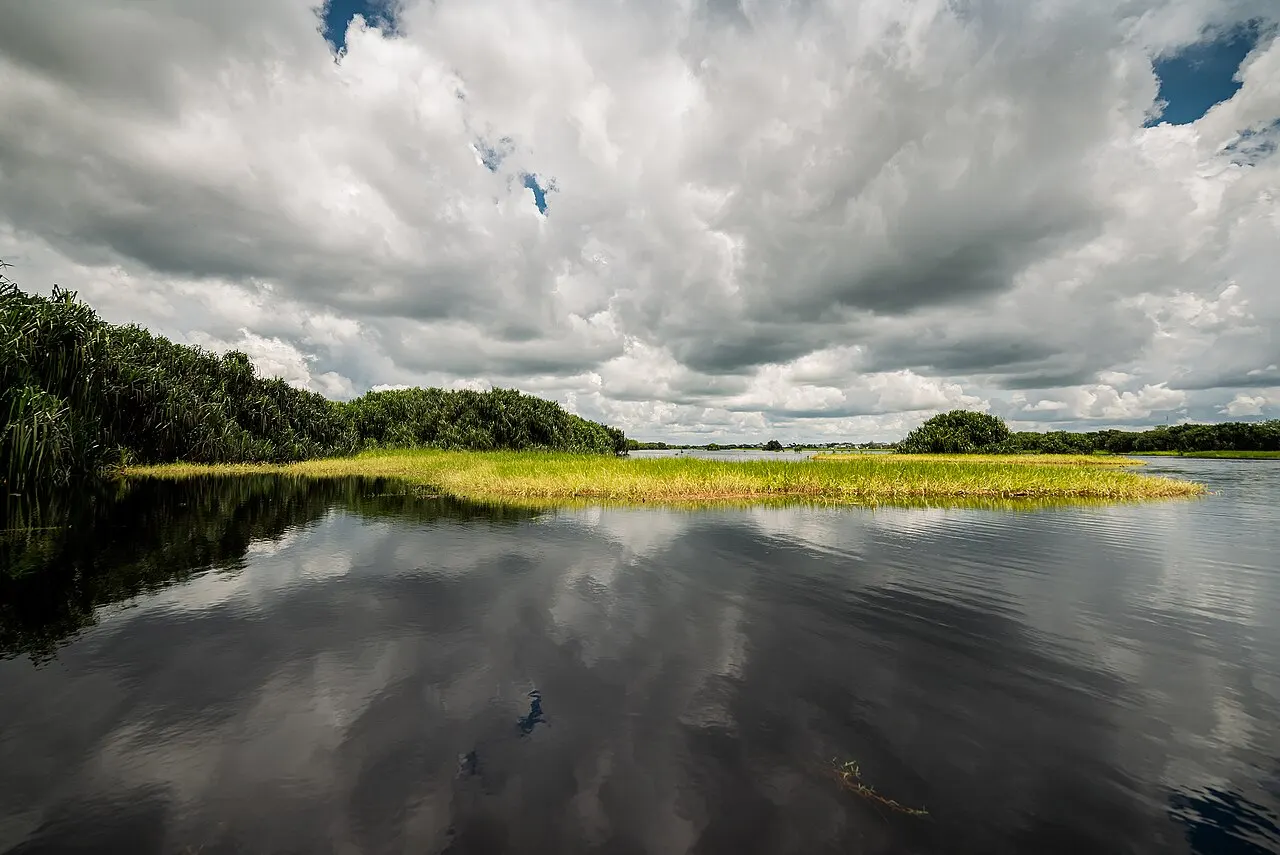
Adults favour lakes and rivers with slow water and dense vegetation. They can breathe atmospheric air, an important part of life in waters where dissolved oxygen may be limited. The species is recorded in the Sebangau catchment of Central Kalimantan, among a diverse peatland fish fauna. Vegetation serves more than one purpose here: it shapes sheltered water and provides a setting for feeding and spawning.
Sources & references · 2
Species account or primary research · FishBase: Helostoma temminckiiMires and Peat · Rasbora kalochroma: documented occurrenceFood and ecological role
Algae, zooplankton and aquatic insects all occur in its diet. Feeding near the surface links it with both plant production and the small animals supported by the water. The sucking movements of the lips should therefore be seen in the context of feeding as well as fish-to-fish interaction. A thickly vegetated water body can offer several kinds of food within a relatively small area.
Sources & references · 1
Species account or primary research · FishBase: Helostoma temminckiiReproduction
Spawning occurs beneath floating vegetation. The eggs hatch quickly and the young soon become free-swimming, so the floating plant layer forms part of the reproductive environment as well as the adult habitat.