What research tells us
Studies investigate its phytochemistry and antioxidant activity. Such laboratory results describe extracts and assays; they do not establish a treatment benefit from eating a tuhau condiment. Traditional food use and medicinal evidence are separate questions.
Sources & references · 1
Universiti Malaysia Sabah; Journal of Tropical Biology and Conservation 18, 2021 · Etlingera coccinea researchIn Borneo’s kitchens
Young parts of Tuhau ginger supply the aromatic ingredient for Tuhau condiment. The plant record gives the scientific identity, Etlingera coccinea, while the food record describes varied regional preparations rather than treating every ginger as interchangeable.
Sources & references · 1
Universiti Malaysia Sabah; Journal of Tropical Biology and Conservation 18, 2021 · Etlingera coccinea researchHow the plant grows
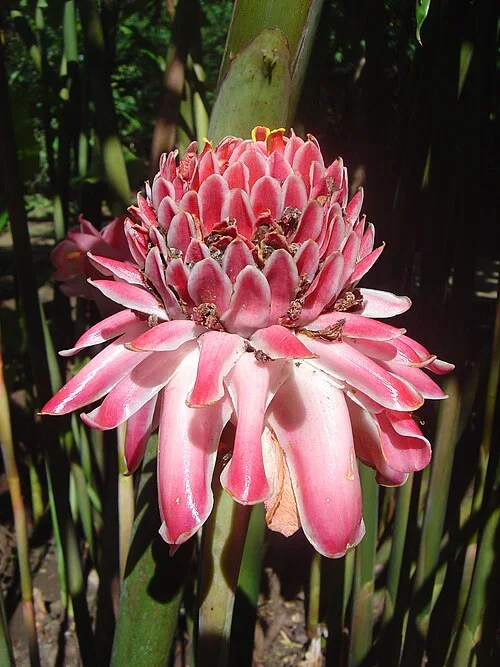
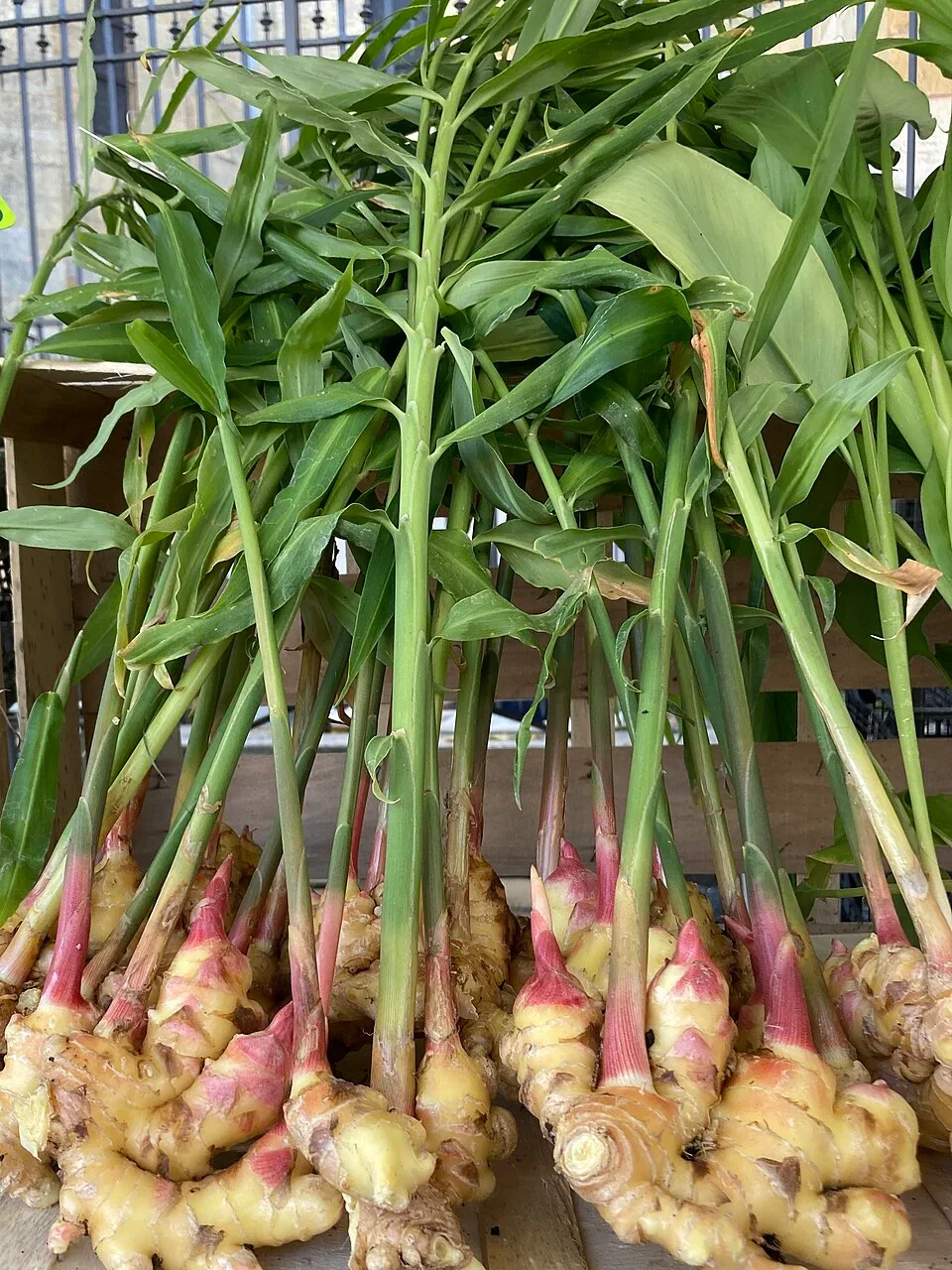
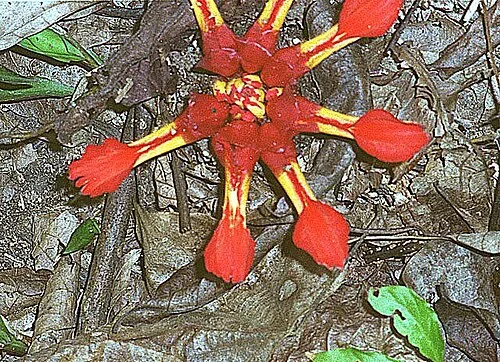
Etlingera coccinea is a large rhizomatous ginger. Leafy shoots arise in clumps, while its flowers are produced close to the ground rather than at the top of the tall foliage. The edible young shoot is therefore not equivalent to the rhizome of ordinary kitchen ginger. The scientific name also separates tuhau from other Etlingera species used as vegetables or aromatics.
Sources & references · 1
Universiti Malaysia Sabah; Journal of Tropical Biology and Conservation 18, 2021 · Etlingera coccinea researchEdible parts, flavour & texture
Young shoots supply the pronounced aroma and crunchy texture of tuhau condiment in Sabah. Finely cut shoot material is combined with sour and spicy seasonings; preparations differ between households. This documented food use concerns a known ingredient, not any fragrant shoot found in a forest. Laboratory studies of extracts examine chemical activity, whereas the condiment is an ordinary food with a distinctive sensory character.