Recognition
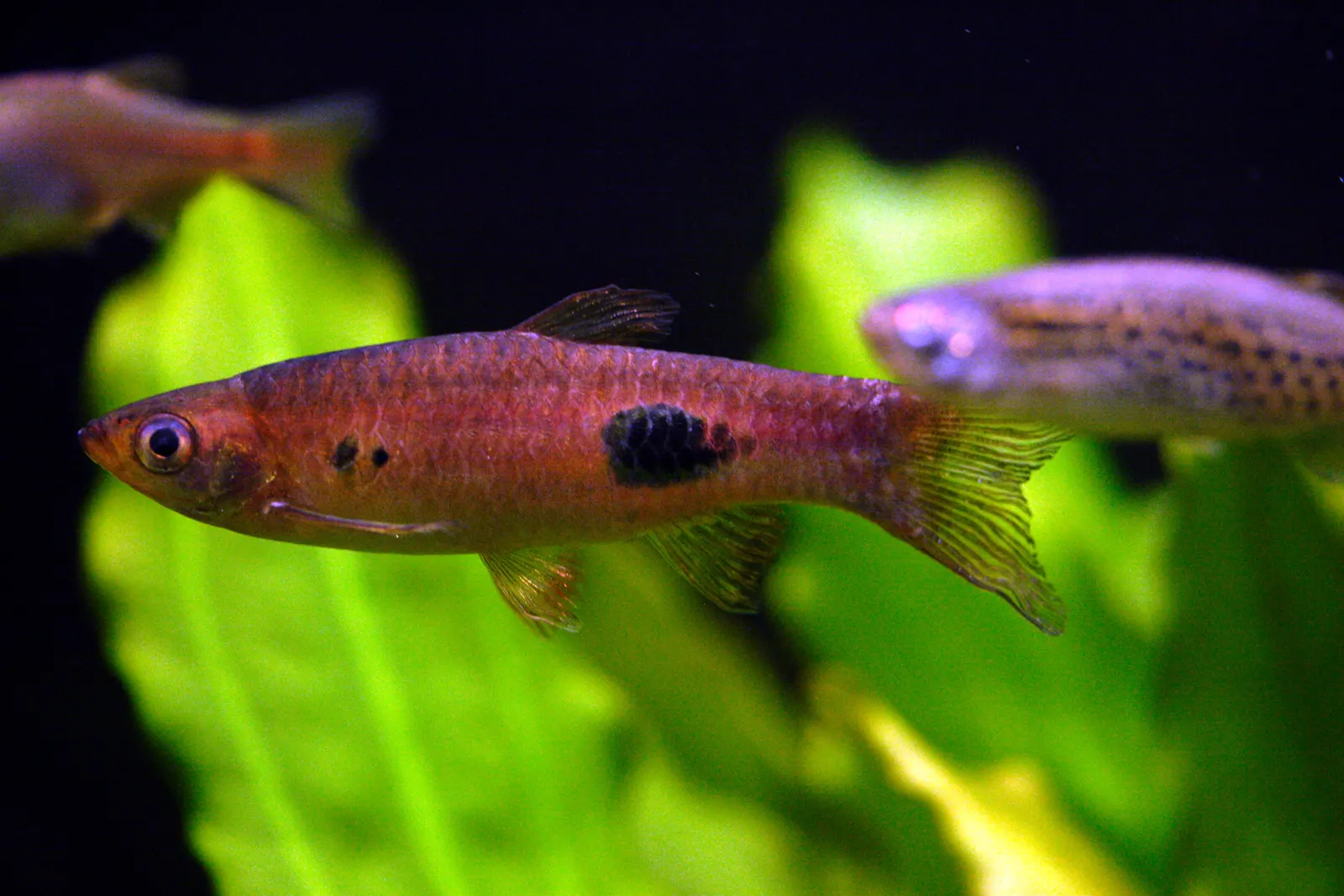
One spot lies above the pectoral fin and the other above the anal fin. Together with the reddish body, these separate marks distinguish it from relatives with a continuous dark stripe along the flank. The reported maximum total length is about ten centimetres. Look for the placement and shape of both marks, rather than relying on the intensity of red in a photograph.
Sources & references · 2
Species account or primary research · Tan (2009), description of Rasbora patrickyapi; comparison with R. kalochromaSpecies account or primary research · FishBase: Rasbora kalochromaHabitat and Borneo range
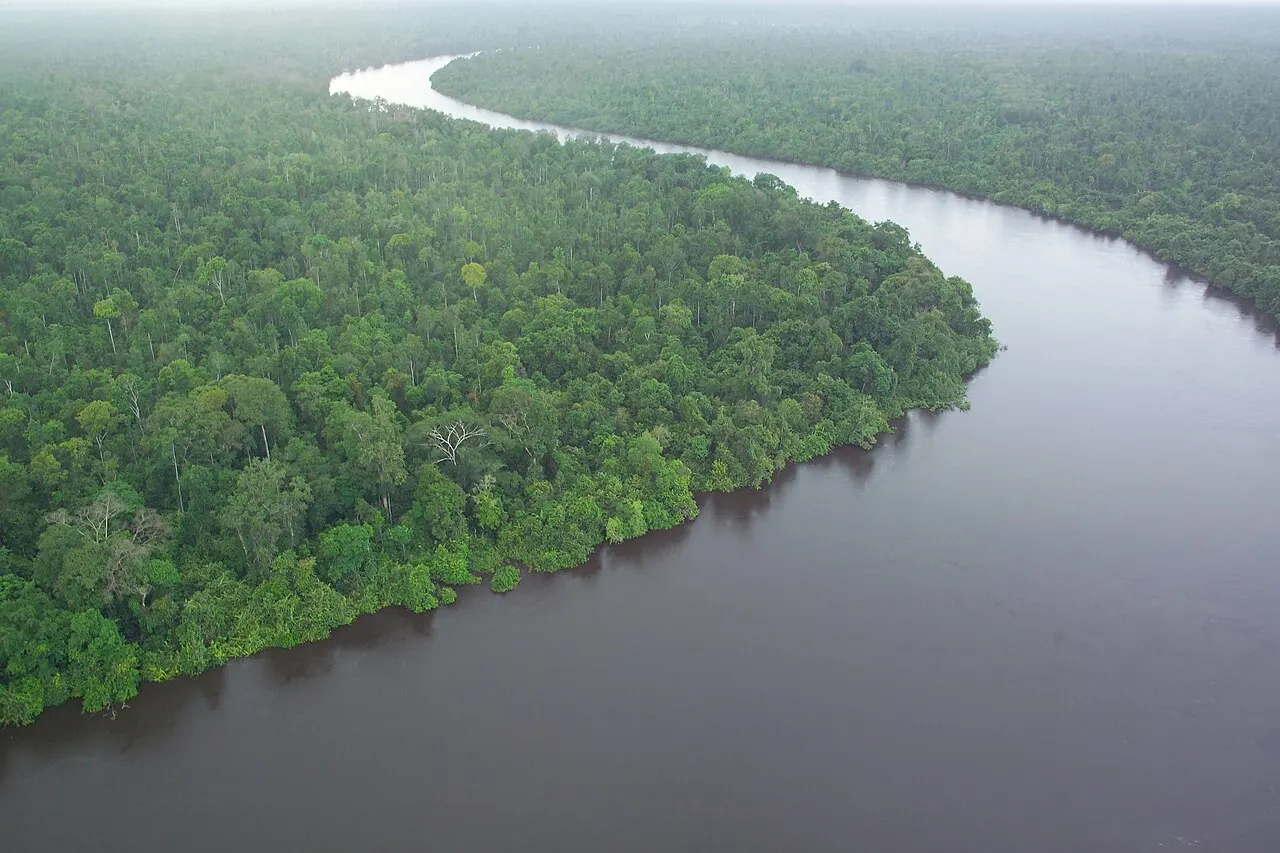
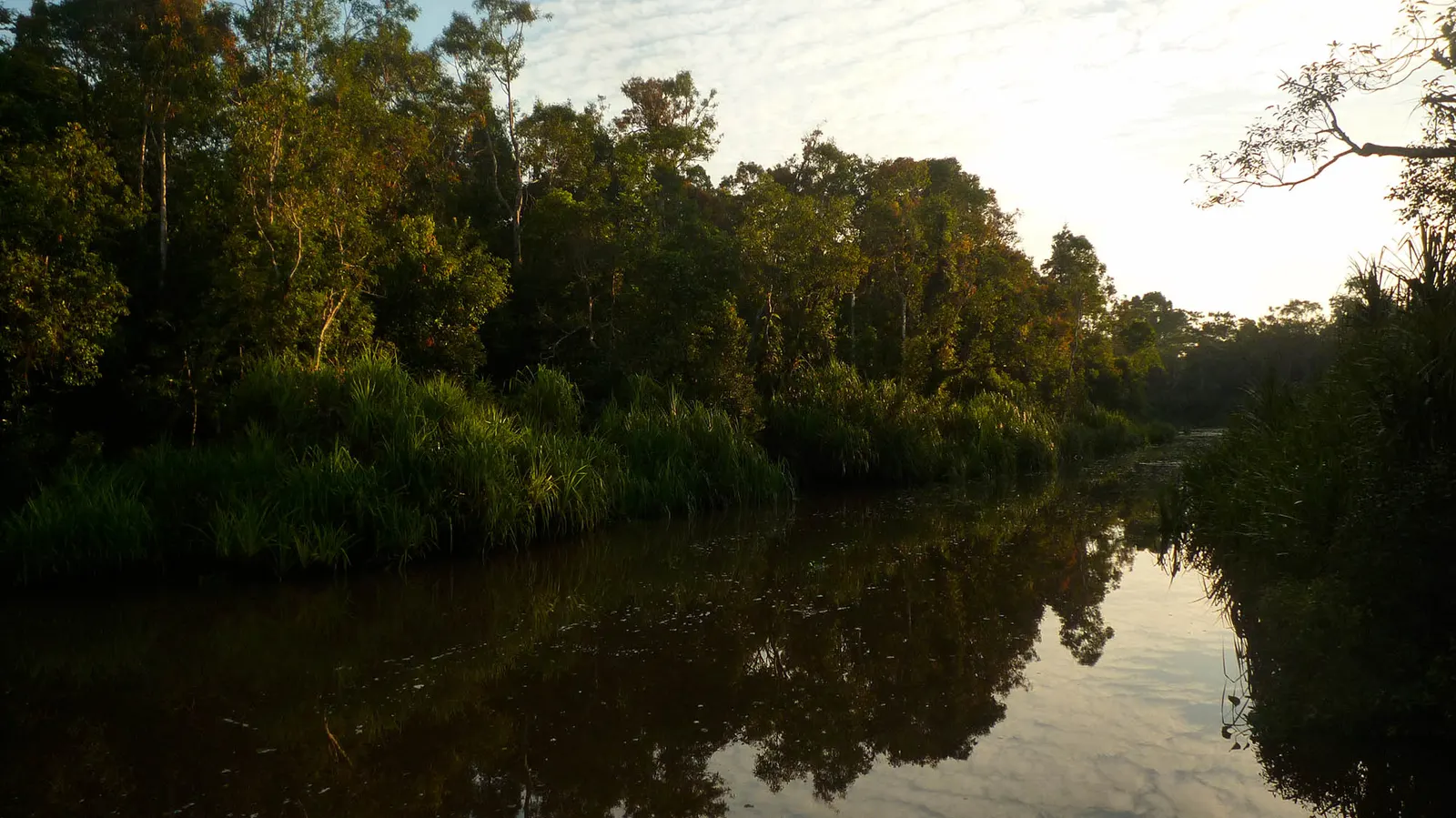
Peat-swamp waters are central to its ecology. In Central Kalimantan, it is recorded from the Sebangau catchment and forest surveys. Here rainwater, peat and forest vegetation create acidic water rich in dissolved organic material. The tea-like colour comes from that dissolved material, rather than necessarily from muddy sediment. Small forest waters and the larger blackwater river form parts of the same wetland landscape.
Sources & references · 2
Species account or primary research · Lim (1995), peat-swamp Rasbora and regional recordsMires and Peat · Rasbora kalochroma: documented occurrenceBehaviour
Its native range includes the Malay Peninsula, Sumatra and Borneo. Published Bornean accounts include the Kuching area and the Kapuas and Barito basins, placing the fish within a wider network of peatland waters. Forest cover, drainage and water chemistry belong together in this habitat: retaining only an isolated pool would preserve only one part of the environment in which the species is documented.