Appearance & recognition
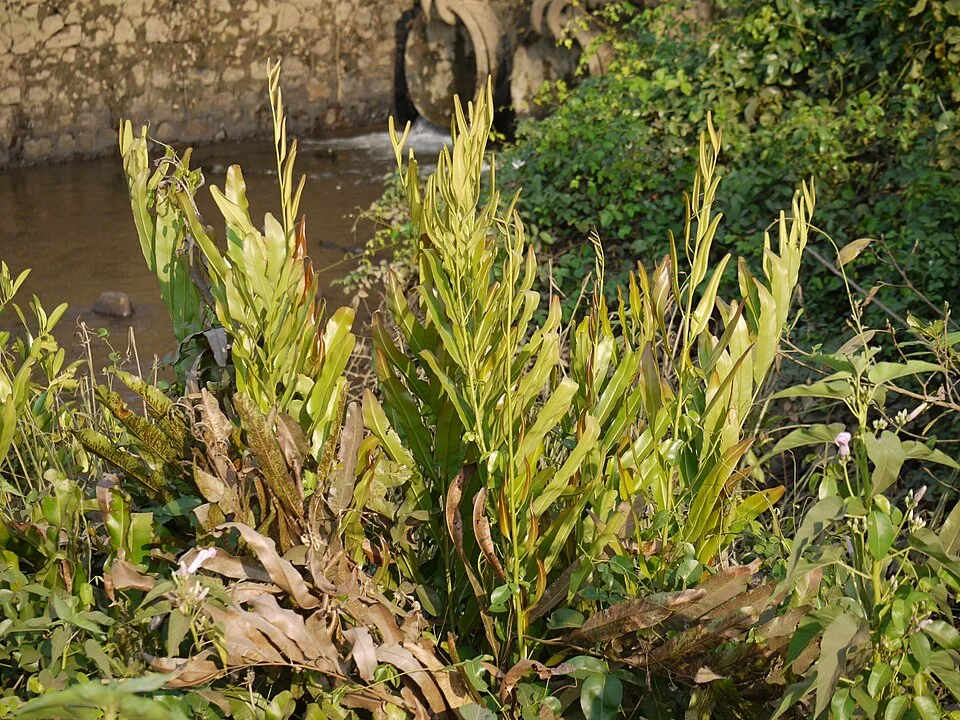
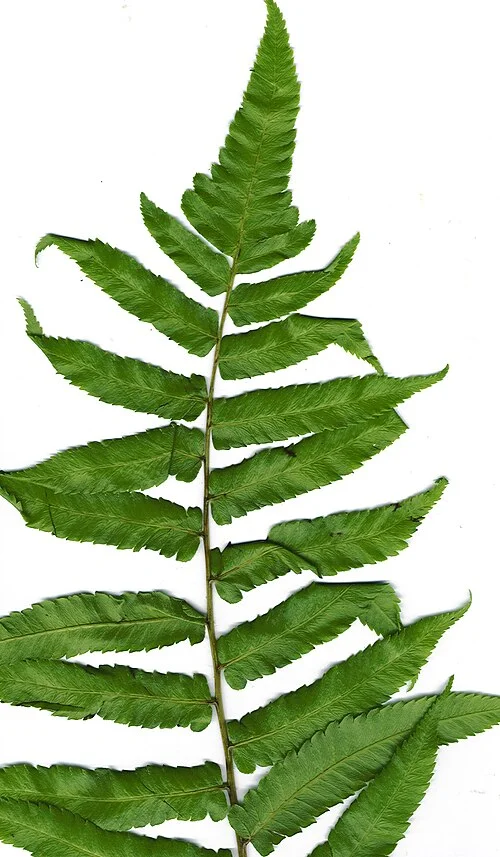
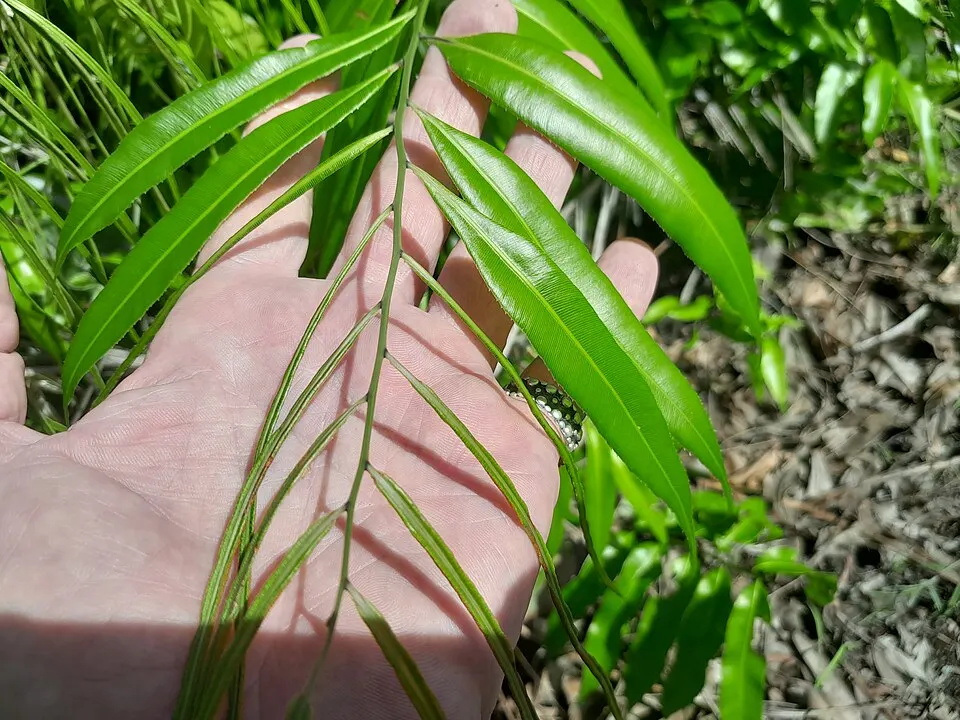
Stenochlaena palustris is a climbing fern with reddish young fronds and leathery mature foliage. Broad sterile leaflets differ from the much narrower fertile leaflets. These two leaf forms belong to the same species, an important distinction when matching plant photographs.
Sources & references · 2
Singapore National Parks Board · Stenochlaena palustrisRoyal Botanic Gardens Kew POWO · Stenochlaena palustrisFlowers, fruits & reproduction
It reproduces by spores. Long linear spore-bearing structures occupy much of the narrow fertile leaflets, helping explain their different appearance from broad sterile leaves.
Sources & references · 1
Singapore National Parks Board · Stenochlaena palustrisWhat research tells us
Laboratory studies have examined fern extracts for antimicrobial activity and toxicity. These are preclinical experiments, not evidence that eating kalakai treats infections in people. Extract concentration and laboratory exposure cannot be translated into a household remedy or dose.
Sources & references · 1
Peer-reviewed experimental research, 2022 · Free radical scavenging, anti-infectious and toxicity activities of Stenochlaena palustris extractsIn Borneo’s kitchens
Young fronds of Kalakai climbing fern are cooked as Midin. The botanical record identifies the fern as Stenochlaena palustris; the culinary name describes the ingredient and dish, not a separate species confined to Sarawak.
Sources & references · 1
NParks · Stenochlaena palustrisEdible parts, flavour & texture
Tender young fronds are the vegetable sold as kalakai in Kalimantan and midin in Sarawak. Their texture is much softer than the stiff mature fronds, which are not interchangeable kitchen ingredients. Midin preparations may combine the cooked fronds with garlic or shrimp paste. The plant’s climbing rhizome can reach high into surrounding vegetation, while the edible harvest concerns young growth near the growing tips, not every part of an unidentified fern.
Sources & references · 2
NParks · Stenochlaena palustrisSarawak Tourism Board · 5 outstanding tribal dishes in SarawakRange & habitat
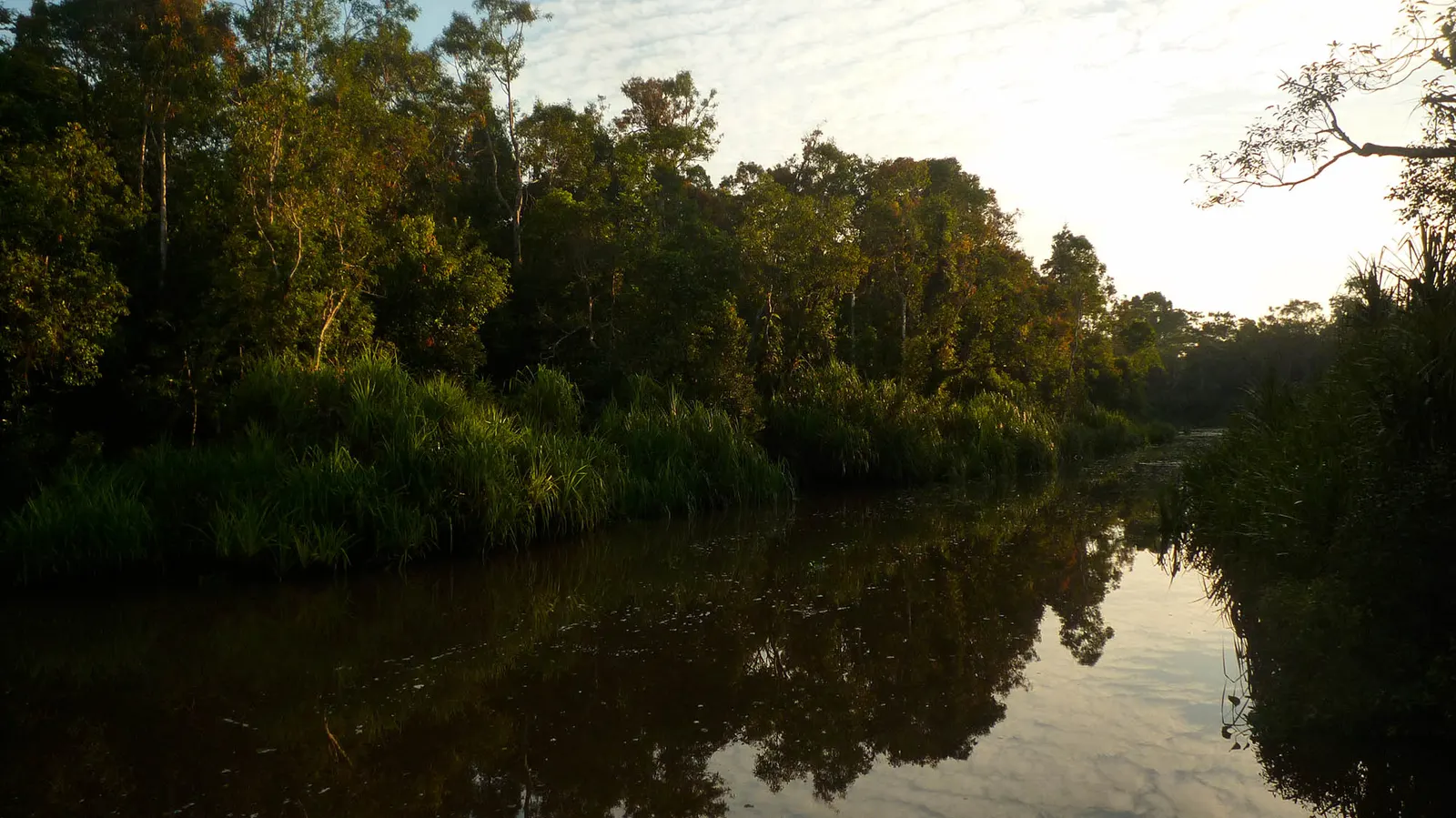
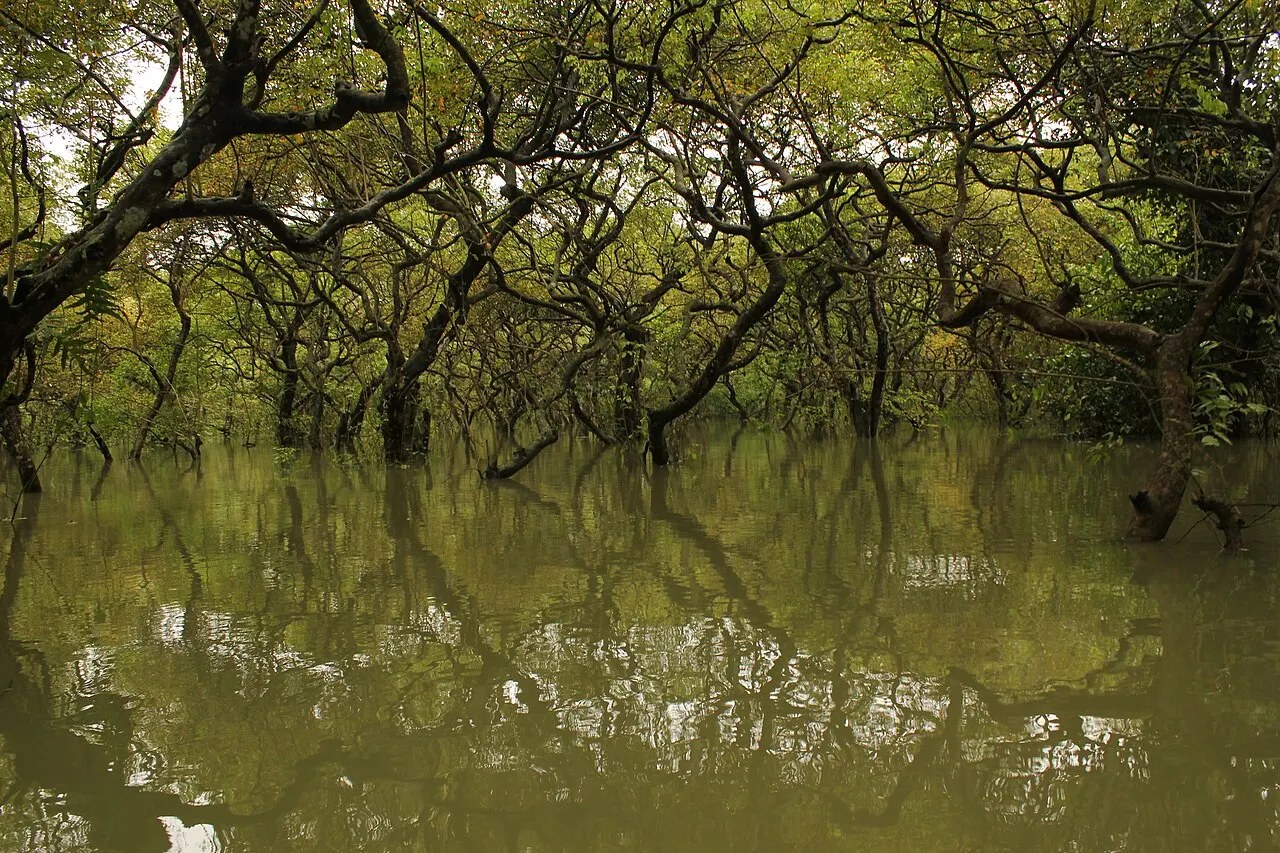
Freshwater swamps, river margins and moist lowland forests suit this fern. Its broad sterile leaflets and narrow fertile ones explain why photographs of the same species may look surprisingly different. Spores form on the fertile leaflets; there are no flowers or seeds. Studies document populations in Central and South Kalimantan, and the plant also occurs well beyond Borneo. Wetland drainage changes its setting alongside that of many forest plants.